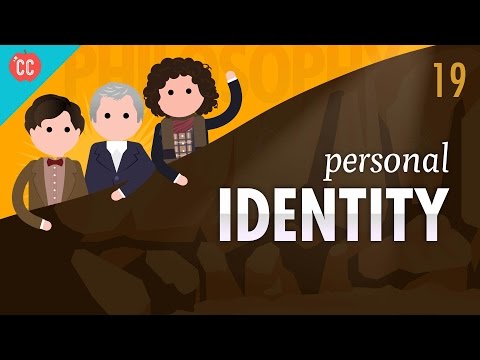
Personal Identity: Crash Course Philosophy #19
Crash Course Philosophy: Who Are You?
In this episode of Crash Course Philosophy, we explore the concept of personal identity and what makes us who we are. We discuss different theories and perspectives on personal identity, including the Body Theory and the Memory Theory.
The Doctor and Personal Identity
- The show Doctor Who raises questions about personal identity through its multiple incarnations of The Doctor. Each incarnation has a different body, mannerisms, likes/dislikes, and memories.
- The issue of personal identity is not clear-cut in real life either. We can ask similar questions about anyone's identity.
- Last time, we discussed the concept of identity and what makes an object the same over time. Now we delve into our own personal identities.
The Body Theory
- The Body Theory suggests that personal identity persists over time because we remain in the same body from birth to death.
- However, our bodies constantly change as cells regenerate and physical features evolve.
- If personal identity is solely based on the body, how much can change before becoming a new person?
Flash Philosophy: Thought Experiment
- Bernard Williams proposed a thought experiment to consider where our personal identity resides.
- Imagine being kidnapped by a mad scientist who plans to transfer your mental content into someone else's body and vice versa.
- Afterward, one body will receive a reward while the other will be tortured. Which body would you choose for each outcome?
- This decision reflects where you believe your identity lies.
The Memory Theory
- John Locke disagreed with the Body Theory and believed that consciousness is essential to personal identity.
- Locke proposed the Memory Theory which states that our identities persist over time because we retain memories connected to previous versions of ourselves.
- Memories create a chain linking past experiences to present consciousness.
Conclusion
Personal identity is a complex topic with various theories attempting to explain what makes us who we are. The Body Theory suggests that our physical bodies determine identity, while the Memory Theory emphasizes the role of consciousness and memories. Understanding personal identity helps us explore fundamental questions about ourselves and others.
Timestamps have been included in the bullet points as requested.
New Section
This section explores the concept of personal identity and the role of memory in shaping our sense of self.
The Role of Memory in Personal Identity
- According to the memory theory, personal identity requires a memory.
- None of us remember being born or the early years of our lives, which means we lost at least a couple of years at the beginning.
- If someone loses their memories, do they stop being the same person?
- False memories pose a challenge to the accuracy of our memories.
- Memory is notoriously tricky, as eyewitnesses often recount events differently.
- How do we know if our memories are accurate? And how do faulty memories influence our identity?
Challenges with Memory Theory
- While Locke's theory initially seems advantageous over the Body Theory due to consciousness and memory persisting through physical changes, further examination reveals that memory itself is tenuous.
The Importance of Personal Identity
- Personal identity is not just a conceptual puzzle but also crucial for how we live our lives.
- Obligations to specific people in our lives may depend on their persistence as distinct identities.
- Expectations in relationships and society are built upon the assumption that individuals remain unchanged.
New Section
This section emphasizes why personal identity matters and its implications for one's life.
The Significance of Personal Identity
- Personal identity is not only a conceptual puzzle but also essential for understanding how one should live their life.
- Obligations to others and expectations from others rely on the persistence of personal identity.
Epistemic Responsibility
- Beliefs should be based on reasons rather than mere assumptions or desires.
- If you believe you deserve something like a paycheck, you need to justify it with reasons.
New Section
This section concludes the discussion on personal identity and introduces the next topic.
Recap of Personal Identity
- The two main answers to the question of personal identity are the Body Theory and the memory theory.
- Both theories have significant problems associated with them.
The Persistence of Identity
- The persistence of personal identity is a topic worth exploring further.
- The next episode will delve into whether the idea of a persistent "you" over time is necessary.
Timestamps for this section are not available in the transcript.
Turn any video into a summary like this
YouTube links, meetings, lectures. With transcripts, search, and chat.