Trading In High Resistance Liquidity Run Conditions - July 21, 2026

Trading In High Resistance Liquidity Run Conditions - July 21, 2026

Market Analysis and Trading Insights

Introduction

  • Brief introduction with Caleb present; market review indicates a downward trend as predicted.

Market Movement

  • Shared stop loss publicly; went short again after initial drop, exited near the day's low.
  • Discussed relative equal lows and potential rally attempts before further declines.

Trading Strategy

  • Noted an enormous gap at opening; planned to sell short one contract due to favorable conditions.
  • Focus on 60-minute buy/sell efficiency; aiming for specific sell-side targets.

Price Action Observations

  • Observed significant sell-off; noted issues with trading view updates affecting strategy.
  • Identified next points of interest despite lower lows being suspect.

Risk Management

  • Placed stop loss below fill price to manage risk during volatility.
  • Expressed concerns about retracement impacting stop loss proximity.

Key Levels and Gaps

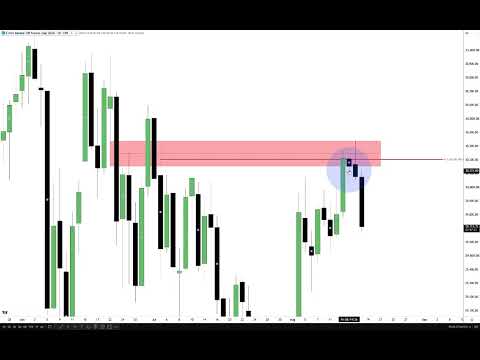
  • Highlighted inversion fair value gap as a key level for potential price action.
  • Monitored wick lengths for signs of reversal or continuation in trends.

Volatility and Execution

  • Acknowledged high volatility affecting trade management; prepared for possible stop out scenarios.
  • Analyzed manual intervention impacts on price movements and trader psychology.

Market Dynamics

  • Anticipated acceleration downwards based on previous liquidity pools left unaddressed.
  • Explained Phil's role in market manipulation, emphasizing caution among traders.

Current Conditions

  • Maintained neutrality while observing large opening range gaps influencing market behavior.
  • Suggested small retracements could occur but preferred continued downward movement.

Monitoring Price Action

  • Emphasized importance of keeping bodies out of upper half of gaps for bearish sentiment.

Technical Analysis Tools

  • Utilized Fibonacci levels to assess potential retracement areas within the gap context.

Trade Management Strategies

  • Removed unnecessary levels from charts to simplify analysis and reduce risk exposure.

Final Thoughts

  • Planned adjustments based on market behavior around key levels, focusing on managing trades effectively.

Market Analysis and Trading Insights

  • Observing half gap levels; monitoring price movements closely.
  • A washout below previous lows could indicate market direction; teaching students about risk management.
  • Momentum building is crucial; bodies need to stay below key levels for a bearish outlook.

Market Behavior and Student Performance

  • Current market conditions are challenging for new traders; immediate feedback is often lacking.
  • Students may struggle with today's volatility; it's important not to be too hard on themselves.
  • Conviction in trading decisions is essential, especially in a trading range scenario.

Expected Price Movements

  • Anticipating strong downward movement once the market breaks out of current ranges.
  • Adjusting stop-loss strategies based on market behavior to mitigate risks.
  • Keeping position sizes small during volatile days is advisable.

Managing Risk in Volatile Markets

  • Protecting against sudden price reversals is critical; patience required during tight price action.
  • Many traders face challenges in current conditions; managing emotions is vital.
  • Successfully targeting relative equal lows indicates progress despite difficult trading environments.

Caution and Strategy Refinement

  • Monitoring trade setups carefully before re-entering positions; caution advised today.
  • Identifying high resistance liquidity areas helps refine trading strategies amidst lagging internet issues.

Understanding Market Dynamics

  • Bodies above lows suggest potential retracement opportunities despite wicks indicating volatility.
  • Traders must remain diligent and aware of their strategies to avoid losses during uncertain times.

Final Thoughts on Trading Conditions

  • Emphasis on burying bodies rather than leaving wicks for confirming bearish trends.
  • Current market lacks willingness to drop lower, indicating possible bullish reclaim scenarios.

Turn any video into a summary like this

YouTube links, meetings, lectures. With transcripts, search, and chat.
Video description

Government Required Risk Disclaimer and Disclosure Statement CFTC RULE 4.41 – HYPOTHETICAL OR SIMULATED PERFORMANCE RESULTS HAVE CERTAIN LIMITATIONS. UNLIKE AN ACTUAL PERFORMANCE RECORD, SIMULATED RESULTS DO NOT REPRESENT ACTUAL TRADING. ALSO, SINCE THE TRADES HAVE NOT BEEN EXECUTED, THE RESULTS MAY HAVE UNDER-OR-OVER COMPENSATED FOR THE IMPACT, IF ANY, OF CERTAIN MARKET FACTORS, SUCH AS LACK OF LIQUIDITY. SIMULATED TRADING PROGRAMS IN GENERAL ARE ALSO SUBJECT TO THE FACT THAT THEY ARE DESIGNED WITH THE BENEFIT OF HINDSIGHT. NO REPRESENTATION IS BEING MADE THAT ANY ACCOUNT WILL OR IS LIKELY TO ACHIEVE PROFIT OR LOSSES SIMILAR TO THOSE SHOWN Trading performance displayed herein is hypothetical. Hypothetical performance results have many inherent limitations, some of which are described below. No representation is being made that any account will or is likely to achieve profits or losses similar to those shown. In fact, there are frequently sharp differences between hypothetical performance results and the actual results subsequently achieved by any particular trading program. One of the limitations of hypothetical performance trading results is that they are generally prepared with the benefit of hindsight. In addition, hypothetical trading does not involve financial risk, and no hypothetical trading record can completely account for the impact of financial risk in actual trading. For example, the ability to withstand losses or to adhere to a particular trading program in spite of trading losses are material points which can also adversely affect actual trading results. There are numerous other factors related to the markets in general or to the implementation of any specific trading program which cannot be fully accounted for in the preparation of hypothetical performance results and all of which can adversely affect actual trading results. U.S. Government Required Disclaimer – Commodity Futures Trading Commission Futures and Options trading has large potential rewards, but also large potential risk. You must be aware of the risks and be willing to accept them in order to invest in the futures and options markets. Don’t trade with money you can’t afford to lose. This is neither a solicitation nor an offer to Buy/Sell futures or options. No representation is being made that any account will or is likely to achieve profits or losses similar to those discussed on this web site. The past performance of any trading system or methodology is not necessarily indicative of future results. Trade at your own risk. The information provided here is of the nature of a general comment only and neither purports nor intends to be, specific trading advice. It has been prepared without regard to any particular person’s investment objectives, financial situation and particular needs. Information should not be considered as an offer or enticement to buy, sell or trade. You should seek appropriate advice from your broker, or licensed investment advisor, before taking any action. Past performance does not guarantee future results. Simulated performance results contain inherent limitations. Unlike actual performance records the results may under or over compensate for such factors such as lack of liquidity. No representation is being made that any account will or is likely to achieve profits or losses to those shown. The risk of loss in trading can be substantial. You should therefore carefully consider whether such trading is suitable for you in light of your financial condition. If you purchase or sell Equities, Futures, Currencies or Options you may sustain a total loss of the initial margin funds and any additional funds that you deposit with your broker to establish or maintain your position. If the market moves against your position, you may be called upon by your broker to deposit a substantial amount of additional margin funds, on short notice in order to maintain your position. If you do not provide the required funds within the prescribed time, your position may be liquidated at a loss, and you may be liable for any resulting deficit in your account. Under certain market conditions, you may find it difficult or impossible to liquidate a position. This can occur, for example, when the market makes a “limit move.” The placement of contingent orders by you, such as a “stop-loss” or “stop-limit” order, will not necessarily limit your losses to the intended amounts, since market conditions may make it impossible to execute such orders.