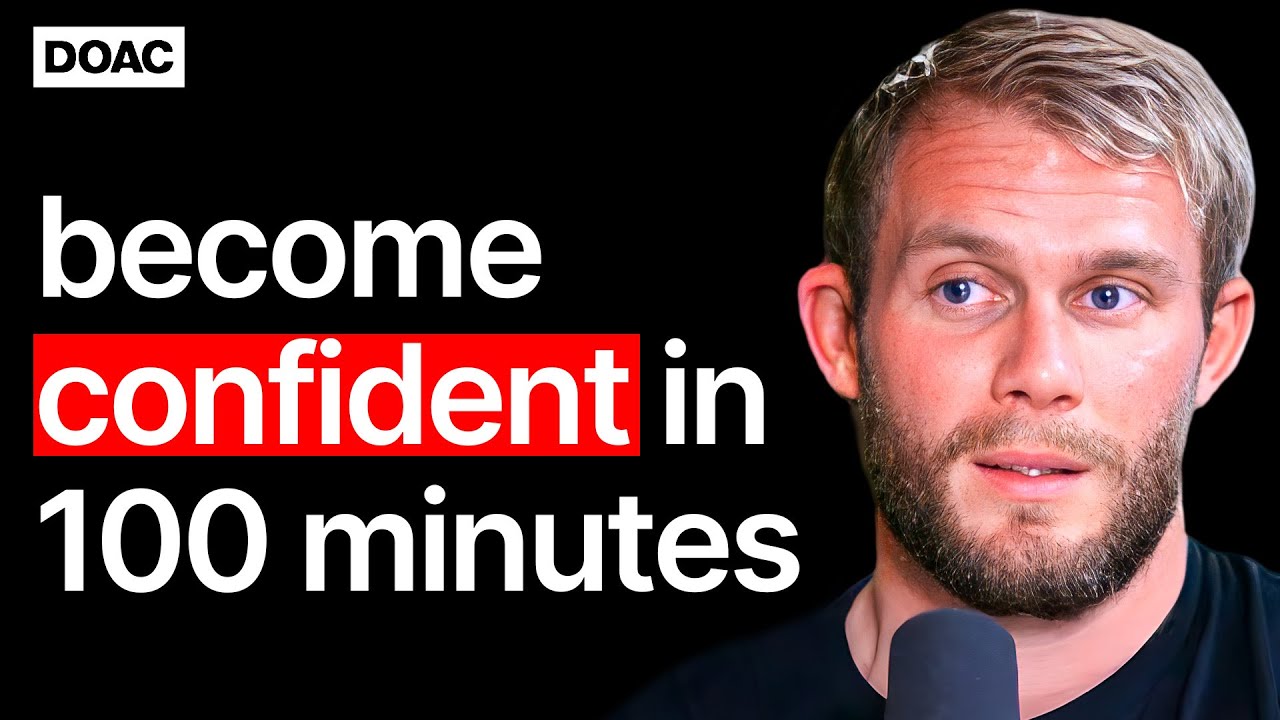
James Smith: Become Confident In 100 Minutes | E174
Introduction and Importance of Confidence
In this section, James Smith, a personal trainer, discusses the importance of confidence and how it can impact various aspects of life.
The Crossroads of Confidence
- When lacking confidence, it becomes a crossroads where one must choose between taking action or remaining stagnant.
- Confidence is crucial in dating as it affects the ability to meet someone new or leave an unhealthy relationship.
- It is important to strive for the best possible outcome by addressing insecurities and working towards self-improvement.
Overcoming Insecurities
- James Smith shares his personal battles with insecurities, fears, and feelings of inadequacy.
- He emphasizes the need to be audacious and face discomfort head-on.
Diary of a CEO Podcast
Stephen Butler introduces "Diary of a CEO" podcast featuring James Smith as a guest.
Welcoming James Smith
- Stephen expresses his excitement about having James back on the podcast due to their inspiring previous conversation.
- He mentions that James has written a book about confidence.
Writing Books on Fitness and Confidence
James explains why he wrote books on fitness and confidence.
Personal Journey in Fitness Industry
- After experiencing struggles in the fitness industry, James decided to share his knowledge with others through his first book.
- Instead of writing another fitness book as a sequel, he focused on work-life balance for his second book.
Perception of Confidence
- Despite having insecurities and fears like most people, James developed a set of values and strategies to overcome them.
- He believes that confidence is not an innate trait but something achievable through changing one's perception of reality.
Confidence as a Superpower
James discusses the concept of confidence as a superpower.
Attainable Confidence
- James believes that confidence is within reach for everyone, contrary to the notion that it is unattainable like superpowers.
- By spending time with individuals and motivating them, he has witnessed how people can overcome their lack of confidence.
Personal Insecurities
- James opens up about his own insecurities regarding body image and constant battles with self-doubt.
- His relatability resonates with many people who appreciate his understanding of their struggles.
Overcoming Challenges and Building Confidence
James shares his journey in building confidence by overcoming challenges.
Tripping Over Steps to Confidence
- Through various experiences, such as working in door-to-door sales, James learned to perceive challenges as a numbers game.
- By understanding the need for repetition before achieving success, daunting tasks became less intimidating.
Belief in Luck
- Although some may attribute his achievements to luck, James attributes them to stumbling upon effective steps towards building confidence.
- He emphasizes the importance of perseverance and appreciating the process rather than relying solely on luck.
Overcoming Fear and Building Confidence
In this section, the speaker discusses the importance of breaking down fear and how everyone is capable of doing things. They mention an example of Liver King, who appears confident but reveals that speaking in front of people cripples him due to past bullying experiences.
Understanding Social Confidence
- Liver King shares his experience of being bullied between the ages of 10 and 14, which severely impacted his social confidence.
- The speaker highlights the variance in people's social confidence, which can be influenced by early self-story and traumatic experiences.
- It is suggested that certain situations can trigger a lack of confidence, such as potential rejection from others.
The Role of Early Self-Story
- The speaker questions how much our early self-story determines our confidence today.
- While there are tips and tricks to boost confidence, addressing past traumas or negative experiences may require more than just surface-level solutions.
- Different situations may evoke different levels of confidence in individuals, highlighting the presence of "gaping holes" in their overall confidence.
Embracing Courageous Actions
- Building confidence often involves finding something one has the courage to do and gradually expanding from there.
- The speaker gives an example of being afraid to approach someone at a bar but having the courage to start with a simple greeting or compliment.
- It is emphasized that everyone has areas where they lack confidence, and it's important to acknowledge these gaps in order to work on them effectively.
Pain Points and Confidence
In this section, the concept of pain points as they relate to building confidence is explored. Pain points refer to deep-seated issues that hinder one's self-confidence.
Understanding Pain Points
- Drawing from sales analogies, pain points are discussed as crucial factors in understanding someone's true motivations and desires.
- Superficial goals, such as wanting to be more toned, may not address the underlying pain points that drive individuals to seek confidence.
- Examples of pain points include feeling unconfident due to body image issues or fear of loneliness and aging without finding a compatible companion.
The Power of Strong Pain Points
- It is emphasized that strong pain points have the potential to motivate significant change in one's life.
- Merely wanting superficial changes, like being more toned, is unlikely to provide enough motivation during challenging times.
- Understanding and addressing deep-rooted pain points can lead to meaningful transformations in self-confidence.
The transcript provided does not contain timestamps beyond 0:10:18.
New Section
The consequences of lifelong loneliness and the importance of taking action to overcome it.
Wanting to Want to Be Someone
- Many people are aware of the negative consequences of lifelong loneliness but still do nothing about it.
- Is there a desire to want to be someone?
- Encourage individuals to reflect on their discomfort with being lonely and compare it to the discomfort of talking to strangers.
- The pain point of being lonely should outweigh the pain point of talking to a stranger.
- Inaction is still a choice, and doing nothing can have consequences.
New Section
Using dating as an analogy for building confidence and taking action.
Dating as an Analogy
- Dating can be seen as an analogy for various aspects of life, including business talks.
- Overcoming fear by focusing on the person at the bar rather than counting down from five.
- Choosing between another week/month of being single or talking to a stranger.
- The discomfort of talking to your boss about feeling undervalued versus the pain point of not receiving promised bonuses.
- Emphasize that saying nothing is still saying something, and doing nothing is still doing something.
New Section
Understanding the dichotomy between action and inaction when facing fear and lack of confidence.
Fear, Confidence, and Action
- Feeling low on confidence is a crossroads between action and inaction.
- Fear can control individuals' choices if they don't muster courage using pain points as motivation.
- Not starting passion projects or expressing oneself on social media is still a choice with consequences.
- Confidence cannot be built solely through affirmations or self-talk; it requires evidence-based actions.
New Section
Building confidence through evidence-based actions and understanding the spectrum between anxiety and confidence.
Confidence as Evidence-Based
- Confidence is based on the evidence individuals have in themselves.
- Building confidence requires going out and getting evidence through actions.
- Beliefs are subjective and can be correct or incorrect based on evidence.
- Confidence should be seen as a spectrum, with anxiety predicting failure and confidence predicting success.
- Expectations greatly influence outcomes, so it's important to have realistic expectations.
New Section
The importance of predicting success, using interrogative self-talk, and being open to being wrong.
Predicting Success
- Confidence involves predicting success rather than just proclaiming oneself as amazing without evidence.
- Interrogative self-talk can be more positive by asking questions instead of making statements.
- Being open to being wrong when predicting success but not defaulting to thinking something won't work.
- The expectation effect shows how expectations can influence outcomes.
New Section
Overcoming negative thoughts, setting confident defaults, and avoiding self-sabotage.
Overcoming Negative Thoughts
- Avoid letting negative thoughts take over when trying to accomplish something.
- Being overconfident in predicting success while accepting the possibility of being wrong.
- Setting confident defaults instead of assuming things won't work from the start.
Timestamps for remaining sections are missing.
The Importance of Confidence
This section discusses the role of confidence in innovation and personal success. It emphasizes that society does not care about an individual's level of confidence, and it is something that individuals need to cultivate themselves.
Confidence and Innovation
- Confidence is essential for innovation.
- Elon Musk's confidence in landing rockets back on Earth demonstrates the importance of self-belief.
- Society does not care about an individual's level of confidence.
Faking Confidence
- The concept of "fake it till you make it" is discussed.
- Faking confidence may not be effective as there is no clear metric for success in this approach.
- Manifestation and the placebo effect are mentioned as related concepts.
Manifestation and Placebo Effect
- Manifestation involves thinking positively about success, but it can be dangerous if taken to extremes.
- The placebo effect shows how belief can impact outcomes, even when a treatment or situation is fake.
- Placebos have been shown to affect pain levels and overall well-being.
Belief in Ourselves
- While we should not simply pretend to be confident, we need to instill a level of belief in ourselves.
- Failure should not be seen negatively; it is often a pathway to development and expertise.
- Optimism should be embraced, but we should also acknowledge that failure is possible.
The Role of Audacity
This section explores the concept of audacity and its significance in personal growth and success. It highlights the importance of expressing opinions despite potential criticism or backlash.
Definition of Audacity
- Audacity refers to putting oneself forward, expressing opinions, and taking risks.
- It plays a crucial role in personal growth and achieving success.
Dealing with Criticism
- Expressing opinions can lead to criticism and even hatred from others.
- Being audacious means being willing to face criticism and push through it.
Personal Experience
- The speaker shares their own experience of facing criticism in the fitness industry.
- Initially, few people disliked them, but as they expressed their opinions, more individuals started criticizing them.
Importance of Audacity
- Being audacious allows one to stand out and make a difference.
- It requires putting oneself above the crowd and believing in one's ideas or abilities.
The transcript provided does not contain enough content for additional sections.
New Section
In this section, the speaker emphasizes the importance of being audacious with ideas and not being afraid of criticism. They also discuss the need to understand that not everyone will be interested in what you do and how audaciousness can have a dark side.
Being Audacious and Dealing with Critics
- The speaker encourages being audacious with ideas and not fearing being wrong or facing critics.
- It is important to understand that there will always be people who are not interested in what you're doing, and their criticisms should not be taken to heart.
- Audaciousness is essential for progress, but it comes with the realization that there will always be haters and people who dislike what you say or do.
- No one is exempt from criticism when they are audacious. However, being audacious can lead to both the worst and best things in life.
Ingredients List of Happiness
In this section, the speaker discusses the concept of happiness as an ingredients list and explores what might be missing from their own list of ingredients for perfect happiness.
Missing Ingredients for Perfect Happiness
- The speaker hasn't thought about what's missing from their life in terms of perfect happiness. They don't dwell on it but see any lacking aspects as little challenges they are excited for.
- While some may have a facade for happiness, the speaker feels they are progressing in everything they do, including jiu-jitsu which they love. Their values revolve around work, professional life, and personal interests like teaching jiu-jitsu classes.
- The idea of opening a small jiu-jitsu dojo near the beach and teaching people jiu-jitsu for the rest of their life is something that sometimes seems better than their existing life.
- The speaker doesn't spend time thinking about what's missing but questions the balance of things in their life, such as gym time, work-life balance, and feedback received.
Protecting Mental Health
In this section, the speaker discusses mental health and how they prioritize certain habits to protect it. They also mention the importance of balance and self-reflection.
Protecting Mental Health
- The speaker used to think they were fortunate not to struggle with mental health problems until a friend pointed out that they are not aware of the habits protecting their mental health.
- Mental health is seen as a table with many legs, each representing different aspects of life like going outside enough or having good family relationships. If one leg disappears, it may be okay, but if multiple legs disappear, it can lead to mental health issues.
- The speaker values being comfortable and not overworking themselves or stretching too thin. They have diminished their relationship with alcohol as productivity has become more important to them with age.
- Self-reflection on the balance of things in life is done based on feedback received and questioning societal expectations or personal relationships' influence on perceived balance.
New Section
In this section, the speaker discusses the impact of alcohol on social interactions and productivity.
The Influence of Alcohol on Confidence and Productivity
- Alcohol can make people feel more confident and care less about their inadequacies in social interactions.
- Availability of alcohol can hinder personal growth in terms of developing confidence and productivity.
- The speaker values productivity, both professionally and personally.
- They mention enjoying activities like playing tennis or having creative ideas for videos.
- Lack of creativity for a few days creates pressure for the speaker to stay productive.
- Negative comments weigh more than positive ones, but positive feedback motivates the speaker to continue being productive.
New Section
In this section, the speaker reflects on their work habits and balancing professional and personal life.
Workaholic Tendencies and Personal Time
- The speaker does not consider themselves a workaholic but acknowledges that they enjoy working.
- Distinguishing between productive time (e.g., watching a film with their girlfriend) and unproductive time (e.g., watching a film alone).
- The speaker enjoys downtime activities like training jiu-jitsu, skateboarding, or going to the beach without being constantly on their phone.
- Retirement is not appealing to the speaker as they find fulfillment in solving problems and staying active.
New Section
In this section, the speaker talks about relationships and personal insights gained from introspection.
Relationships and Personal Insights
- The speaker has been in a relationship for over a year but expresses skepticism about discussing relationships on podcasts due to potential changes in their relationship status by the time it airs.
- Reflecting on a past experience with magic mushrooms, where they contemplated different aspects of life with friends by the beach.
- Acknowledging their competitive nature, even with people they have never spoken to on social media.
- Realizing the importance of family and what truly matters in life, such as having a family and making their parents proud.
- Understanding that winning the race for money and fame may not bring long-term happiness compared to fulfilling personal relationships.
New Section
In this section, the speaker emphasizes the importance of finding fulfillment in life beyond material success.
Finding Fulfillment Beyond Material Success
- The speaker wants to ensure that their pursuit of money and fame does not overshadow other important aspects of life.
- Making their family proud is a significant motivation for the speaker's achievements.
- Recognizing that personal relationships and a happy family life hold more value than material possessions or external recognition.
- Reflecting on the significance of problem-solving throughout human history and how it drives personal fulfillment.
- Rejecting the idea of retirement as it would mean giving up on solving problems and staying active.
Realizing the Limitations of Certain Values
The speaker reflects on their realization that certain values they held in their late 20s may not be beneficial in the long run. They mention wealthy older men in Bondi with sports cars and young girlfriends, but express that they do not envy them. The speaker discusses the concept of a fixed mindset versus an open mindset, acknowledging that while they have an open mindset for many things in life, they had a fixed mindset when it came to relationships.
- The speaker acknowledges that in their 20s, they had a fixed mindset when it came to relationships.
- They would blame others and discontinue relationships when things went wrong.
- The speaker realizes later on that the negatives of failed relationships in their 20s were not severe and allowed them more time for personal growth.
- Their longest relationship lasted about a year, making their current relationship one of the longest ever.
Fixed Mindset and Open Mindset
The speaker further explores the concept of a fixed mindset versus an open mindset. They mention Carol Dweck's book "Mindset" and how it influenced their perspective. While they have an open mindset for many aspects of life, they had a fixed mindset when it came to relationships.
- Carol Dweck's book "Mindset" discusses the concepts of fixed mindset and open mindset.
- The speaker appreciates having an open mindset for many things but realizes they had a fixed mindset regarding relationships.
- They would approach business problems with determination to improve but lacked this attitude towards relationships.
Developing vs Blaming Others
The speaker reflects on how some people choose to develop and become better when faced with challenges, while others blame others and discontinue. They realize that they had a fixed mindset in their younger years and only realized it later on.
- When faced with challenges, some people choose to develop and become better, while others blame others and give up.
- The speaker realizes that they had a fixed mindset in their younger years.
- The negatives of failed relationships in their 20s were not severe, and they saw it as an opportunity to focus more on work.
Relationships in the 20s
The speaker reflects on the relatively less severe impact of failed relationships in their 20s. They mention having more time for themselves and work during that period.
- The negatives of failed relationships in their 20s were not severe.
- Instead of feeling down about failed relationships, the speaker saw it as an opportunity to focus more on work.
- They mention having more time for themselves during this period.
Longest Relationship and Societal Trends
The speaker discusses the length of their longest relationship (about a year) and how it compares to their current relationship. They also mention societal trends such as women over 30 without children being more common than those under 30.
- Their longest relationship lasted about a year, making their current relationship one of the longest ever.
- There are societal trends where women over 30 without children outnumber those under 30.
- This trend was mentioned by Chris Williamson during a conversation with Jordan Peterson.
Prioritizing Family Life
The speaker reflects on the importance of appreciating family life like previous generations did. While they don't believe it's necessary to adopt all values from previous generations, they emphasize the need to prioritize important aspects of life.
- The speaker believes that society is not appreciating family life as much as previous generations.
- They don't think it's necessary to adopt all the values of previous generations but emphasize the importance of prioritizing important aspects of life.
- Some friends have gotten married and had kids early, and while there may be exceptions, they are generally happy.
Influences on Beliefs
The speaker discusses how personal experiences can shape beliefs. They mention confirmation bias and people who try to tear down beliefs that didn't work for them. They draw parallels between this and the dieting world.
- Personal experiences can shape beliefs.
- Some people try to tear down beliefs that didn't work for them, similar to the way some plus-size models promote body positivity due to their negative experiences in pursuit of getting in shape.
- The speaker sees similarities between this phenomenon and discussions about monogamy.
Monogamy Discussion
The speaker mentions a conversation they had with James about monogamy. They discuss how personal experiences can influence one's perspective on monogamy and question why some individuals try to tear down the concept.
- The speaker had a conversation with James about monogamy.
- Personal experiences can influence one's perspective on monogamy.
- They question why some individuals try to tear down the concept of monogamy based on their own negative experiences.
Understanding Different Perspectives
The speaker reflects on how individuals who engage in open relationships might have been hurt in the past, leading them to criticize or reject monogamous relationships. They also mention societal benefits associated with monogamy.
- Individuals who engage in open relationships might have been hurt in the past, leading them to criticize or reject monogamous relationships.
- The speaker questions why some individuals who have negative experiences with monogamy try to tear down the concept for everyone else.
- They believe that monogamy has benefits, such as better support for a family.
Personal Beliefs and Influences
The speaker shares their personal belief in monogamy and mentions that their parents are still together. They discuss how individuals who try to tear down beliefs may have been hurt by those beliefs themselves.
- The speaker personally believes in monogamy.
- Their parents are still together and were each other's first girlfriend and boyfriend.
- Individuals who try to tear down beliefs may have been hurt by those beliefs themselves.
Temptations and Perspectives on Monogamy
The speaker acknowledges that while monogamy may be perfect for the majority of people, temptations can still arise. They mention having a conversation with friends about different perspectives on monogamy and marriage.
- Monogamy may be perfect for the majority of people, but temptations can still arise.
- The speaker had a conversation with friends about different perspectives on monogamy, polygamy, and long-term commitment.
- Society is changing, and staying in marriages might become more challenging as time goes on.
Fear of Losing Spark
The speaker raises concerns about losing the spark in a long-term relationship. They mention expectations and how they can impact relationships.
- There is concern about losing the spark in a long-term relationship.
- Expectations play a role in maintaining relationships.
New Section
In this section, the speaker discusses the importance of trying one's hardest in a relationship and handling breakups amicably. They also touch upon the topic of cheating and its implications.
Trying Your Hardest and Handling Breakups
- The speaker emphasizes the importance of giving your best effort in a relationship, even if it doesn't work out in the end. It is crucial to handle breakups amicably and not destroy someone's life or make them feel worthless.
- They express their belief that if two people have changed over time and are no longer compatible, it is better to acknowledge it rather than forcing a broken marriage. Having parents in separate households may be more beneficial for raising a family.
Cheating as Lack of Discipline
- The speaker suggests that cheating can be seen as a lack of discipline in some cases. They mention that humans have primal instincts and desires, but it is important to resist these urges.
- They reflect on human history filled with territorial conflicts and wars, highlighting our primal nature. However, they also acknowledge that society has evolved, providing more options for secrecy and infidelity.
Changing Dynamics and Options
- The speaker discusses how societal changes have provided numerous avenues for infidelity, such as private messaging platforms or dating apps designed for married individuals like Ashley Madison.
- They mention that cheating could stem from a lack of confidence in one's partner or relationship. However, they believe it is better to pursue what feels right rather than staying in an unhappy situation.
Relationship Choices and Ignorance
- The speaker reflects on the importance of questioning one's desire to be in a relationship. They mention the concept of the "hot cold empathy gap," where it is challenging to imagine an opposing state when in a particular mindset.
- They discuss how society often promotes the idea that being wrong or ignorant is acceptable, but it is essential to strive for the best possible outcome and not settle for mediocrity.
- The speaker shares a personal experience where their girlfriend questioned whether they genuinely wanted to be in a relationship or if they were simply following societal expectations. This raises the question of whether people would choose a relationship with both its benefits and the freedom of being single if given the option.
New Section
In this section, the speaker continues discussing personal choices in relationships and explores the concept of hot-cold empathy gaps.
Hot-Cold Empathy Gap
- The speaker explains the hot-cold empathy gap, which refers to difficulty imagining an opposing state when experiencing strong emotions. For example, when single and feeling numb after casual encounters, it can be challenging to understand why someone would want a committed relationship.
- They mention that post-not clarity often leads individuals to question their choices and wonder what they truly want from a relationship.
Desires and Dangers of Open Relationships
In this section, the speaker discusses the opposing feelings and curiosity associated with open relationships. They highlight the potential dangers and catastrophic outcomes that can arise from opening a relationship. The speaker also shares personal experiences and reflections on the topic.
Exploring Feelings and Curiosity
- The speaker acknowledges the opposing sense of feelings when considering open relationships.
- There is a curiosity about exploring these feelings, but caution should be exercised.
- Opening a relationship can lead to catastrophic consequences if things go wrong.
Hard Wiring and Freedom
- The speaker mentions a "hard wiring" aspect where both partners may desire freedom if one partner wants an open relationship.
- While it may seem like a good idea initially, experiencing the polar opposite reality can lead to regret and irreversible consequences.
- Personal experiences, such as reading books like "The Game," have shaped the speaker's perspective on different relationship approaches.
Sacrifice and Value
- The speaker reflects on how valuable things in life often require sacrifice.
- Obtaining a six-pack physique requires choosing discipline over indulgence.
- Similarly, relationships hold value because they involve commitment and saying no to other options.
Temptations and Clear Intentions
- Like maintaining physical fitness, relationships require clear intentions and resisting temptations.
- Confidence, inspiration, and belief systems play significant roles in achieving success in various aspects of life.
- Inspiring others through one's own actions can have a positive impact without even realizing it.
Modern Dating Challenges
In this section, the discussion shifts towards modern dating challenges. The speaker contemplates writing about modern dating in their next book due to its relevance for a generation caught in technological transitions.
Caught in Technological Transition
- The speaker observes that there is a generation caught between traditional dating methods and the influence of technology.
- Modern dating is a significant topic due to the challenges it presents.
Impact on Married Individuals
- The speaker acknowledges that their book may be read by married individuals who might not find direct relevance in the topic.
- However, they emphasize that even if it doesn't change their lives, it could potentially impact others positively.
Dating as a Pain Point
- Dating is described as an incredibly big pain point due to its complexities and challenges in the modern era.
New Section
In this section, the speaker discusses the importance of not staying in a relationship solely based on the amount of time invested. They also highlight how alcohol can negatively impact dating experiences and suggest alternative ways to meet and connect with potential partners.
Focusing on Relationship Investment
- Many people stay in relationships because they have already invested a significant amount of time.
- This mindset can prevent individuals from leaving unhealthy or unfulfilling relationships.
- It is important to consider other factors such as personal happiness and growth when evaluating a relationship.
Alcohol's Impact on Dating
- The speaker shares their personal experience with using alcohol to cope with nerves before dates.
- They realized that alcohol skewed their perception and led to regrettable decisions.
- Avoiding alcohol on dates can lead to more authentic connections and better decision-making.
Alternative Ways to Meet Potential Partners
- Instead of traditional dinner or bar dates, the speaker suggests engaging in activities like swimming, walking, or getting coffee together.
- Driving or walking conversations tend to be more relaxed and less interview-like, allowing for deeper connections.
- Breaking away from conventional dating norms can lead to more positive experiences.
New Section
In this section, the speaker explores how changing perspectives on dating can improve outcomes. They discuss the concept of "Thursday" as an alternative approach to small talk and emphasize that confidence is not a fixed trait but something that needs continuous effort.
Changing Perspectives on Dating
- The speaker mentions "Thursday," an event in London that offers an alternative approach to small talk during social interactions.
- Small talk often becomes a barrier in dating, preventing genuine connections from forming.
- By removing societal expectations and focusing on meaningful conversations, dating experiences can be improved.
Confidence as Continuous Effort
- Confidence is compared to fitness; if not consistently practiced, it can diminish.
- Using dating apps exclusively may limit opportunities for personal growth and connection-building.
- Engaging in a variety of dates and interactions can lead to better prospects and experiences.
New Section
In this section, the speaker discusses the challenges of supporting friends who continuously express their desire for change but fail to take action. They reflect on their own role as a friend and the potential strain it can put on relationships.
Supporting Friends' Desire for Change
- The speaker shares their experience with a friend who repeatedly expresses a desire to go to the gym or make life changes but fails to follow through.
- As a friend, they feel exhausted by this pattern and question whether they are overstepping boundaries by wanting to help.
- It is challenging to strike a balance between offering support and potentially straining the friendship.
Struggles with Helping Friends
- The speaker admits that they have sometimes become frustrated with friends who do not take action towards their goals.
- They worry that their efforts to help might be resented or negatively impact the relationship.
- Reflecting on personal experiences, they acknowledge that everyone has different journeys and timelines for change.
The Importance of Belief and Confidence
In this section, the speaker discusses the significance of belief and confidence in achieving goals. They highlight how many individuals want to believe in themselves but often lack the true belief that they can accomplish their goals.
Belief vs. Confidence
- Belief is crucial for success, as individuals need to truly believe in their abilities.
- Many people want to believe they can achieve their goals but lack the confidence to do so.
- Confidence is often portrayed in certain areas of life but may not be present when it comes to pursuing specific goals.
Taking Action and Building Evidence
- Action must come first before belief can be fully established.
- Individuals need to prove to themselves that their goals are attainable through hard work and dedication.
- Small steps and habits play a significant role in building evidence towards achieving larger goals.
- Breaking down big goals into smaller, manageable steps helps individuals take action.
Overcoming Obstacles
- People often struggle with taking the first step towards their desired outcome if it feels too overwhelming or unattainable.
- As a coach, one strategy is to make the initial stepping stone so small that individuals have no choice but to take action.
Starting Without Evidence
This section explores the idea that many people feel they need evidence or proof before starting something new. However, the speaker emphasizes that starting without evidence is necessary because evidence is gained through experience.
Needing Evidence Before Starting
- Many individuals feel they require evidence or assurance before embarking on a new venture or idea.
- Excuses and imperfections are often used as barriers preventing people from taking action.
Gaining Evidence Through Experience
- Starting without sufficient evidence is common for most successful endeavors.
- Imposter syndrome affects many individuals, but it is important to recognize that everyone experiences it at some point.
- Belief and evidence are gained through stumbling forward and learning from mistakes.
The Role of Belief in Personal Growth
- Starting with a lack of belief is normal, whether it's becoming a parent or starting a new business.
- Over time, as evidence accumulates, belief strengthens.
- Confidence is built by embracing the persona required for different situations and roles.
Becoming the Person You Need to Be
This section focuses on the importance of personal growth and becoming the person needed for specific roles or situations. The speaker emphasizes the need to have a clear vision of who one needs to be in order to succeed.
Embracing Different Roles
- Certain situations require individuals to adopt different personas, such as being a father or pitching a business idea.
- Initially lacking confidence or experience is common when taking on new roles.
- Belief in oneself is crucial when stepping into unfamiliar territory.
Internal Conversations for Personal Development
- Engaging in internal conversations about who one needs to be helps foster personal growth.
- Acknowledging imperfections and working towards improvement is essential.
- Becoming comfortable with being an imposter initially can lead to growth and success.
Understanding Personal Mindset
In this section, the speaker discusses their active mindset and potential ADHD diagnosis. They highlight how understanding one's own mind can benefit personal development.
Active Mindset and Potential ADHD Diagnosis
- The speaker acknowledges having an active mind that often prioritizes personal interests over others' needs.
- Considering getting an ADHD test as adults diagnosed with ADHD have found it beneficial for understanding their minds better.
Prioritizing Personal Goals
- Sometimes individuals become so focused on their own goals that they may overlook the needs or desires of others.
- Understanding one's mindset and tendencies can help in finding a balance between personal aspirations and considering others.
The transcript provided does not include any further content beyond this point.
New Section
In this section, the speaker discusses the concept of personalities and how confidence is not a personality trait but rather a set of beliefs based on previous experiences.
Understanding Personalities and Confidence
- The speaker compares personalities to tribes, with different traits such as being left or right-handed, aggressive or calm.
- It is emphasized that confidence is not a personality trait but rather a set of values and beliefs that individuals can have.
- Height is given as an example of something predetermined, influenced by factors like nutrition. However, introversion/extroversion or patience/impatience are not fixed traits either.
- Overconfidence is highlighted as a common human tendency. For example, most people believe they are above average at driving.
- Faulty eyewitnesses in exoneration cases demonstrate our ability to be overconfident in certain areas.
- The speaker suggests that we should utilize our ability to be confident in all areas of life.
New Section
In this section, the speaker explores the relationship between confidence and evidence. They discuss how personal experiences and subjective evidence can shape one's level of confidence in different areas.
Confidence and Evidence
- The speaker reflects on their own driving skills as an example. They may feel confident in driving due to their lack of accidents but may lack confidence in other aspects of life where they don't have similar evidence.
- The question arises whether confidence is solely based on evidence or subjective evidence gained from different areas.
- The speaker proposes their theory that while someone's history influences their perception, it doesn't mean it's fixed. Confidence can be developed through new experiences and positive reinforcement.
- Availability bias is mentioned as another factor influencing our perception. People fear flying more than driving despite driving being statistically more dangerous.
New Section
In this section, the speaker discusses how our social circles and interactions with others can impact our confidence. They explore the concept of "picking your passengers" and the importance of surrounding oneself with supportive individuals.
Social Circles and Confidence
- The speaker introduces the concept of "picking your passengers," which means being selective about who we surround ourselves with.
- They compare it to a long car journey where choosing the right companion is crucial for a pleasant experience.
- The speaker emphasizes that our social circles influence our perception of what is possible in relationships and life in general.
- Negative feedback or expressions from friends can contribute to a pessimistic self-story, while positive support can foster optimism.
- While not explicitly advising to remove certain people from one's circle, the speaker suggests being mindful of who we allow to influence us.
New Section
In this section, the speaker continues discussing the importance of choosing supportive individuals in one's social circle. They highlight how personal space and interactions can affect confidence.
Personal Space and Interactions
- The speaker emphasizes that personal space, including who we travel or interact with, plays a significant role in our confidence.
- They mention that even when traveling or engaging in activities, having compatible companions can greatly impact one's experience.
- The availability bias is mentioned again as something influenced by our friendship circles and what information is available to us.
- The speaker concludes that there is much more to confidence than just personal history; it also involves current experiences and interactions with others.
The Importance of Surrounding Yourself with Positive People
In this section, the speaker emphasizes the significance of evaluating the impact of people in our lives and making decisions based on long-term benefits. They discuss how individuals with a pessimistic outlook can hinder personal growth and suggest considering letting go of such individuals if necessary.
Evaluating Relationships
- It is important to assess the influence of people in our lives.
- Being with someone who has a pessimistic outlook can hinder personal growth.
- Consider the long-term effects on your net position when dealing with negative individuals.
Utility of Deprivation Concept
- The speaker mentions Jordan Peterson's concept of "utility of deprivation."
- This concept refers to sacrificing certain things in life for positive outcomes.
- Sacrificing certain habits or behaviors, such as excessive drinking or consuming junk food, can have a net positive effect on other areas of life.
Implications of Masturbation and Pornography
- The speaker discusses the potential implications of excessive masturbation and pornography consumption.
- While not advocating for their prohibition, they highlight the need to consider their impact on personal well-being.
- Excessive exposure to porn may desensitize individuals to sexual intimacy and affect relationships negatively.
- Abstaining from masturbation might improve one's overall well-being, especially for those who are lonely or single.
Considering the Utility of Deprivation
In this section, the speaker further explores the concept of utility deprivation. They discuss how abstaining from certain activities like masturbation or reducing consumption can have positive effects on various aspects of life.
Benefits of Depriving Oneself
- Sacrificing certain indulgences like porn or fast food can have positive impacts on overall well-being.
- Depriving oneself can lead to improvements in physical health, mental clarity, and personal relationships.
- The speaker shares their personal experience of being in a healthy relationship and how abstaining from excessive masturbation has positively affected their intimate relationship.
Recognizing the Implications of Pornography
In this section, the speaker discusses the potential negative effects of pornography consumption. They highlight the disparity between pornographic content and real-life sexual experiences, especially for young people.
Discrepancy Between Pornography and Reality
- Watching porn can create unrealistic expectations about sexual experiences.
- Young people may have distorted perceptions of sex due to exposure to explicit content.
- It is important to recognize that pornography may not always be a net positive or beneficial influence on individuals.
Personal Reflection on Masturbation in Relationships
In this section, the speaker reflects on their personal perspective regarding masturbation within a committed relationship. They discuss how excessive masturbation can affect desire and intimacy with one's partner.
Impact on Intimate Relationships
- The speaker believes that excessive masturbation can negatively impact their intimate relationship with their partner.
- Masturbating before being intimate with a partner can reduce desire and lead to disinterest in sexual activities.
- They mention the concept of "post-nut clarity" experienced by men after ejaculation, which can significantly alter psychology and perception.
Timestamps are approximate and may vary slightly depending on the source video.
The Importance of Abstaining from Pleasures
In this section, the speaker discusses the benefits of abstaining from certain pleasures and how it can lead to a more fulfilling experience.
Benefits of Abstaining from Pleasures
- The speaker mentions that while masturbation can be seen as a form of intimacy, it is more enjoyable when not done excessively or as a means of release during times when one should be focusing on other activities.
- The concept of abstaining from things that one likes is highlighted, with an example given by Liver King who believes in doing things that are good for us rather than just what we enjoy.
- It is acknowledged that some activities may not provide immediate benefits but can have long-term advantages. The speaker suggests appreciating these activities for their net benefit in the long run.
Masturbation in Relationships vs Being Single
- The speaker differentiates between being in a relationship and masturbating occasionally versus being single and engaging in excessive masturbation. It is suggested that being single and masturbating excessively may hinder one's ability to actively seek out potential life partners.
- While acknowledging differing opinions on monogamy, it is mentioned that being in a relationship allows for more opportunities to meet suitable life partners compared to being single and hindering personal growth through excessive self-gratification.
Finding Purpose and Making a Positive Impact
In this section, the speaker reflects on his goals and the impact he aims to make through his work.
Personal Goals and Impact
- The speaker shares an anecdote about a stranger thanking him for changing their life, which highlights the positive impact he is making through his work. Despite feeling awkward in such situations, he finds pleasure in knowing that his efforts are making a difference.
- The speaker acknowledges that helping others also brings personal satisfaction, even if it may be considered a selfish endeavor. He expresses a desire to continue making a positive impact while living a fulfilling life himself.
Overcoming Challenges and Appreciating Life
In this section, the speaker reflects on the worst day of his life and emphasizes gratitude for the opportunities he has.
Overcoming Challenges
- The speaker recalls the 13th of March 2017 as the worst day of his life, highlighting the struggles he faced during his journey as a personal trainer. Despite initial difficulties, he persevered and eventually found success.
- Moving to Australia presented new challenges as he struggled to establish himself as a personal trainer in a competitive gym environment. However, through hard work and determination, he was able to overcome these obstacles.
Gratitude for Opportunities
- The speaker expresses gratitude for the opportunities he has been given and appreciates having something that others may never have. He recognizes that his current success is not something everyone experiences and values it greatly. , (4210), ,
The Turning Point
In this section, the speaker reflects on a difficult time in their life when they were considering moving back home and borrowing money from their dad. This led them to make a decision to change their approach and start building an online business.
Challenging Times and Change of Approach
- The speaker had a moment of realization that they might have to move back home and borrow money from their dad.
- They felt disappointed as they had everything they wanted in the UK but now found themselves struggling financially.
- This became a turning point for them, leading them to take action and do things differently.
- They bought a whiteboard and markers, set up a tripod with their iPhone, and started doing live speeches on Facebook.
- Initially, the response was not significant, but it marked the beginning of building an online following.
Transitioning to Online Business
In this section, the speaker shares how they transitioned from working at the gym to focusing on building an online business. They also highlight the importance of taking action and being grateful for past decisions.
Building an Online Following
- By May, the speaker left the gym but still had one remaining client who paid less than before.
- They decided to accept gifts instead of payment from this client as a way to continue training while transitioning into an online business.
- Despite not making much money initially, they were determined to build an online following and business.
- The speaker expressed gratitude for their past self who took action during challenging times.
Learning from Mistakes
In this section, the speaker talks about learning from mistakes and embracing failure as part of building confidence. They share personal experiences related to their online content creation journey.
Embracing Failure and Learning
- The speaker shares a story about their first video filmed without an iPhone, where they made mistakes in filming and editing.
- They emphasize that all wins and losses can feel the same, and it's important to not compare oneself to others.
- The speaker highlights the importance of not being defeated by failure but rather using it as a learning opportunity.
- Confidence is not solely based on success but also on one's relationship with failure.
Key to Confidence
In this section, the speaker discusses the key to confidence and how it relates to failure. They share a quote from a famous martial artist and reflect on their own experiences.
Relationship Between Confidence and Failure
- The speaker mentions a quote from Hixton Gracie, a renowned martial artist, stating that losing is not the same as being defeated.
- They explain that confidence is more closely related to one's ability to handle failure than just achieving success.
- The speaker stumbled upon this understanding through their experience with door knocking and embracing failure.
- Confidence comes from being willing to take risks and accept potential failures along the way.
This summary provides an overview of the main points discussed in the transcript. It is recommended to refer back to the original transcript for complete accuracy.
The Importance of Confidence and Overcoming Trauma
In this section, the speaker discusses the difference between being happy with losing and being defeated. They emphasize the importance of building confidence and how trauma can affect one's ability to attain confidence.
Building Confidence and Overcoming Trauma
- Being truly happy with losing is different from being unhappy with being defeated.
- Confidence allows individuals to handle failure without it affecting them greatly.
- Traumatic experiences, such as public speaking failure, can make attaining confidence more challenging.
- Changing beliefs and overcoming trauma requires positive evidence to counteract negative experiences.
- Developing gratitude towards inadequacies can lead to personal growth and progression.
- Working on insecurities and inadequacies can help individuals find their path in life.
- Passion comes as a byproduct of investing time in something, not necessarily at the beginning.
- Focus on developing inadequacies rather than aiming for drastic changes or achievements.
Taking Action to Improve Confidence
In this section, the speaker provides actionable advice for improving confidence by stepping out of one's comfort zone.
Stepping Out of Your Comfort Zone
- Take small steps towards developing your inadequacies instead of waiting for passion to arise.
- Tim Ferriss suggests an exercise where you ask for a 10% discount on a coffee, not expecting to receive it but embracing the discomfort of asking.
Embracing Uncomfortable Situations
In this section, the speaker shares a personal experience of embracing discomfort and explains the importance of putting oneself in uncomfortable situations.
Embracing Discomfort
- Asking for a 10% discount on a coffee is not about the discount itself but about putting yourself in an uncomfortable situation.
- The discomfort helps to overcome fear and build confidence.
- Personal example of asking for a discount on coffee and feeling extremely uncomfortable.
Conclusion: Embracing Uncomfortable Situations for Growth
In this section, the speaker concludes by emphasizing that embracing uncomfortable situations can lead to personal growth and increased confidence.
Embracing Growth Opportunities
- Putting yourself in uncomfortable situations helps you grow and develop confidence.
- It's not about the outcome but about challenging yourself and expanding your comfort zone.
The Importance of Not Worrying About Others' Opinions
In this section, the speaker discusses the significance of not being overly concerned about what others think of us and how it can limit our actions and potential.
Understanding the Lack of Attention from Others
- People often believe that others pay more attention to them than they actually do.
- Studies have shown that people who arrive late to class or wear embarrassing clothing overestimate the amount of attention they receive.
- We tend to think that every action we take is closely observed by others, but in reality, people are often preoccupied with their own lives and barely notice us.
Breaking Down Fear and Taking Action
- It is important to realize that most people are not as focused on us as we may think.
- Instead of worrying about what others will think, focus on taking small actionable steps towards your goals.
- Whether it's expressing opinions or pursuing a career path, breaking down fears into manageable steps can help overcome anxiety.
The Power of Asking Questions
- Asking questions can be a catalyst for change in one's life.
- Even seemingly trivial questions can lead to significant opportunities and shifts in perspective.
- Developing a habit of asking questions can alter the trajectory of one's life and open doors to new possibilities.
The Impact of Asking for What You Want
This section emphasizes the importance of asking for what you want and how it can lead to pivotal moments and personal growth.
The Power of Asking for Help or Opportunities
- Asking for help or opportunities can create pivotal moments in life.
- By developing a habit of asking, one's life trajectory can significantly change over time.
- Moments where individuals ask for something often compound into larger achievements or breakthroughs.
Overcoming Fear of Failure and Embracing the Need to Achieve
- The need to achieve often outweighs the fear of failure for some individuals.
- Being willing to ask for support or investment, even in uncertain situations, can lead to unexpected positive outcomes.
- Asking questions and seeking opportunities can have a compounding effect on personal growth and success.
The Profound Impact of Asking Questions
This section highlights personal experiences where asking questions had a profound impact on the speaker's life and emphasizes the transformative power of curiosity.
Personal Experiences with Asking Questions
- Asking a simple question became a catalyst for significant change in the speaker's life.
- The act of asking led to finding an investor for their company, demonstrating the potential positive outcomes that can arise from taking initiative.
The Ripple Effect of Asking Questions
- By zooming out and reflecting on one's life, it becomes evident that pivotal moments often stem from asking questions.
- Compounded over time, these moments shape one's trajectory and contribute to personal growth and achievement.
The Value of Inquisitiveness and Curiosity
This section explores how being curious and open-minded can lead to unexpected opportunities and insights.
Embracing Curiosity in Unexpected Situations
- Being curious about someone working remotely led to a book recommendation that resonated deeply with the speaker.
- Curiosity opens doors to new knowledge, perspectives, and possibilities.
The Opposite of Happiness is...
- A book recommendation highlighted that the opposite of happiness is left unmentioned in this section.
The Opposite of Happiness is Boredom
In this section, the speaker reflects on a period of boredom in their life and how it led to a realization about the importance of meaningful purpose and personal growth.
Feeling Bored and Lacking Purpose
- The speaker recalls feeling bored and experiencing a sense of malaise despite being successful in their career.
- They realize that their lack of motivation and enjoyment stemmed from a lack of personal growth and meaningful purpose.
- Despite being comfortable and earning good money, they felt that their growth had stagnated.
Discovering Purpose
- The speaker reflects on how they were content with being a personal trainer but didn't realize the possibility of having a deeper sense of purpose.
- At 27 years old, they made a decision to pursue something more meaningful and found happiness in doing so.
- This was the first time they felt successful in their life, as previous jobs and relationships had not brought them fulfillment.
Success vs. Boredom
- The speaker discusses the concept of being successful but still feeling bored.
- They believe that true success should be defined by personal fulfillment rather than societal expectations or external definitions.
- It is possible for someone to appear successful to others but still feel unfulfilled if they are bored with what they are doing.
Balancing Personal Training with Other Endeavors
- The speaker mentions spending around seven hours per day as a personal trainer, which limited their ability to reach more people.
- While one-on-one sessions had meaning, they realized that reaching thousands through social media could have an even greater impact.
- They find joy in creating videos that can potentially benefit many people, even though it may not have immediate financial rewards.
Finding Happiness in Helping Others
- The speaker expresses happiness in helping thousands through social media rather than focusing solely on individual clients.
- They mention the joy of creating and editing videos, knowing that they have the potential to positively impact a large audience.
- The financial implications may be different, but the fulfillment derived from helping others is invaluable.
The Power of Reaching a Wide Audience
In this section, the speaker discusses the satisfaction they find in reaching a large audience through social media and how it compares to one-on-one coaching sessions.
Impacting Many Through Social Media
- The speaker shares their happiness in creating videos that can potentially benefit thousands of people.
- They compare this to one-on-one coaching sessions, where the impact is limited to just one person.
- While they appreciate their previous clients for enabling them to be where they are now, they find greater fulfillment in helping a larger audience.
The Joy of Creation
- The speaker expresses their love for the creative process involved in making videos.
- From having an idea to recording and editing, they find immense satisfaction in seeing their content come to life.
- They are amazed by the number of people who can benefit from their videos and struggle to comprehend the reach they have.
Setting Sights on New Summits
- The speaker acknowledges that some people may not realize when they have reached their peak or summit in life.
- They caution against setting sights on new mountains without recognizing personal achievements and milestones already reached.
Conclusion
The transcript highlights the importance of meaningful purpose and personal growth in finding happiness. It emphasizes that success should be defined by personal fulfillment rather than external definitions. Additionally, it explores how reaching a wide audience through social media can bring greater satisfaction compared to individual coaching sessions.
The Value of Incompletable Goals
The speaker discusses the importance of having goals that are incompletable and how they contribute to personal growth and fulfillment.
Setting Sights on Incompletable Goals
- Having goals that can never be fully achieved provides a sense of purpose and prevents stagnation.
- The speaker emphasizes the need to constantly learn, teach, and pass on information to others.
- By embracing incompletable goals, one can avoid boredom and continuously strive for improvement.
Finding Fulfillment in the Journey
- Completing goals can lead to disappointment, while pursuing ongoing journeys brings more satisfaction.
- The speaker shares examples from their own life, such as shifting focus from achieving a six-pack physique to prioritizing consistency in fitness.
- The podcast itself is mentioned as an example of an infinite journey without a foreseeable end.
Designing Sustainable Businesses and Organizations
- Inspired by Simon Sinek's concept of infinite games, the speaker aims to create businesses and organizations that are not driven solely by finite goals like profit or rankings.
- Emphasizes the importance of sustainability in all aspects, including how team members are treated.
Embracing Incompletable Goals
The speaker reflects on the impact of setting incompletable goals in various areas of life and shares personal experiences related to inspiration and success.
Filling Life with Incompletable Goals
- Completed goals often lead to letdowns, while incompletable goals provide ongoing motivation.
- Acknowledges being inspired by other people's success rather than feeling bitter about it.
- Expresses a desire for continuous growth through encounters with inspiring individuals.
Impactful Conversations
- Reflects on how conversations with others can have a profound impact on personal growth and habits.
- Mentions feeling inspired to improve the podcast after a conversation with someone who achieved success in a similar field.
The Hardest Thing in Life
The speaker contemplates the concept of a "right of passage" and shares thoughts on the hardest thing they have experienced.
Rite of Passage
- Discusses the idea that challenging moments in life can be seen as stepping stones towards personal growth.
- Considers various humorous examples but ultimately reflects on the ability to find fulfillment in repetitive tasks.
Falling in Love with Repetition
- Shares the unusual notion of finding joy and satisfaction in mundane, repetitive tasks.
- Acknowledges that this perspective may seem strange but believes it is an important aspect of personal development.
Timestamps are provided for each section.
The Power of Small Disciplines
In this section, the speaker discusses the importance of small disciplines and how they can shape our lives in the long term. They reflect on their own privilege and the impact of consistent actions on future success and happiness.
Small Disciplines Define Us
- Engaging in small, repetitive actions can lead to falling in love with them.
- The speaker acknowledges their privilege but emphasizes that small disciplines have been the most challenging aspect of their life.
- They recognize that others may expect more battle-hardened individuals, but they feel they have done a disservice by not having faced greater challenges.
- Small disciplines, such as going to the gym or avoiding tempting food, can define us over time.
- The book "The Slight Edge" explores why we engage in these small disciplines daily and what drives us to do so.
Long-Term Benefit of Short-Term Actions
- The speaker has always been good at recognizing the long-term benefits of short-term actions.
- While many focus on doing things now for a better future life, they are inverted and prioritize having a good life now.
- They understand that certain financial decisions like buying multiple houses may be beneficial but also stressful. Instead, they focus on daily small actions that can benefit future relationships and family.
- The speaker's parents serve as examples of consistency and sacrifice. Their father commuted into London for 50 years without taking sick days or being lazy. Their mother was also consistent in raising them.
Creating Success for Future Generations
- The speaker believes that confidence is predicting success in the future by doing these small things consistently.
- They aim to create happiness for people further down the line by continuing these small disciplines.
- Privilege is discussed, acknowledging that previous generations' long-sighted goals and ambitions contribute to current privileges.
- The speaker's ability to travel to Australia at 27 is seen as a privilege, while others may have responsibilities that prevent such opportunities.
Confidence and the Quest for Happiness
- Confidence is a topic frequently asked about, as it inhibits people from achieving their goals and finding happiness.
- The speaker initially considered writing a book on confidence but feels that the current book covers the topic comprehensively and truthfully.
- They express gratitude for the opportunity to discuss confidence with the author and appreciate his nuanced approach.
- People will likely resonate with this book due to its exploration of confidence and its impact on happiness, health, and fulfillment.
Conclusion and Appreciation
In this final section, the speaker expresses appreciation for the conversation, compliments the author on their work, and shares their excitement for the book's success.
Appreciation for Conversation
- The speaker enjoys these conversations and finds them valuable for developing their own thinking.
- They express honor in having someone like the author listen to their podcast, considering them smart and kind.
- Spending time with such individuals is something they cherish.
Compliments to the Author
- The speaker commends the author for writing a book on confidence, as it addresses a topic that many people struggle with.
- They initially considered writing a book on confidence themselves but feel that this book covers it thoroughly.
- They believe people will love this book due to its honest portrayal of confidence.
Excitement for Book Success
- The speaker wishes success for the author's book tour and expresses excitement about its release.
- They hope to see each other again in future conversations or podcast episodes.
Timestamps are provided based on available information.
The Frictionless Experience of Using Blue Jeans
In this section, the speaker discusses their positive experience with using Blue Jeans for virtual meetings. They highlight the absence of glitches, sound issues, delays, and other frustrations commonly associated with virtual meetings. Blue Jeans is praised for its compatibility across devices and its suitability for small businesses.
Benefits of Using Blue Jeans
- Blue Jeans provides a completely frictionless experience for virtual meetings.
- No glitches, sound issues, or delays are encountered during meetings.
- It can be used on any device at any time.
- Perfect for small businesses.
Excitement about Partnership with Blue Jeans
The speaker expresses their enthusiasm about partnering with Blue Jeans. They mention that they will explain the features of Blue Jeans in the coming weeks and emphasize why it is perfect for different types of businesses.
Partnership Announcement and Features
- The speaker is excited to announce their partnership with Blue Jeans.
- Features of Blue Jeans will be explained in detail in future discussions.
- Suitable for both small businesses (with 10 or 20 people) and larger businesses (with hundreds of people).
Recommendation to Consider Switching to Blue Jeans
The speaker encourages listeners who haven't considered using or switching to Blue Jeans yet to explore its benefits. They share personal experiences where many people have reached out to them on social media platforms expressing their satisfaction with starting their "heel journey." The speaker believes that partnering with a product like Blue Jean will help individuals change their lives positively.
Recommendation and Personal Experiences
- Listeners are encouraged to consider using or switching to Blue Jeans.
- Many people have shared pictures on Instagram, Telegram, and Twitter DMs, showcasing their journey with Blue Jeans.
- The speaker finds it amazing to have a sponsor like Blue Jeans that can help people improve their lives.
- The podcast aims to help people live better lives, and Blue Jeans is seen as a product that supports this goal.
Benefits of Blue Jean's Nutritional Value
The speaker highlights the nutritional benefits of using Blue Jeans. They mention that it provides essential protein, vitamins, and minerals in a plant-based, low-sugar, and gluten-free drink. The convenience of having all these nutrients in one small drink is emphasized.
Nutritional Benefits
- Blue Jeans provides essential protein, vitamins, and minerals.
- It is plant-based and low in sugar.
- Suitable for individuals following a gluten-free diet.
- Convenience of having all necessary nutrients in one small drink.
Ready-to-Drink Option as a Diet Savior
The speaker expresses their appreciation for the ready-to-drink option provided by Blue Jeans. They describe it as the savior of their diet throughout the week due to its convenience while maintaining a fast-paced lifestyle.
Ready-to-Drink Convenience
- The ready-to-drink option from Blue Jeans is highly valued by the speaker.
- It serves as a savior for maintaining a healthy diet during busy weeks.
- Other products are available such as foods and hot and savory collections.
Conclusion
This section contains music playing with no significant content or information provided.
Turn any video into a summary like this
YouTube links, meetings, lectures — with transcripts, search, and chat.