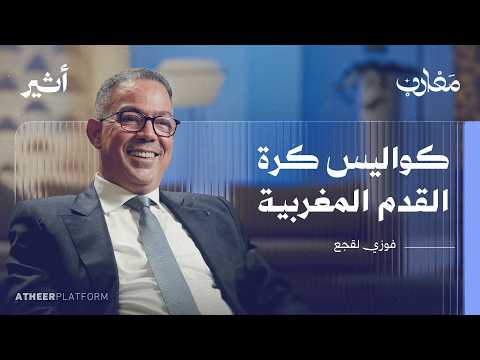
الكرة المغربية وأسرارها.. حوار مع الرجل الذي كان في قلب كل القرارات | بودكاست مغارب - فوزي لقجع
Introduction to Fawzi Lekjaa and His Background
Early Life and Career
- Fawzi Lekjaa reflects on his humble beginnings in Berkan, Morocco, highlighting the contrast between his childhood environment and his current role in football management.
- He emphasizes the importance of the academy in developing players who represented Morocco at international levels, particularly during events like the World Cup.
The Role of Football in Moroccan Society
- Discussion on how football is intertwined with political will, specifically mentioning royal support for its success.
- Lekjaa expresses frustration over Morocco's lack of representation within African football institutions like CAF (Confederation of African Football).
Challenges Faced by Moroccan Football
Issues with FIFA and International Relations
- Lekjaa discusses perceived injustices from FIFA regarding Morocco's treatment compared to other nations.
- He questions why opportunities were missed during critical matches, reflecting on strategic decisions made by the team.
Developmental Strategies
- The interview takes place at the Mohammed VI Football Complex, which serves as a training ground for various national teams.
- The complex is equipped with facilities that cater to both male and female teams across different age groups.
Infrastructure and Training Facilities
Overview of Mohammed VI Complex
- The complex includes medical facilities aimed at providing comprehensive care for athletes.
- Plans are underway to open a specialized sports clinic in partnership with health institutions to enhance athlete care.
Focus on Youth Development
- Emphasis on creating an environment conducive to professional training for young athletes across genders.
Strategic Vision for Moroccan Football
Historical Context and Future Aspirations
- Lekjaa highlights that the foundation laid since 2010 has produced numerous talented players who have excelled internationally.
Cultural Significance of Sports
- He connects personal experiences growing up in Berkan with broader themes of cultural diversity and historical richness within Morocco.
National Strategy for Sports Development
Royal Involvement
- Discussion about King Mohammed VI’s direct involvement in shaping sports policy through initiatives launched since 2008 aimed at enhancing athletic performance nationwide.
Social Impact Through Sports
- Lekjaa articulates how sports serve as a vehicle for social integration among youth, instilling values such as teamwork and respect.
Values Instilled Through Sports Participation
Importance of Teamwork
- Participation in sports teaches children essential life skills including discipline, respect for rules, and acceptance of defeat.
Broader Implications
- These values contribute significantly to societal cohesion beyond just sporting achievements; they foster community spirit among participants.
Conclusion: Looking Ahead
Future Goals
- Lekjaa expresses aspirations not only for immediate successes but also long-term developmental goals that align with national interests.
Final Thoughts
- Emphasizes commitment towards nurturing talent while ensuring that moral values are upheld throughout their development journey.
Overview of the Moroccan National Team's Journey
Travel and Accommodation Arrangements
- The Moroccan national team will move to another city for their next matches, with accommodations arranged by FIFA in New Jersey.
- In Boston, a specific hotel has been designated for the team's stay, referred to as "Hotel Rolly," which is not the main headquarters but serves as a temporary lodging.
- Senegal or Nigeria could have faced Morocco in the semifinals; Morocco won through penalties against Senegal.
- There were issues with hotel preferences from the Senegalese team, leading them to change hotels after expressing dissatisfaction.
Training Facilities and Locations
- The Senegalese team's training center was located in Tangier, while they had access to various training facilities across cities like Rabat and Casablanca.
- The Moroccan national team trained at a facility close to their accommodation, emphasizing logistical considerations for both teams during their stay.
Match Day Experiences
- On match day, there were no significant issues reported until the 90th minute when unexpected events occurred regarding ticket sales.
- Tickets were made available two months prior to the competition; both Moroccan and Senegalese fans purchased tickets ahead of time.
Ticketing Challenges
- Concerns arose about ticket availability for Moroccans wanting to attend the final match; requests were made for additional tickets from FIFA due to high demand.
- A total of over 25 VIP tickets were allocated specifically for delegations and audiences attending from Morocco.
Match Dynamics and Reactions
Game Events and Controversies
- During the match, reactions varied among fans; some behaviors displayed by individuals did not reflect true sportsmanship towards Senegal's team.
- True supporters appreciate football values—celebrating victories while respecting opponents during defeats.
Referee Decisions and Accusations
- There was an accusation from Senegal’s coach suggesting that Morocco might have cheated during the game based on penalty decisions made by referees.
- Discussions arose around whether certain calls should be reviewed by international refereeing committees due to perceived inconsistencies.
Coaching Perspectives
Insights on Coaching Decisions
- Questions emerged regarding coaching strategies employed during critical moments of matches, particularly concerning player behavior under pressure.
Developmental Goals in African Football
- Emphasis was placed on improving African football's image globally through professional conduct and organization during tournaments.
Weather Conditions Impacting Matches
Rainfall Effects on Gameplay
- Remarkably, no matches faced delays due to rain despite heavy rainfall experienced in Morocco during that period.
Infrastructure Preparedness
- The successful execution of all scheduled games highlighted effective infrastructure management amidst challenging weather conditions.
Future Prospects: World Cup 2030
Hosting Aspirations
- Discussion surrounding potential hosting rights for World Cup 2030 between Morocco, Spain, and Portugal indicates healthy competition without hostility.
Selection Criteria
- Each country aims to host key matches based on capacity requirements set forth by FIFA while ensuring fair selection processes are followed.
Player Recruitment Strategies
Dual Nationality Considerations
- Notable recruitment efforts focus on dual-nationality players who grew up abroad yet possess ties back home in Morocco.
Projected Growth Opportunities
- Players are attracted by prospects of regular participation in continental competitions like Africa Cups or World Cups leading up till 2030.
The Dual Nature of Morocco's Development
Overview of Morocco's Tourism and Economic Disparities
- The speaker reflects on the impressive tourism infrastructure in major Moroccan cities like Marrakech, Tangier, Casablanca, and Rabat, highlighting a personal favorite hotel experience.
- Contrastingly, the speaker notes that regions such as the eastern part of Morocco suffer from poor road conditions and lack of development, creating a stark contrast within the country.
- The concept of "Morocco of Two Speeds" is introduced, indicating two distinct developmental paths within the nation—one thriving with modern amenities and another lagging behind.
Analysis of Developmental Discrepancies
- The speaker emphasizes that this duality is not an arbitrary choice but rather a result of historical developmental trajectories leading to unequal progress across regions.
- Continuous evaluation and acknowledgment of these disparities are crucial for addressing them effectively; recognizing issues allows for targeted solutions.
Government Response to Development Challenges
- A diagnosis was made regarding Morocco's development speed differences; discussions led to decisions aimed at improving conditions in slower-developing areas through government programs approved by royal decree.
- Recent financial allocations (210 billion dirhams over one month and a half) aim to enhance infrastructure speed in underdeveloped regions.
Addressing Regional Inequalities
- It’s vital to acknowledge regional inequalities without ignoring them; understanding their causes can lead to effective interventions rather than maintaining status quo policies.
Infrastructure Investments and Future Prospects
- Investment trends show significant focus on key routes like Tangier-Marrakech or Tangier-Akadir, which have seen improved infrastructure compared to other areas lacking similar investments.
- While some transportation services (like trains between major cities) are efficient, others reveal delays and inefficiencies that highlight ongoing challenges in service quality.
Reflection on Historical Context
- The speaker suggests comparing current developments with historical data over 50 years to assess whether disparities have widened or narrowed over time.
Future Developments
- Upcoming projects include high-speed rail connections aimed at enhancing tourism while also addressing infrastructural gaps in less developed areas.
- Long-awaited projects are finally being realized after decades; however, continuous improvements are necessary due to geographical challenges affecting certain regions.
Financial Management Insights
- Emphasis is placed on sustainable financial management as essential for supporting ongoing development efforts across varying speeds within Morocco.
Conclusion: Responsibility Towards Development
- There’s a strong call for responsible governance that acknowledges financial obligations while striving towards equitable growth across all Moroccan territories.