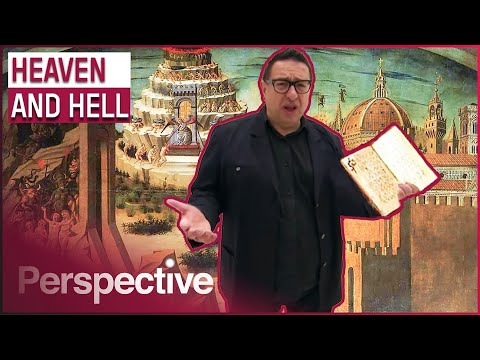
The Renaissance And The Afterlife (Waldemar Januszczak Documentary)
The Renaissance: A Misunderstood Era?
Overview of the Renaissance
- The Renaissance was a crucial period in European culture, marking the beginnings of modern thought and characterized by a revival of Greco-Roman ideals and an increasing focus on secular life.
- While some aspects of the Italian Renaissance reflect this revival, many artworks do not align with these narratives, suggesting a more complex reality.
Artistic Misconceptions
- Many renowned works from the Italian Renaissance do not adhere to the traditional interpretations found in art history books; for instance, Niccolò dell'Arca is often overlooked despite his significant contributions.
- Contrary to popular belief, much of Italian art during this time was focused on storytelling for illiterate audiences and expressing deep religious sentiments rather than reviving classical antiquity or inventing modern thought.
Francis of Assisi's Influence
- Assisi is highlighted as a town rich in Renaissance art and complexities due to its association with St. Francis, who appears frequently in artwork alongside Jesus Christ and Mary.
- The name "Assisi" translates to "rising up," linking it symbolically to themes of enlightenment and spiritual awakening associated with St. Francis's life.
St. Francis's Legacy
- St. Francis’s narrative includes his transformation from wealth to poverty after receiving divine instruction through a speaking crucifix at San Damiano Chapel, which he restored as part of fulfilling biblical prophecy (Zechariah 6:12).
- His followers viewed him as a messianic figure who believed he was enacting God's will by rebuilding the church, further solidifying his importance in both religious and artistic contexts during the Renaissance.
Giotto's Artistic Contributions
- Giotto’s frescoes in Assisi depict key moments from St. Francis’s life, showcasing early Renaissance artistry that combines vivid storytelling with theological significance—such as scenes illustrating his renunciation of wealth and communication with animals.
The Power of Renaissance Art and the Concept of Purgatory
Understanding Purgatory in Renaissance Context
- The speaker introduces the concept of purgatory, describing it as a state between earth and heaven for souls not bad enough for hell but not good enough for immediate entry into heaven.
- In purgatory, souls undergo penance until they are cleansed and ready to enter paradise, referencing Dante's works as foundational to this understanding.
Artistic Representations of Purgatory
- A fresco by Domenico de Micolino (1465) depicts Dante towering over Florence, illustrating the consequences awaiting sinners: hell on one side and purgatory on the other.
- The imagery compares lesser sinners in purgatory to naughty schoolboys running off their sins, highlighting a more relatable view of atonement during the Renaissance.
Role of Virgin Mary in Renaissance Art
- To reduce time spent in purgatory, sinners prayed to the Virgin Mary; her representation became central in many artworks due to this need for intercession.
- The speaker emphasizes that many beautiful depictions of Madonna emerged from these prayers, showcasing artists' attempts to capture her perfection.
Identifying Different Types of Madonnas
- The film aims to guide viewers through various types of Madonnas found in Renaissance art so they can better appreciate what they see in museums.
- An example is given with an enthroned Madonna surrounded by saints; halos identify them as holy figures like Saint Peter and Saint John the Baptist.
Notable Works by Piero della Francesca
- The discussion shifts focus to Piero della Francesca's Madonnas painted between 1445 and 1474 along Tuscany and Umbria borders.
- One significant piece is "Madonna del Parto," depicting a pregnant Virgin Mary—an uncommon portrayal that highlights Mary's humanity alongside divinity.
Complex Religious Arrangements
- Another notable work is located in Sansepolcro, where Piero’s "Madonna Misericordia" features a protective cloak symbolizing mercy offered by Mary.
- This artwork serves as a stand-in for the church itself, with kneeling donors depicted at its forefront who commissioned such pieces to earn favor with God.
Conclusion on Artistic Legacy
- The speaker reflects on how commissioning art was another way for individuals during the Renaissance to seek forgiveness and lessen their time in purgatory.
The Challenge of Painting the Madonna
The Duality of the Madonna
- The task of painting a Madonna embodies both motherhood and virginity, presenting a significant challenge for Renaissance artists.
- Piero della Francesca uses light to symbolize purity, with sunlight illuminating Christ in his artwork.
- While Piero's Madonnas are celebrated for their beauty, the depiction of baby Jesus is often criticized as unconvincing or even ugly.
Artistic Intentions Behind Baby Jesus
- Renaissance artists aimed to portray baby Jesus not merely as an infant but as a divine being who has existed since the beginning of time.
- This duality complicates the representation, leading to many depictions that may appear unattractive due to the conflicting concepts they embody.
The Role of Dominicans in Art
The Convent of San Marco
- The convent was taken over by the Dominicans in 1435, who were dedicated to combating heresy within the church.
- Dominicans can be identified by their distinctive black and white robes; they were also known as "the hounds of the Lord."
Artistic Contributions by Fra Giovanni Angelico
- Fra Giovanni Angelico painted throughout San Marco, creating works that allowed friars to contemplate Christ’s story continuously.
- His paintings reflect a gentle spirit, contrasting with the Dominicans' fierce reputation for flagellation and religious zeal.
Frat Angelico's Unique Style
Divine Inspiration in Art
- Frat Angelico believed his art was divinely inspired; he would pray before painting and never retouch his work once started.
- His Annunciation pieces exemplify simplicity and beauty, showcasing his unique approach within a context filled with darker themes.
Michelangelo and Carrara Marble
Sculpture's Renaissance Era
- Carrara marble quarries supplied stone for Michelangelo, whose sculptural techniques defined Renaissance sculpture.
- Michelangelo’s struggles with marble symbolized broader artistic challenges during this period.
Misleading Ancient Sculptures
Who Broke Michelangelo's Nose?
The Rivalry Between Michelangelo and Torreggiano
- Michelangelo faced a mythic white past that never existed; the film aims to reveal the truth of his story.
- The Brancacci Chapel in Florence is highlighted as a significant Renaissance site, known for Masaccio's frescoes depicting humanity's expulsion from paradise.
- Michelangelo’s nose was broken by rival sculptor Pietro Torreggiano after a mocking incident; he recalled feeling bone and cartilage break.
- While Michelangelo rose to prominence, Torreggiano fled Florence and became largely forgotten despite his talent, creating vivid sculptures across Europe.
- Torreggiano worked for the Tudor court in England but ended up destitute in Spain, leaving behind a unique yet overlooked sculptural tradition.
The Forgotten Tradition of Terracotta Sculpture
- An example of Torreggiano’s work is shown: an intense depiction of Saint Jerome made from terracotta clay rather than marble.
- Terracotta allows for more detailed and realistic representations compared to marble, challenging traditional notions of Renaissance art.
- Nicolo dell'Arca’s "Compianto" (lamentation over Christ), created around 1460, exemplifies dynamic Renaissance sculpture often overshadowed by marble works.
- Dell'Arca has been written out of history due to the unglamorous nature of terracotta compared to prestigious materials like Carrara marble.
The Rise of Savonarola
Savonarola's Vision and Influence
- Girolamo Savonarola emerges as a key figure painted by Fra Bartolomeo; he joined the Dominican order with fervent zeal.
- After moving to Florence in 1482, he began teaching logic and ethics but later claimed divine inspiration for purging sin from society.
- Savonarola preached against corruption within the church and society, gaining popularity through fiery sermons that filled San Marco and later the Duomo.
The Impact on Art and Society
- His sermons targeted various societal issues including makeup, music, dancing, and non-Christian art forms leading to widespread influence among Florentines.
- In 1493, following apocalyptic visions coinciding with French invasions into Italy, his prophecies gained traction among citizens seeking guidance amidst chaos.
- Instead of being dismissed as madness, Savonarola’s ideas were embraced; Florence enacted laws against immorality under his influence.
The Bonfire of Vanities
- Young men patrolled Florence enforcing modesty laws while public bonfires destroyed items deemed sinful—this included Botticelli's pagan artworks.
The Rise and Fall of Savonarola
Savonarola's Prophecies and Downfall
- Savonarola prophesied the return of Christ, claiming that when it happened, a countdown to the end of the world would begin. His reign in Florence was marked by terror.
- In 1498, he faced a trial by fire initiated by the Franciscans to validate his prophecies but refused to participate. This refusal led to a shift in public sentiment against him.
- Following imprisonment and torture by the papal inquisition, Savonarola confessed that his visions were fabricated. He was executed shortly after.
Renaissance Art: The Pieta
Artistic Challenges in Depicting Jesus' Death
- Renaissance artists grappled with portraying Jesus as both an adult at death (33 years old) and as an infant cradled by Mary, creating awkward artistic poses.
- The challenge lies in linking Jesus' birth with his death; artists struggled to convey this duality effectively, often resulting in awkward representations.
Notable Artists and Their Works
- Sodoma's Pieta attempts to capture this complex relationship but lacks emotional depth, particularly in Mary's portrayal despite accurate anatomy.
- A favorite Pieta from around 1450 showcases pioneering French realism, emphasizing emotional depth that many artists failed to achieve.
Michelangelo's Mastery
Michelangelo’s Unique Approach
- Michelangelo’s Pieta is celebrated for its harmonious proportions; he adjusts sizes for Mary and Jesus to create a graceful composition despite some age discrepancies.
The Risen Christ Sculpture
- Michelangelo sculpted Christ naked post-resurrection as per scripture; however, later modifications added a loincloth due to changing papal attitudes towards nudity.
The Sistine Chapel: A Testament of Faith
Michelangelo's Religious Conviction
- Unlike other Renaissance artists whose beliefs may be ambiguous, Michelangelo’s works reflect deep Catholic faith characterized by guilt and devotion.
Artistic Collaboration within the Chapel
- The Sistine Chapel features contributions from various artists including Botticelli and Perugino alongside Michelangelo’s powerful frescoes that narrate biblical stories.
Themes of Judgment and Guilt
The Atmosphere of Trepidation
- The artwork conveys themes of divine judgment where God creates figures who ultimately fail Him—reflecting human frailty through biblical narratives.
Universal Judgment
Exploring Themes of Doom and Renaissance
The Concept of Doom
- The speaker reflects on the notion of being "doomed," suggesting that this theme resonates with the walls, possibly symbolizing confinement or despair.
- This idea is characterized as not traditionally Greek but rather aligned with Renaissance thought, indicating a shift in philosophical perspectives during that era.
Transition to Venice
- The tone shifts positively as the discussion moves towards an upcoming film set in Venice, hinting at a more uplifting narrative.
- Anticipation builds around activities such as eating and drinking, which suggests a celebration of life and culture in contrast to earlier themes of doom.