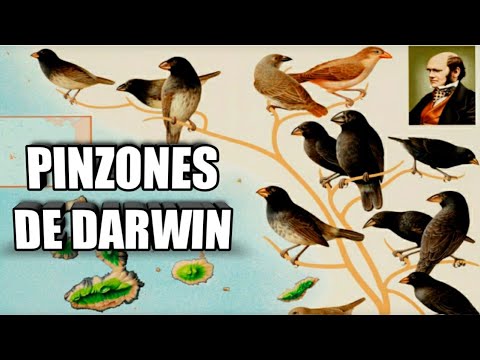
🐦FABULOSA EVOLUCIÓN! Pinzones de Darwin 🤩
Darwin's Finches: Icons of Evolution
Introduction to Darwin's Finches
- Darwin's finches, also known as Galapagos finches, are not particularly colorful or large but hold significant importance in the study of evolution.
- These birds provide visitors with a firsthand view of evolution in action, often seen around airport arrivals looking for food despite feeding being prohibited.
Historical Context and Discovery
- In 1835, Charles Darwin discovered these finches during his voyage on the Beagle; initially, he did not recognize their significance.
- Upon returning to England, he realized he had collected different species of closely related finches, leading to insights about their evolutionary diversity.
The Journey and Adaptation
- Scientists believe that Darwin's finches descended from seed-eating birds that migrated over 1,000 kilometers from South America to the Galapagos Islands more than 2 million years ago.
- Each island presented unique food sources and habitats, prompting natural selection to favor specific beak shapes suited for survival.
Evolutionary Divergence
- Over time, distinct beak traits evolved on different islands; short robust beaks were advantageous for ground seeds while longer pointed beaks suited cactus fruit.
- This led to significant differences in appearance and behavior among species derived from the original seedbed pioneer.
Current Diversity and Significance
- Today, Galapagos finches can be differentiated by various traits including beak size/shape, body size, song patterns, and feeding behaviors.
- Their evolution challenged traditional beliefs about creation and suggested a common ancestry with primates; they exemplify adaptive radiation in isolated environments.
Observing Darwin's Finches Today
- Visitors can easily spot these curious land birds throughout the year on both cruises and land tours in the Galapagos Islands.
Darwin's Finches: Threats and Conservation Efforts
Overview of Darwin's Finches
- Darwin's finches, known for their unique diet of eggs and cactus nectar, are primarily found on Fernandina Island. This species has become extinct in other parts of the Galapagos.
- The finches face multiple threats including predators, introduced diseases, habitat destruction, and invasive species like the parasitic fly Philornis downsi.
The Mangrove Finch: A Case Study
- Among the finch species, the mangrove finch is critically endangered with only about 100 individuals remaining and around 20 breeding pairs.
- To combat extinction, a partnership between the Charles Darwin Research Station and San Diego Zoo has initiated a captive breeding program aimed at increasing population numbers.
Captive Breeding Program Details
- The project involves caring for chicks for four months to help them develop survival skills before transferring them to a pre-release aviary in Isabela’s mangrove forests.
- After adapting for four to six weeks in the aviary, birds can leave freely; some have been tracked successfully back into the wild.
Research on Finch Behavior and Adaptation
- International experts are studying variations in song and diet among finches on Santa Cruz Island to understand how human food sources have altered their natural behaviors.
- Research by Peter Grant from Princeton University indicates that changes in beak size can occur within just two or three generations due to environmental factors such as climate and rainfall affecting seed availability.
Conclusion: Importance of Understanding Evolution