en US Pentateuco#7 EXODOI
Introduction to the Book of Exodus
Overview of Pentateuch Studies
- Professor Dilmar César Lopes introduces the study of the Pentateuch, having previously covered Genesis and its key themes.
- The focus shifts to the Book of Exodus, which is the second book in the sequence of the Pentateuch (Torah).
- Emphasis on understanding the background and context before delving into Exodus, highlighting its continuity from Genesis.
Importance of Contextual Understanding
- The professor stresses that knowing how a narrative develops is crucial for understanding its significance.
- He aims to provide clarity about Exodus within the broader context of the Pentateuch without performing an exhaustive exegesis.
The Name and Meaning of Exodus
Original Title: Chimot
- The original Hebrew name for Exodus is "Chimot," meaning "names."
- This title reflects a list of names from Jacob's sons who entered Egypt, emphasizing their importance in Israelite history.
Translation and Significance
- The Septuagint translated "Chimot" to "Exodus," which means "exit" or "departure," signifying Israel's liberation from Egypt.
- Understanding etymology helps grasp what the book discusses and its implications regarding authorship and historical context.
Authorship and Continuity with Genesis
Moses as Central Figure
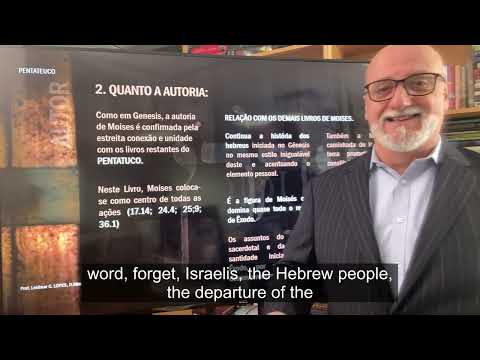
- Moses is identified as a central figure in Exodus, paralleling his role in Genesis; this connection reinforces Mosaic authorship.
- Key verses are cited where Moses' actions are pivotal, establishing his leadership during critical events.
Relationship with Other Books
- The relationship between Exodus and other books by Moses is explored, noting similarities in style and content.
- Themes introduced in Exodus continue into Leviticus, particularly concerning priesthood and holiness laws.
Themes Explored in Exodus
Personal Element in Narrative
- The narrative style emphasizes personal elements through Moses’ experiences, enhancing reader engagement with historical events.
Systematic Development
- Discussion on how themes such as priesthood begin in Exodus but find fuller expression later in Leviticus demonstrates biblical continuity.
The Journey of Israel to the Promised Land
Overview of Israel's Journey
- The narrative of Israel's journey to the Promised Land is primarily found in the Book of Numbers, which begins with the Exodus from Egypt.
- The story starts with the departure of the Hebrew people from Egypt, leading to their wandering in the desert until they reach Canaan.
- The Book of Exodus is considered the "heart" of the Pentateuch, connecting historical content across other books.
Historical Context and Dating
- Understanding the historical context during this period is crucial; it includes knowing who was in power and significant events.
- The Exodus is believed to have occurred around 1445 BCE, based on various manuscript studies and biblical references.
- References from 1 Kings 6:1 suggest a timeline that places Exodus approximately 480 years before Solomon began building the Temple.
Geographical Insights
- Judges 11:26 indicates that events occurred about 300 years before Jephthah’s time (around 1100 BCE), supporting dating claims for Exodus.
- Ancient Egypt, known for its pharaohs, played a significant role in this history. It spanned along the Nile River valley from its cataracts to where it meets the Mediterranean Sea.
Importance of Agriculture and Geography
- Agriculture in ancient Egypt relied heavily on Nile floods, which created fertile land through seasonal inundations extending up to 19 miles away from the river.
- The Nile River not only provided water but also enriched soil with nutrients essential for agriculture due to its flooding patterns.
Political Climate and Oppression
- A discussion on Egyptian rulers highlights how Pharaoh Ahmose (1580–1558 BCE) intensified oppression against Hebrews due to their growing population posing a threat.
The Story of Moses and the Pharaoh
The Early Life of Moses
- A pursuit was made against the firstborn boys, leading to their intended assassination. Moses' mother and sister, Miriam, cleverly placed him in a basket and set it adrift in a river near where Pharaoh's daughter bathed.
- Pharaoh's daughter discovered the basket containing baby Moses. She called for his mother and sister, adopting Moses while allowing his biological mother to nurse him.
- Moses grew up in the royal palace, receiving an education that prepared him to be a significant leader within Egyptian society.
Historical Context of Egypt
- The timeline indicates that around 1525 BC, Hatshepsut may have been the Pharaoh’s daughter who adopted Moses after Tutankhamun's death.
- During this period, Moses fled from Egypt to Midian due to threats against his life. His adoptive mother was still alive but unable to protect him from Pharaoh's wrath.
Confrontation with Pharaoh
- God commanded Moses to return to Egypt and confront Pharaoh about freeing the Israelites. He expressed concern over how he would explain God's identity.
- God instructed Moses on what to say when asked about His name: "I AM has sent me." This moment highlighted God's authority and presence.
Miraculous Signs
- God demonstrated His power through miracles; when Moses threw down his staff, it turned into a serpent. This act served as a sign for Pharaoh regarding God's might.
The Political Landscape of Ancient Egypt
- Ramses II (1290–1224 BC), known for monumental construction projects during the Exodus period, played a crucial role in Egyptian history.
- Ancient Egypt was divided into three regions: Lower Egypt (with Memphis as its capital), Upper Egypt (with alternating capitals like Thebes), reflecting political dynamics.
Unification of Egypt
- The history of ancient Egypt dates back over 3,000 years before Christ when King Menes unified Upper and Lower Egypt. This unification marked significant cultural and political developments.
Irrigation and Cultural Expansion in Ancient Egypt
Overview of Irrigation Projects
- Discussion on irrigation projects, particularly focusing on the Nile River's role in agricultural expansion and mineral exploration.
- Visual representation of the Nile's floodwaters creating fertile land, extending up to 19 km from its banks during the New Kingdom period (1546 - 1085 BC).
Religion and Beliefs
- Examination of Egyptian polytheism, highlighting their worship of multiple gods associated with nature and animals.
- Emphasis on the belief in immortality and resurrection, symbolized by Osiris; burial practices included offerings for the afterlife.
Key Deities in Egyptian Mythology
- Introduction to major deities: Ra (sun god), Amon-Ra (combined sun deity), and Osiris (god of fertility and life).
- Mention of Horus as another significant sun god represented by a falcon; connection to cultural imagery.
Historical Context of Israel in Egypt
- Reference to Joseph bringing his family from Canaan to Egypt, choosing a fertile area near the Nile Delta for settlement.
- Notation that this region provided both productivity and protection for the Hebrew people during their time in Egypt.
Purpose and Message of Exodus
- Inquiry into the purpose of the Book of Exodus, which details God's covenant with Abraham and subsequent promises regarding land and descendants.
- The narrative describes how God liberated Israel from slavery, establishing them as a nation through divine intervention.
Significant Events Recorded in Exodus
- Highlighting three pivotal events: liberation from Egypt, delivery of the Law at Sinai, and construction of the Tabernacle.
- Explanation that liberation marked Israel's transition from slavery to nationhood; receiving laws shaped their identity as a holy people.
The Role of the Tabernacle
The Role of God in Delivering His People
God's Intervention and the Plagues
- God must act to liberate His people; otherwise, they would remain enslaved by Pharaoh. His power is essential for their freedom.
- Before leaving Egypt, God commands the sacrifice of a Passover lamb, with its blood marking the doorposts to protect against the angel of death.
- This event marks the beginning of Passover, which holds a central place in God's revelation to His people as a prophetic symbol pointing to Christ's sacrifice.
Significance of the Passover Lamb
- The Passover lamb foreshadows Jesus Christ, who is referred to as the Lamb of God that takes away sin. His blood purifies all who believe.
- The celebration of Passover represents both liberation from physical bondage and spiritual redemption from eternal condemnation through Christ’s sacrifice.
Spiritual Provision for Redeemed People
God's Sustenance and Law
- God provides everything spiritually necessary for His redeemed people; they need not seek elsewhere for sustenance.
- The Ten Commandments were given as a moral framework and covenant, establishing an unparalleled relationship between God and Israel.
System of Sacrifices
- Due to human sinfulness, God instituted a sacrificial system involving various animal sacrifices for atonement.
- The scapegoat ritual involved sending a goat into the wilderness once a year to symbolize national atonement for sins.
Understanding Moses' Life Journey
Early Life and Identity Crisis
- Moses’ life can be divided into three 40-year periods: his birth and adoption by Pharaoh's daughter in Egypt.
- He was raised as an Egyptian prince but struggled with his Hebrew identity, leading him to confront his heritage.
Transition to Midian
- After killing an Egyptian oppressor out of anger for his people's suffering, Moses fled to Midian where he lived in exile.
Shepherding Years
- In Midian, Moses spent 40 years as a shepherd learning humility and leadership before returning to Egypt.
Final Phase: Return and Leadership
Understanding the Role of Moses in Israel's Liberation
The Dual Challenge of Liberation
- Moses faced a dual challenge: convincing Pharaoh to release the Israelites and persuading the people to abandon their mindset of slavery. This highlights the complexity of leadership during times of oppression.
- Throughout his journey, Moses served as a prophet, priest, and king before these roles were formally established. His leadership was crucial during the Israelites' 40 years in the desert.
The Transformation Through Trials
- Over three sets of 40 years, Moses experienced significant personal transformation: initially feeling powerful, then grappling with feelings of worthlessness, and ultimately realizing that God is everything. This evolution underscores the importance of faith and resilience.
- As an intercessor for his people, Moses pleaded with God not to destroy them despite their idolatry. His advocacy demonstrates the power of prayer and mercy in leadership.
The Significance of Exodus
- The Book of Exodus details Israel's liberation from Egyptian slavery and establishes God's covenant at Sinai. It serves as a foundational text for understanding Israel's identity as God's chosen people.