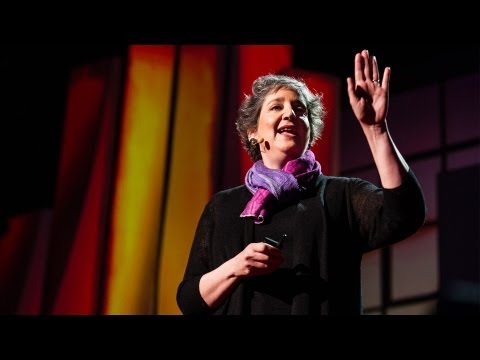
4 Lessons in Creativity | Julie Burstein | TED Talks
Introduction to Raku Pottery
In this section, the speaker introduces raku pottery and its significance in Japanese culture.
Raku Pottery and Its Imperfections
- Raku pottery is a type of pottery that originated in Japan for making bowls used in the tea ceremony.
- The speaker keeps a small clay pot on his desk, which is more than 400 years old and made using raku technique.
- Each raku pot is handcrafted with imperfections that are cherished by people.
The Process of Raku Firing
This section explains the process of firing raku pottery and the unique characteristics it brings.
Fast Firing Process of Raku
- Everyday pots like cups take around 8 to 10 hours to fire, but raku firing is much faster.
- Raku kilns are taken up to temperature (1,500 degrees) within 15 minutes.
- Once the glaze has melted inside the kiln, it is turned off, and the red-hot pot is immediately immersed in a solution (traditionally green tea in Japan).
- In the United States, pots are dropped into sawdust instead, creating smoke and adding drama to the process.
Embracing Surprises and Imperfections
- The speaker loves raku because it allows him to play with elements like fire and smoke.
- The unpredictable nature of raku firing leads to surprises like crackle patterns on pots due to stress during rapid cooling.
- Raku becomes a metaphor for creativity as it involves letting go of control and embracing unexpected outcomes.
Letting Go in Creativity
This section explores how letting go plays a crucial role in creativity.
Reversing the Creative Process
- The speaker realized that when writing a book about creativity, he had to let go at the very beginning.
- Immersing himself in the stories of artists and creators helped him understand that creativity often grows from everyday experiences and letting go.
Creativity and Tension between Control and Letting Go
- The process of creativity involves tension between what can be controlled and what needs to be let go.
- This tension is experienced in various aspects of life, such as creating a radio show or negotiating with teenage sons.
Embracing Four Aspects of Life for Creativity
This section discusses four aspects of life that need to be embraced for creativity to flourish.
Embrace 1: Paying Attention to the World Around Us
- Artists emphasize the importance of being open and embracing experiences.
- In today's digital age, it becomes challenging to pay attention when constantly distracted by smartphones.
- Mira Nair's story highlights how being open to experiences sparked her journey towards becoming a filmmaker.
Embrace 2: Finding Inspiration in Difficulties
- Some of the most powerful work comes from challenging parts of life.
- Richard Ford's dyslexia became an opportunity for him to appreciate language on a deeper level, leading him to become a successful novelist.
Conclusion - Creativity from Everyday Experiences
The conclusion emphasizes that creativity can arise from everyday experiences and broken places.
Embrace 3: Learning through Stories
- Stories are an excellent way to learn about anything, including creativity.
- Julie Burstein shares Mira Nair's story as an example of how everyday experiences can lead to creative paths.
Embrace 4: Growth from Broken Places
- Creativity also grows from the broken places in life.
- Embracing the challenges and difficulties can lead to new insights and creative breakthroughs.
The transcript ends here, and no further sections are available.
Embracing the Challenge of Dyslexia
The speaker discusses how individuals can learn from challenges, such as dyslexia, rather than trying to overcome them. Embracing limitations and pushing against them can help in finding one's own voice and creativity.
Learning from Dyslexia
- Individuals with dyslexia should embrace the challenge and learn from it.
- Instead of trying to overcome dyslexia, they should focus on hearing the music in language.
- Pushing against limits and exploring what one cannot do can lead to greater focus and finding their own voice.
Finding Inspiration in Art: "Las Meninas"
The speaker shares a story about artist Richard Serra's experience with finding inspiration in art. He highlights the impact of Diego Velázquez's painting "Las Meninas" on Serra's artistic journey.
Discovering "Las Meninas"
- Richard Serra, a young artist, visited Madrid and saw Diego Velázquez's painting "Las Meninas."
- The painting depicts a little princess and her ladies-in-waiting, with a mirror reflecting her parents.
- Serra realized that Velázquez was looking at him through the painting, making him the subject.
- This realization made Serra question his ability to create such artwork himself.
Letting Go of Painting for New Possibilities
Richard Serra's decision to let go of painting opens up new possibilities for his artistic exploration. He moves to New York City and starts experimenting with different materials and techniques.
Transition from Painting to Sculpture
- After realizing he couldn't replicate Velázquez's painting, Richard Serra abandoned his paintings in Florence.
- He moved to New York City and shifted his focus from painting to sculpture.
- Serra created a list of verbs, such as roll, crease, and fold, and started playing around with different materials.
- His experimentation led him to create sculptures using steel that require time and motion to experience.
Embracing Experience, Challenge, and Limitations
The speaker emphasizes the importance of embracing experience, challenge, and limitations for creativity to flourish. She introduces the concept of standing in the space between reality and aspirations.
Embracing Experience and Challenge
- Creativity flourishes when individuals embrace their experiences and challenges.
- Richard Serra's transition from painting to sculpture exemplifies embracing new possibilities.
- Limitations can push individuals to explore beyond their comfort zones and find their unique artistic voice.
The Hardest Embrace: Loss
The speaker discusses the hardest embrace of loss as an essential part of the creative process. Standing in the space between reality and hope requires facing rejection, heartbreak, war, death, etc.
Embracing Loss
- Loss is an inevitable part of human experience that artists must confront.
- Standing in the space between reality and hope involves acknowledging loss.
- Educator Parker Palmer refers to this space as "the tragic gap."
- Holding this tension like a violin string can lead to creating something beautiful.
Capturing History Through Photography
The speaker shares photographer Joel Meyerowitz's story after 9/11. Meyerowitz's determination to capture history through photography despite restrictions highlights the importance of preserving records.
Joel Meyerowitz's Journey
- Joel Meyerowitz was known for street photography before 9/11.
- He photographed landscapes like Tuscany but also captured images of light on buildings like the World Trade Center.
- After 9/11, he raced back to New York City but faced restrictions at Ground Zero.
- Meyerowitz realized the significance of preserving history through photography and found a way to document the aftermath.
The transcript ends here.
New Section
The speaker reflects on the aftermath of a tragic event and how nature and time transform the ruins into something new.
Nature's Transformation
- The speaker describes the tragic event as both horrific and enormous, but also acknowledges its transformation into a residue over time.
- Standing in the rubble, the speaker recognizes the inherent beauty of nature and how it is slowly erasing the wounds caused by the event.
- As time passes, light and seasons temper the memory of the event, giving it a new perspective. The speaker emphasizes being a realist rather than a romantic.
Capturing Moments
- The speaker describes a scene where they witness an extraordinary sight: smoke veiling the Woolworth Building, pink hues illuminating everything, hoses spraying water, and sodium lamps turning the water acid green. They feel compelled to capture this moment through photography.
- Joel Meyerowitz's story highlights his passionate obstinacy in overcoming bureaucratic obstacles to pursue his work at Ground Zero after 9/11. His sense of urgency resonates with many artists who feel compelled to create despite challenges.
Creativity in Everyone
- A member of the audience raises an interesting point about artists talking about their work rather than their art, which prompts reflection on creativity in various fields. Whether scientists, teachers, parents, or entrepreneurs, everyone wrestles with experience and challenges while creativity remains essential for all.
Embracing Imperfections
- The speaker shares an image of a Japanese tea bowl that has been repaired using gold lacquer to emphasize its cracks instead of hiding them. This broken bowl now holds more beauty because it tells a story of creation and destruction that we all experience in life.
New Section
The speaker concludes by emphasizing the beauty found in imperfections and the cycle of creation and destruction that we all live.
Embracing Imperfections
- The repaired Japanese tea bowl at the Freer Gallery in Washington, D.C., serves as a powerful symbol of embracing imperfections. Despite being broken, it is now more beautiful than when it was first made.
- The cracks in the bowl tell a universal story of the cycle of creation and destruction that we all experience in our lives.
This transcript is already in English, so there is no need to translate it.
Turn any video into a summary like this
YouTube links, meetings, lectures. With transcripts, search, and chat.