How Do Greenhouse Gases Actually Work?
# The Temperature Difference between Earth and Moon
This section explains the temperature difference between the Earth and the Moon, despite being at similar distances from the Sun.
Temperature Variation on the Moon
- The average temperature on the Moon is -18°C, ranging from -170°C during lunar night to 100°C at lunar noon.
- These temperatures exceed both the coldest and hottest temperatures ever recorded on Earth.
- The duration of days and nights on the Moon is about 14 times longer than on Earth.
Role of Earth's Atmosphere
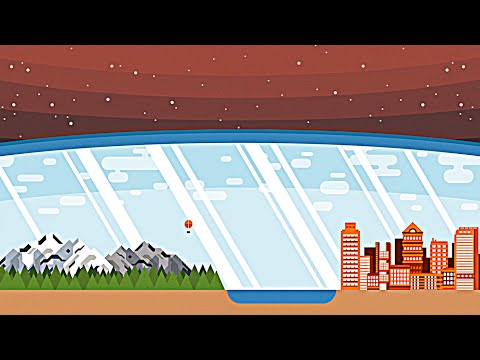
- The Earth's atmosphere protects us from extreme temperatures.
- During daytime, it acts as a shield, blocking harmful solar rays and one-third of visible light.
- At night, it traps infrared radiation (heat) radiating from the Sun-warmed surface, preventing freezing.
Electrically-Charged Particles in Atmosphere
- For an atmosphere to absorb radiation, it needs electrically charged particles for electromagnetic waves to interact with.
- Most of our atmosphere consists of gas molecules without an electric charge.
- However, some molecules have a lopsided distribution of negatively-charged electrons that can absorb energy from incoming infrared rays.
Infrared Absorption by Lopsided Molecules
- Molecules like water, ozone, and nitrous oxide are electrically lopsided and can absorb infrared radiation.
- Carbon dioxide and methane molecules may not appear lopsided but their motion causes them to vibrate in electrically-lopsided ways, allowing them to absorb infrared rays.
Majority of Atmosphere Cannot Absorb Infrared Radiation
- Nitrogen and oxygen make up most of our atmosphere but they do not get lopsided even when vibrating due to their symmetric structure.
- However, the lopsided 1% of molecules in our atmosphere are excellent infrared absorbers. They intercept about 90% of Earth's outgoing heat.
- These absorbed rays get bounced around the atmosphere and often return to the surface before escaping to space.
# Importance of Radiation-Pinball Game for Earth
This section highlights the significance of the radiation-pinball game in regulating Earth's temperature.
Impact of Atmospheric Carbon Dioxide
- Ice records from Earth's coldest climate show that small variations in atmospheric carbon dioxide lead to significant temperature changes.
- Compared to the last 800,000 years, today's game of regulating temperature is much more challenging.
# Acknowledgements
The video acknowledges the team at Kurzgesagt for their animations and invites viewers to check out their channel.
Collaboration with Kurzgesagt
- The video expresses gratitude to the team at Kurzgesagt for creating the animations.
- Viewers are encouraged to visit Kurzgesagt's channel, which covers a wide range of topics from neutron stars to fracking and Islamic culture.
Timestamps have been associated with relevant sections as per the transcript provided.