How to Structure a Team - Project Management Training
How to Structure a Team
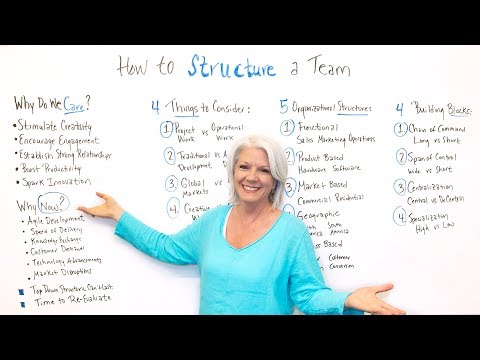
Importance of Team Structure
- A well-structured team can enhance creativity, engagement, and relationships among members and stakeholders.
- Effective team structures boost productivity and foster innovation, which is crucial in today's fast-paced environment.
- The demand for quicker delivery from customers necessitates reevaluating traditional top-down organizational structures.
Key Considerations for Team Evaluation
- Teams should assess whether they are focused on project work or operational work, as mixing the two can hinder project progress.
- It's essential to determine if the team is using traditional or agile development methods; hybrid approaches may also exist.
- Understanding the market served—global vs. local—is vital for structuring teams effectively.
- Identifying the nature of work (creative vs. structured/technical) helps in defining team roles and responsibilities.
Organizational Structures Overview
Types of Organizational Structures
- Functional Structure: Traditional model with distinct departments like sales, marketing, and operations.
- Product-Based Structure: Segments teams based on product lines (e.g., hardware vs. software).
- Market-Based Structure: Organizes teams by market type (e.g., commercial vs. residential real estate).
- Geographic Structure: Divides teams based on regions (e.g., North America vs. South America).
- Process-Based Structure: Focuses on specific processes within customer interaction (e.g., attraction vs. conversion).
Building Blocks of Team Structures
Key Elements to Consider
- Chain of Command: Evaluate if there’s a long or short chain from CEO to line workers; shorter chains may enhance communication.
- Span of Control: Determine if management oversees many divisions or just a few; this affects managerial effectiveness.
- Centralization vs. Decentralization: Assess whether decision-making is centralized within one unit or distributed across multiple teams.
- Specialization Levels: Identify how specialized teams are; high specialization can lead to greater expertise but may limit flexibility.