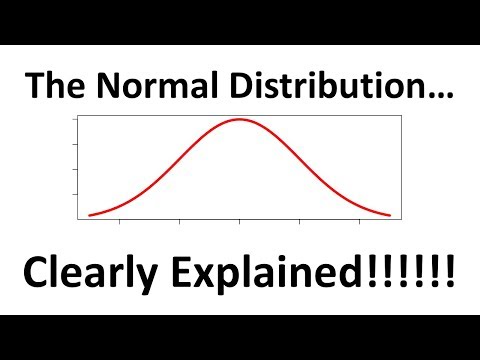
The Normal Distribution, Clearly Explained!!!
Introduction to Normal Distribution
Overview of Normal Distribution
- The normal distribution, also known as the Gaussian distribution or bell-shaped curve, is a symmetrical curve representing probabilities of various outcomes, such as human height.
- The y-axis indicates the relative probability of observing individuals at different heights; it shows that extreme heights (very short or very tall) are less common compared to average heights.
Characteristics of Normal Distributions
- Two examples illustrate normal distributions for male human height: one for newborns (average 20 inches) and another for adults (average 70 inches).
- The graph indicates a high probability that newborn babies will be between 19 and 21 inches tall, while adult heights range from 60 to 80 inches.
Standard Deviation and Its Importance
- The width of the normal distribution curve is determined by standard deviation; newborns have a smaller standard deviation (0.6 inches) compared to adults (4 inches).
- Knowing the standard deviation allows us to understand where most measurements fall; approximately 95% of values lie within ±2 standard deviations from the mean.
Drawing Normal Distributions
- To draw a normal distribution, one needs two key parameters: the average measurement (mean), which centers the curve, and the standard deviation, which determines its width.
- A narrower curve indicates higher probability density around the mean for newborn measurements compared to adult measurements.
Applications and Significance
- Many phenomena in nature follow a normal distribution pattern beyond just height—weight and commuting times are other examples.