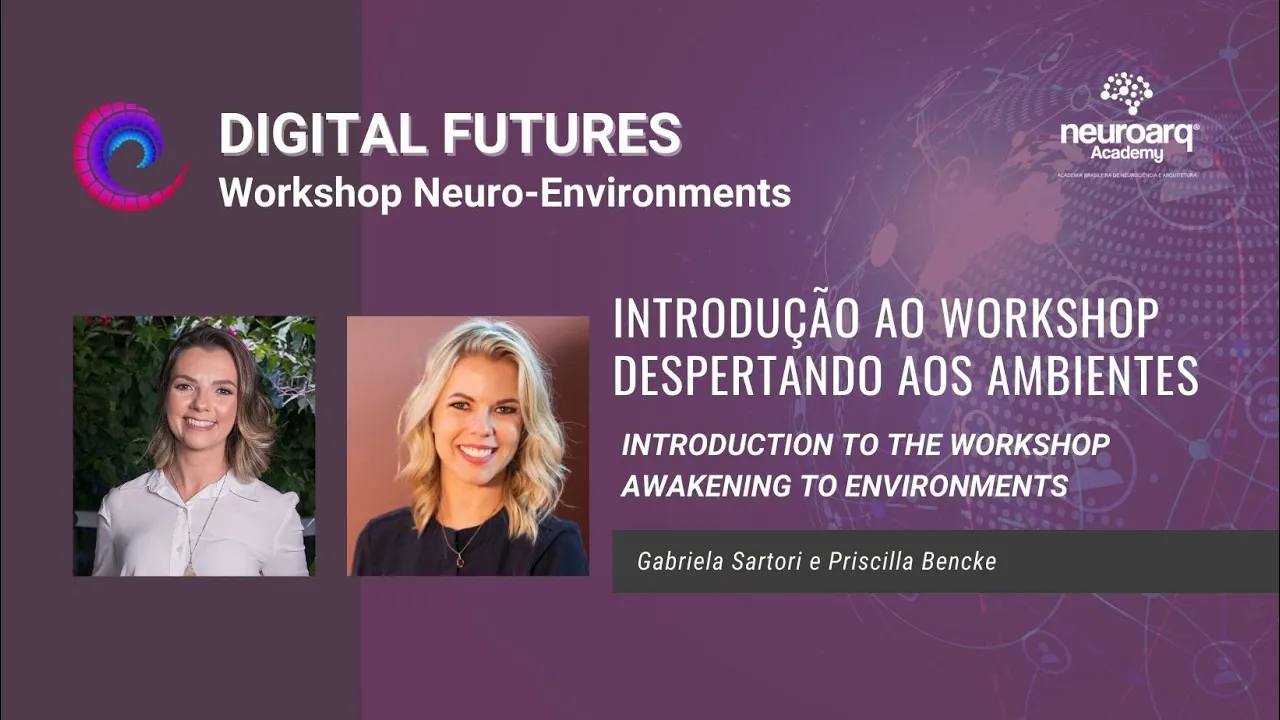
Dia 1 - Introdução ao Workshop Despertando aos Ambientes
Introduction and Background
The speakers express gratitude for the opportunity to participate in the workshop and share their knowledge on applied neuroscience in architecture. They highlight their involvement in neurohack Academy and previous experiences in the field.
Neurohack Academy's Participation
- Neurohack Academy expresses happiness for being part of the Digital Filter workshop for the second year.
- The speakers attended a course at New School on neuroscience applied to architecture, leading to their participation in a conference on the same topic in Brazil.
- The goal of the workshop is to provide valuable content and methodology related to applied neuroscience in architecture, aiming to enhance participants' knowledge.
Formation of Brazilian Academy of Neuroscience and Architecture
The speakers delve into their personal journeys that led them to establish the Brazilian Academy of Neuroscience and Architecture, emphasizing their passion for creating better living environments through architectural design informed by neuroscience principles.
Personal Journeys
- The founders discuss their backgrounds before establishing the academy, driven by a shared interest in improving people's well-being through architectural spaces.
- One founder shares her professional quest to understand how individuals can live better within designed environments, leading her to explore psychology environmental studies.
- Exposure to environmental psychology and later applied neuroscience during international conferences sparked a deep interest in integrating these fields with architecture back home.
Evolution Towards Applied Neuroscience
Both founders recount how their professional paths evolved towards incorporating neuroscience into architectural practice, highlighting pivotal moments that shaped their understanding and dedication to this interdisciplinary approach.
Professional Evolution
- Attending an international conference on neuroscience and architecture in 2016 sparked a profound interest in applying neuroscientific principles within architectural design practices.
- Upon returning to Brazil, both founders were determined to deepen their knowledge and contribute meaningfully within this emerging field nationally.
Personal Transformations Through Neuroscience
The speakers reflect on personal transformations that led them from traditional architectural practices towards integrating neuroscience principles into their work, emphasizing a shift towards creating emotionally impactful spaces informed by cognitive science.
Personal Reflection
- One founder transitioned from scenographic projects aimed at inspiring emotions through physical spaces towards a deeper understanding of behavior influenced by cognitive science principles.
New Section
In this section, the speaker discusses the formation of the Brazilian Academy of Neuroscience and Architecture, highlighting the connection with international experiences and the values brought back to Brazil.
Formation of the Academy
- The inception of the Brazilian Academy of Neuroscience and Architecture was influenced by international experiences, particularly in the United States.
- The aim was to connect these global learnings with local professionals in Brazil, emphasizing value transfer and knowledge dissemination.
- The Academy's primary goal is to spread knowledge through actions like courses, events, workshops, focusing on enhancing awareness and consciousness among architecture and design professionals.
New Section
This part delves into the initial stages of the Brazilian Academy's journey, starting with its first conference in 2019 that aimed at broadening discussions on neuroscience applied to architecture within a multidisciplinary framework.
First Conference in 2019
- The inaugural conference held in São Paulo in 2019 marked a significant step towards fostering interdisciplinary dialogues involving medical professionals, neuroscientists, biologists, enriching discussions on applied neuroscience in architecture.
- The event aimed to bridge neuroscience concepts with cultural contexts, laying a foundation for future endeavors.
New Section
This segment outlines key milestones leading up to subsequent conferences post-2019 and highlights preparatory activities such as study groups initiated in 2016.
Milestones Post-2019 Conference
- Preparatory activities included voluntary study groups from 2016 onwards followed by participation in conferences like Engecap (2018) and New School courses emphasizing continuous learning and engagement.
- Subsequent conferences post-2019 witnessed digital adaptations reflecting changing global landscapes while maintaining a commitment to disseminating knowledge effectively.
New Section
Here, current initiatives within the academy are discussed including educational programs like neuroarchitecture studies along with collaborative efforts involving dedicated teams for communication and research support.
Current Initiatives
- Ongoing efforts include a comprehensive neuroarchitecture training program divided into beginner, intermediate, and advanced modules spanning 180 hours annually catering to diverse professional needs.
Detailed Overview of Events and Conferences
The speaker discusses the growth and impact of their events and conferences, showcasing past events and highlighting upcoming ones.
Membership Growth and Event Participation
- Over 100 members have joined, with event registrations exceeding 450 for free events since 2020.
- Photos displayed from previous in-person events including workshops and lectures held across Brazil in recent years.
Conference Details and Theme
- The third edition of the conference will be bilingual, focusing on human intervention in architecture with responsibilities towards space utilization.
- Encouragement to participate in the upcoming conference happening in October 2021, emphasizing bilingual content accessibility through subtitles.
Digital Initiatives and Platform Features
- Engagement in digital actions like discussions on lectures via platforms such as Instagram, YouTube, and Spotify.
- Introduction to the membership platform offering recorded conferences, live monthly meetings with guest speakers, curated library resources by a neuroscientist, study guides, all freely accessible.
Educational Resources and Research Updates
- Membership benefits include open access to curated bibliographies for self-study on neuroscience and architecture topics.
- Preview of ongoing research projects within their laboratory setting aimed at practical implementation soon.
Voluntary Actions and Content Sharing
- Promotion of voluntary study groups alongside free content available on various social media platforms like podcasts on Spotify or Instagram posts.
Detailed Workshop Overview
In this section, the speaker discusses the workshop's focus on personal and professional transformation, emphasizing internal change before external application.
Methodology of Learning
- The methodology emphasizes starting with internal changes to facilitate professional practice.
- Exploring 7 environmental variables for evidence-based project development.
Workshop Structure
- Introduction to the workshop theme: "Awakening the Environment" for heightened environmental perception.
- Three-day event with two hours of content each day, available for 24 hours post-broadcast.
Practical Tools and Activities
This part outlines practical tools and activities within the workshop, ensuring engagement and application of concepts.
Practical Engagement
- Daily practical activities introduced by neurologist experts to enhance spatial perception.
- Accessing tools via transmission page or WhatsApp group for interactive learning.
Tool Utilization and Results Discussion
Discusses tool utilization, access methods, and sharing results from a self-perception scale tool.
Tool Application
- Introducing the "Self-Perception Scale of Environment" tool for assessing environmental impact on well-being.
Workshop Agenda Breakdown
Provides a detailed breakdown of each day's agenda during the workshop sessions.
Daily Agenda Highlights
- Day 1 focuses on human-environment relationships, emotions, and self-perception tools.
- Day 2 delves into environmental variables like aromas, sounds, lighting with expert insights.
Final Day Expectations
Outlines expectations for the final day regarding result analysis, variable recapitulation, and neuroscience implications.
Closing Remarks