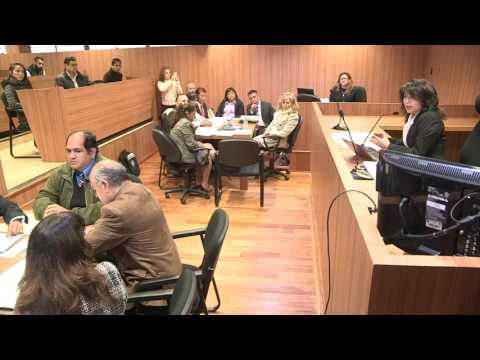
Simulacro de Juicio Oral en Materia Civi Facultad de Derecho UNAM
Opening Remarks and Context
Introduction to the Hearing
- The session aims to provide participants with a realistic experience of their future professional practice, emphasizing its significance and content.
- The hearing is officially opened in a civil oral courtroom in Mexico City for a preliminary audience regarding an ongoing civil trial.
Participants and Legal Representation
- The case involves Rebeca Manzano Quiroz and Jaime Moreno Ramírez against Alma Laura Rosalía de la Madrid González and José Antonio Salinas Guzmán, presided over by Judge María Soledad Germázo Villera.
- All parties are instructed to maintain decorum by silencing their phones as the judge enters the courtroom.
Identification of Parties
Confirmation of Attendance
- The Secretary confirms the presence of both plaintiffs, Rebeca Manzano Quiroz and Jaime Moreno Ramírez, along with their attorney José Antonio Reyes Santiago.
- The defendants, Alma Laura Rosalía de la Madrid González and José Antonio Salinas Guzmán, are also present with their lawyer José Amaya Zamorano.
Oath Administration
Legal Obligations
- The judge administers an oath to all participants, stressing the importance of truthfulness under penalty of imprisonment for false declarations.
Procedural Overview
Phase Opening
- The judge opens the phase concerning procedural clarification based on Article 973 of the Civil Procedure Code for Mexico City.
Legitimacy Confirmation
- It is confirmed that all parties have appeared in person and are recognized as legitimate representatives in this legal matter.
Transition to Conciliation Phase
Objectives Explained
- The judge explains that this phase aims for both parties to negotiate towards a settlement beneficial for them without further litigation.
Importance of Settlement Agreements
Benefits Highlighted
- A successful agreement would carry weight similar to a judicial sentence; failure to comply could lead to forced execution.
Confidentiality Assurance
- Discussions during this phase cannot be referenced in subsequent legal proceedings, ensuring confidentiality.
Proposal from Plaintiffs
Initial Offer Presented
- Rebeca proposes that they receive public deed documentation while absorbing notarial costs as part of settling the dispute amicably.
Counterproposal from Defendants
Response from Defense
- Defendants propose payment terms involving three installments totaling 100 thousand pesos without interest as part of their counteroffer.
Negotiation Dynamics
Challenges Identified
- Both sides face challenges regarding authenticity claims related to documents presented by plaintiffs asserting full payment has been made.
Final Considerations
Closing Remarks on Proposals
- Discussion centers around potential payments due; no new proposals arise from either party after extensive negotiation efforts.
Proposal for Payment and Documentation
Initial Proposal by the Court
- The court proposes that the plaintiff pays 50% of the outstanding balance claimed through conventional means.
- Additionally, the plaintiff is responsible for any costs associated with documentation, while the defendant must provide all necessary documents to formalize the agreement.
Acceptance and Counterarguments
- The judge asks if there are any comments regarding this proposal.
- The plaintiff accepts but argues that 50,000 pesos is excessive since they believe they have fully paid for the property; they suggest a maximum payment of 15,000 pesos instead.
- The defendant counters that this amount does not represent what they seek and insists on receiving full payment as per their claim.
Encouragement for Conciliation
Continuation of Conciliatory Practices
- The judge encourages both parties to continue conciliatory practices and informs them about the Alternative Justice Center available for free advisory services to resolve their dispute.
Transition to Agreement Phase
Closing Conciliation Phase
- With this, the current phase of conciliation concludes, transitioning into discussing agreements on uncontested facts.
- The judge emphasizes that if an agreement is reached, it should specify whether it pertains partially or entirely to each fact discussed.
Acknowledgment of Contract Existence
Recognition of Contractual Facts
- It is acknowledged that a purchase contract exists; thus, its validity is accepted by both parties.
- A proposal is made to recognize as uncontested fact number one regarding the existence of a contract related to a specific property.
Details About Property Location
Specific Property Information
- The property in question is detailed as being located at Puente Tifla street number 53 in Iztapalapa district.
Acceptance of Uncontested Facts
Confirmation from Defendant
- The plaintiff's proposal regarding uncontested facts about contract celebration is accepted by the defendant.
- Further discussions arise concerning amounts involved in transactions related to property pricing.
Clarification on Payment Amount
Discussion on Payment Terms
- It’s confirmed that an initial payment of 400,000 pesos was made with a remaining balance of 100,000 pesos still owed.
- This acknowledgment leads to partial acceptance regarding payment terms discussed earlier.
Legal Obligations Under Civil Code
Reference to Legal Framework
- According to Article 1949 of the Civil Code applicable in Mexico City, obligations exist for both parties concerning public deed elevation based on agreed payments which remain unfulfilled by plaintiffs.
Proposals Regarding Controversial Facts
Addressing Controversial Points
- A proposal arises concerning fact number three; however, it remains contested without further proposals from either party.
Challenges in Notarial Elevation
- There are challenges noted regarding elevating agreements due to unpaid balances hindering progress towards notarization.
Document Delivery Agreements
- Discussions include stipulations around document delivery and signing processes required under existing agreements between parties.
Conclusion on Non-contested Facts
- Only fact number one from initial demand submissions will be recognized as non-contested based on mutual acknowledgments during proceedings.
Transitioning Towards Probative Agreements
- Following these discussions concludes this phase leading into probative agreement applications where further proposals may arise from either party.
Admission of Documentary Evidence
- Proposals include admitting private documentary evidence related specifically tied back towards contractual obligations previously established within demands submitted initially.
Objections Raised Against Testimonial Evidence
- Objections raised against testimonial evidence proposed by defendants highlight concerns over relevance pertaining directly towards established contracts under discussion currently ongoing throughout hearings held thus far.
Finalizing Admissibility Decisions
- Final decisions made surrounding admissibility criteria focus primarily upon ensuring all presented materials align closely with factual bases outlined within original claims filed accordingly across various stages encountered thus far throughout litigation process undertaken collectively here today .
Admission of Testimonies
Overview of Testimonial Evidence
- The court admits testimonies from Enriqueta Montalvo Fernández and Víctor Tenorio Zabaleta as outlined in the initial demand.
- The defendant's testimonial evidence is also accepted, as specified in their response to the demand and counterclaim.
- Parties are responsible for presenting their witnesses at the scheduled trial hearing; failure to do so will result in dismissal of evidence due to non-compliance.
- Testimonies from Victor Rosales and Carlos Adrián Huerta are not admitted due to prior agreements reached in earlier proceedings.
Expert Evidence on Document Authenticity
Handling of Document Disputes
- The court accepts expert testimony regarding the authenticity dispute raised by the defendant, requiring submission within ten days.
- Legal and human presumptive evidence is admitted as offered by both parties, concluding this segment of proceedings.
Scheduling Future Hearings
Next Steps in Proceedings
- A hearing is set for November 19, with all parties duly notified per applicable legal provisions.
Final Requests Before Adjournment
Closing Remarks from Parties
- Parties are granted an opportunity to make final requests; one party requests copies of audio recordings from the session.
Conclusion of Current Hearing
Formal Closure Procedures
- The secretary proceeds to close the hearing and document necessary records, marking time at 10:21 AM on November 19.
Break Before Next Session
Transition Between Hearings
- A five-minute recess is announced before commencing the next session at 10:46 AM on November 19.
Introduction of Case Details
Case Background Information
- This civil oral case involves Rebeca Manzano Quiroz and Jaime Moreno Ramírez against Laura Rosalía de la Madrid González and José Antonio Salinas Guzmán.
Opening Remarks by Presiding Judge
Courtroom Protocol
- Judge María Soledad Gervasio Villeda presides over the hearing, reminding attendees to maintain decorum during proceedings.
Commencement of Trial Hearing
Official Start
- The trial hearing officially opens following procedural orders established during a preliminary session held previously.
Identification of Participants
Representation Confirmation
- Identification confirmed for both plaintiff (Rebeca Manzano Quiroz & Jaime Moreno Ramírez with attorney José Antonio Reyes Santiago), and defendants (Alma Laura Rosalía de la Madrid González & José Antonio Salinas Guzmán with attorney José María Zamora).
Oath Administration
Witness Oaths
- Witnesses take oaths affirming their commitment to truthfulness during testimony.
Summary of Admitted Evidence
Evidence Overview
- Admitted evidence includes confessions from both parties along with testimonies from key witnesses such as Enriqueta Montalvo Fernández.
Order for Presentation of Evidence
Sequence Established
- Following legal protocols, a structured order for presenting evidence has been established based on previous admissions.
Initiation of Evidence Presentation
Process Begins
- The presentation begins with confessional statements followed by witness testimonies as outlined earlier.
Witness Preparation
Call for Witnesses
- Witnesses are instructed to prepare for their turn when called upon during proceedings.
Beginning Confessional Testimony
First Statements
- The first confessional testimony begins with Alma Laura Rosalía de la Madrid González present in court.
Personal Information Collection
Initial Questions
- Basic personal information collected from witness Alma Laura Rosalía including name, age, address, marital status, occupation, and education level.
Payment Agreement Details
Initial Payment Structure
- The initial payment for the property was 400,000 pesos, with a remaining balance of 100,000 pesos to be paid in five installments.
- Payments were scheduled to occur every six months following the initial payment date.
Payment Collection Issues
- Questions arose regarding why actions were not taken to collect payments during the five-month period after the agreement.
- Clarification was sought on whether clients were charged for these installments and if they adhered to the agreed-upon dates.
Discrepancies in Payment Collection
Confirmation of Payment Dates
- Inquiry into whether payments were made on the dates that had been previously established.
- Witnesses indicated uncertainty about specific payment dates but confirmed multiple attempts at collection.
Documentation and Evidence
- Questions raised about any documents or proof related to payment requests made by the parties involved.
- It was noted that several requests for payment were made based on agreements outlined in contracts.
Legal Actions Considered
Reasons for Not Filing a Lawsuit
- Discussion centered around why no legal action was pursued despite ongoing issues with payments.
Testimony Challenges
- Acknowledgment that certain technical terms used may not have been understood by all witnesses involved in the case.
Witness Testimonies
Personal Information of Witnesses
- Witness José Antonio Salinas Guzmán provided personal details including age and occupation before answering questions regarding payments.
Initial Payments Clarification
- Inquiry into how the initial 400,000 pesos were paid; it was clarified that part of this amount was paid in cash upon signing.
Controversy Over Payments
Claims of Non-Payment
- Discussions included claims regarding whether all agreed-upon payments had been fulfilled or not.
Notary Public Involvement
- Mention of prior interactions with a notary public concerning documentation related to transactions and agreements.
Final Statements from Witnesses
Proof of Non-Payment
- Questions focused on how witnesses could substantiate claims that no payments had been received as per agreements.
Limitations on Testimony
- Emphasis placed on ensuring witness testimonies remained within their direct knowledge and experience related to events discussed.
Inquiry About Document Signatures
Questions on Document Preparation
- The witness is asked about the authorship of the parameters and general data filled in forms related to a legal case.
- The witness states that the promissory notes presented were filled out by machine, indicating uncertainty regarding the handwriting of another party's documents.
Contract Signing Details
- The witness recalls that five documents were prepared during a private sale contract on May 3, 2003.
- It is clarified that these documents were pre-prepared to avoid errors and signed later on October 4 during full payment settlement.
Signature Usage and Security Measures
Signature Practices
- The witness discusses their practice of using different signatures for various legal documents for security reasons.
- They emphasize that one signature is used for bank-related documents while another is reserved for personal use.
Legal Implications
- The witness asserts that having two signatures does not lead to any legal implications as they have never faced issues with this practice.
Official Documentation and Signature Verification
Identification of Official Signatures
- When asked about which signature is used for official matters, the witness confirms it’s the one appearing on promissory notes and demands.
Additional Documentation Queries
- Further inquiries are made regarding other official documents where this signature has been utilized, but responses remain vague.
Testimony from Jaime Moreno Ramírez
Personal Information Disclosure
- Jaime Moreno introduces himself, providing his age, address, and occupation as a veterinarian specialist.
Property Occupation Confirmation
- He confirms continuous peaceful possession of the property since signing the purchase agreement three years prior.
Delayed Contract Fulfillment Inquiry
Reasons for Delay in Compliance
- A question arises regarding why compliance was sought seven years after signing when it was stipulated to be completed within six months.
Explanation of Seller's Good Faith
- The witness explains they believed sellers acted in good faith, leading them to delay action until they felt necessary.
Discrepancies in Signatures
Differences Noted Between Documents
- A significant inquiry addresses why signatures differ between promissory notes demanded in court versus those on the purchase contract despite both being acknowledged by parties involved.
Use of Multiple Signatures Explained
- The witness reiterates their use of two distinct signatures: one for transactions and another for personal convenience.
Expert Testimony on Handwriting Analysis
Findings from Handwriting Examination
- An expert presents findings indicating discrepancies between signatures on contracts compared to those submitted with initial demands through detailed comparative analysis.
Conclusion Drawn from Analysis
- It’s concluded that there are notable differences in handwriting characteristics suggesting non-correspondence between disputed signatures.
Analysis of Signature Authenticity in Legal Context
Examination of Signatures
- The expert references the CLAS report, indicating that all analyses and explanations regarding signatures are documented within it.
- A question arises about the existence of signatures and their variations; the expert acknowledges that not all signatures are identical or homologous.
- The expert states that for a signature to be deemed authentic, it must meet three criteria: original, authentic, and homologous.
Comparison of Non-Homologous Signatures
- It is confirmed that the examined signatures from a promissory note are not homologous, raising questions about the validity of comparing them.
- The expert explains that an initial premise was established based on one signature from a contract before conducting comparative analysis to determine authenticity.
Contractual Validity and Authority
- The witness notes that contracts are presumed valid unless proven otherwise but emphasizes the need for documents to be verified by competent authorities.
- Despite being private contracts, they still hold significance in legal proceedings as recognized by both parties involved.
Documentation Requirements
- Questions arise regarding whether sufficient documentation was available for issuing a reliable opinion; lack thereof could undermine the findings.
- The expert confirms there were relevant documents related to the case but did not request additional verification from authorities when necessary.
Allegations of Fraudulent Behavior
- Claims emerge regarding payments made for property over 13 years without prior actions taken by defendants to recover funds owed.
- Discussion includes allegations surrounding falsified documents presented during litigation, questioning their authenticity based on signature discrepancies.
Legal Arguments Presented
Defense's Position on Signature Authenticity
- The defense argues that presented evidence does not conclusively prove ownership due to inconsistencies in signature characteristics noted by experts.
Counterclaims Against Plaintiffs
- It is asserted that plaintiffs have failed to fulfill their financial obligations under the purchase agreement, impacting their claims against defendants.
Accusations of Malicious Intent
- Defendants accuse plaintiffs of attempting to deceive through fraudulent documentation while failing to uphold contractual agreements.
Conclusion and Next Steps
Summary of Proceedings
- Both parties present closing arguments summarizing their positions with respect to contractual obligations and alleged misconduct throughout proceedings.
Court's Decision Process
- Following deliberation, court prepares for sentencing after a brief recess while ensuring all parties remain present for final judgment.
This structured summary encapsulates key discussions around signature analysis within legal contexts while highlighting critical arguments made by both sides during proceedings.
Overview of the Contract Payment Dispute
Initial Payment Agreement
- The plaintiffs stated that a total price of 500,000 pesos was agreed upon for a private sale contract, with an initial payment of 400,000 pesos made in cash and the remaining balance of 100,000 pesos to be paid in five installments of 20,000 pesos each through promissory notes.
Defendants' Acknowledgment and Denial
- The defendants acknowledged the existence of the private sale contract but denied receiving full payment for the property. They recognized the initial cash payment but contested the subsequent payments.
Authenticity of Promissory Notes
- While defendants admitted to receiving 400,000 pesos as a first payment, they disputed claims regarding the authenticity of promissory notes presented by plaintiffs as evidence that they had settled their debt.
Expert Testimony on Signatures
- An expert witness was called to determine if the signatures on the promissory notes were authentic; however, he only identified three different signatures without attributing them to specific individuals involved in the case.
Witness Testimonies Supporting Plaintiffs
- Two witnesses testified that they were present when documents were signed during the contract's execution. Their statements remained unchallenged by defendants and provided significant support for plaintiffs' claims.
Court's Decision and Rulings
Findings from Evidence Presented
- The court found that plaintiffs successfully proved their case while defendants failed to substantiate their exceptions against it. This led to favorable rulings for plaintiffs based on testimonial evidence.
Order for Notarization
- The court ordered defendants to sign a deed before a notary public designated by plaintiffs once notified about scheduling details related to this process.
Responsibility for Costs
- Plaintiffs are responsible for all costs associated with notarizing and formalizing ownership documentation related to this transaction; no special costs were imposed on either party beyond this arrangement.
Conclusion of Proceedings
Availability of Written Judgment
- Parties were informed that written copies of the judgment would be available upon request following its issuance during these proceedings.
Closing Remarks from Judge
- The judge concluded proceedings at 12:26 PM on November 19, 2016, thanking participants and acknowledging their efforts throughout this legal process.
Reflections on Learning Experience
Importance of Reflection
- Participants reflected on lessons learned during this experience, emphasizing critical thinking about what could have been improved or approached differently throughout proceedings.
Acknowledgment of Efforts
- Participants expressed gratitude towards opposing teams and facilitators for their dedication and hard work during hearings; recognition was given for managing stress under pressure in courtroom settings.
This structured summary captures key discussions from the transcript while adhering strictly to timestamp requirements.
Turn any video into a summary like this
YouTube links, meetings, lectures. With transcripts, search, and chat.