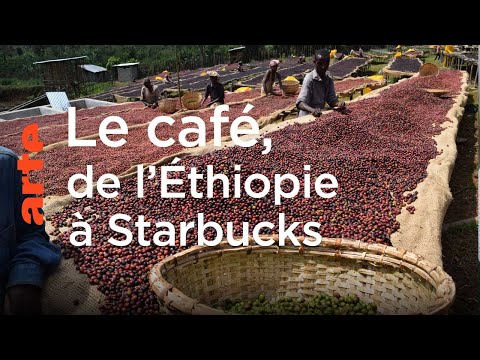
Le café : un si long voyage - Le Dessous des cartes | ARTE
Introduction to "Le dessous des cartes"
Overview of the Episode
- The episode begins in Dima, Ethiopia, highlighting a giant coffee pot that symbolizes the region's rich coffee heritage. The area was historically known as "Kaffa," where coffee is believed to have originated.
- Coffee remains central to Ethiopia's economy and culture, being one of the most consumed beverages globally. The discussion will cover its journey, speculation, and environmental impacts.
Historical Journey of Coffee
- Coffee's journey starts in Ethiopia with the wild growth of Coffea arabica on high plateaus. The discovery of coffee's stimulating effects dates back to a shepherd in the 8th century.
- The process involves harvesting red coffee cherries, drying them, and roasting them into brown beans that emit a unique aroma. This segment sets up an exploration of how coffee became a global phenomenon.
Spread Across Cultures
- By the Middle Ages, coffee spread from Africa to Yemen by the 12th century. Yemeni Sufi brotherhoods adopted it for their mystical rituals due to its energizing properties.
- In the 15th century, Moka port monopolized coffee trade, leading it into sacred Islamic cities like Mecca and Medina. By the 16th century, pilgrims helped disseminate it throughout the Muslim world.
European Adoption and Colonialism
- The first café opened in Constantinople in 1554; drinking coffee evolved into a lifestyle rather than just consumption.
- In the 17th century, European merchants introduced coffee culture across major cities like Paris and London as a luxury item among aristocrats.
- As demand grew but climate conditions limited cultivation in Europe, colonial powers began establishing plantations in Java and later across their colonies in America.
Impact of Slavery on Coffee Production
- The rise of coffee plantations led to increased slave trade from Africa to support this labor-intensive crop until the late 19th century.
Current Geography of Coffee Production
Major Producers Today
- Brazil leads global production followed by Vietnam, Colombia, Indonesia, and Ethiopia. Brazilian plantations account for over one-third of worldwide output.
Regional Insights
- Latin America is significant for Arabica production with countries like Colombia (3rd globally), Peru, Honduras contributing substantially.
- Asia now produces over a quarter of global supply primarily through Vietnam (2nd largest producer), Indonesia (4th), and India.
Economic Challenges for Farmers
- Vietnamese farmers transitioned from coastal plains to highland cultivation during French colonization; however, this has led to soil depletion concerns.
Global Consumption Patterns
Consumer Demographics
- Approximately 125 million people depend on coffee farming across tropical regions; many smallholders earn only about 5% from retail prices in developed markets like France or Germany.
Consumption Trends by Region
- Luxembourg tops per capita consumption rates followed by Finland at around 12 kg annually per person; other notable consumers include Sweden and Norway favoring long-filtered coffees.
The Global Coffee Trade: Geography, Economics, and Challenges
The Inverted Geography of Coffee Production and Consumption
- Except for Brazil, the geography of coffee production is completely inverted compared to consumption patterns. This inversion makes coffee a highly traded agricultural product.
- Coffee is sent in containers along maritime routes from producing countries to consuming nations, leading to its status as a globalized agricultural commodity.
Market Dynamics and Economic Impact
- Coffee has become a market commodity with fluctuating prices set by exchanges; New York sets arabica prices while London sets robusta prices.
- Since 2011, coffee prices have plummeted from $3 per pound to under $1 in 2020 due to overproduction, severely impacting farmers' livelihoods and increasing poverty and emigration rates.
The Role of Roasters and Distributors
- Major players in the roasting industry include Germany and Switzerland, which import raw coffee beans and sell them at a high value after processing.
- Distributors take more than 50% of the retail price of packaged coffee. Nestlé stands out as the largest global player in this market.
Innovations and Environmental Concerns
- Nestlé pioneered instant coffee in 1938 and single-use pods in 1986, significantly raising consumer prices while contributing to waste issues; only 30% recycling rate for pods reported in France by 2020.
- Future challenges for coffee cultivation include ensuring fair pricing for producers through cooperative support and developing agroforestry practices to combat climate change.
Emerging Markets and Consumer Trends
- Starbucks exemplifies the globalization of coffee culture with over 32,000 locations worldwide by early 2020; China has rapidly expanded its presence as both a consumer and producer.
- During COVID-19 pandemic disruptions starting March 2020, major importing countries stockpiled Vietnamese coffee due to lower risk factors associated with its production processes.
Conclusion: Resources for Further Exploration
- For deeper insights into these topics, refer to "Atlas mondial des matières premières: incertitudes et défis" by B. Mérenne-Schoumaker.