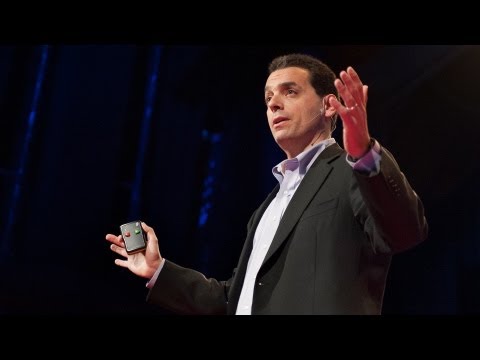
The puzzle of motivation | Dan Pink | TED
Confession and Introduction
The speaker confesses about a regretful event from over 20 years ago, involving attending law school despite not excelling in it. He introduces the concept of making a case for rethinking business operations based on evidence and legal reasoning.
Confession and Regret
- The speaker admits to attending law school as a professional degree after his university education but did not perform well academically.
- Despite graduating in the lower part of his law school class, he never practiced law due to restrictions.
The Candle Problem Experiment
The speaker introduces the "candle problem" experiment by Karl Duncker, highlighting its significance in behavioral science experiments and its implications for problem-solving approaches.
Understanding the Candle Problem
- Participants are tasked with attaching a candle to a wall without wax dripping onto a table using limited resources like thumbtacks and matches.
- Many individuals initially attempt ineffective methods such as directly thumbtacking the candle or melting it against the wall.
Incentives and Motivation
The discussion shifts towards an experiment by Sam Glucksberg that demonstrates the impact of incentives on problem-solving speed, challenging conventional beliefs about rewards and performance.
Impact of Incentives
- Two groups were tested: one with time norms set and another incentivized with monetary rewards for faster solutions.
- Surprisingly, the incentivized group took longer on average to solve the problem compared to those without incentives.
Extrinsic vs. Intrinsic Motivation
The speaker delves into the mismatch between scientific findings on motivation and prevalent business practices centered around extrinsic motivators like rewards, emphasizing their limitations in modern tasks.
Discrepancy in Motivational Strategies
- Business systems heavily rely on external motivators like bonuses and commissions despite research showing their ineffectiveness or harmful outcomes for many tasks.
- Extrinsic motivators may work for certain 20th-century tasks but prove counterproductive for complex 21st-century challenges requiring creativity.
Impact of Rewards on Focus
Exploring how rewards influence focus and problem-solving strategies, contrasting their effectiveness in straightforward tasks versus more intricate problems like the candle task.
Influence of Rewards on Focus
- If-then rewards excel in tasks with clear rules and objectives where focus is beneficial.
Are Rewards Effective in Enhancing Performance?
The speaker discusses the ineffectiveness of if-then rewards in enhancing performance, especially in tasks requiring creativity and cognitive skills.
The Ineffectiveness of Rewards
- If-then rewards are ineffective in solving problems with unclear rules and multiple solutions.
- Higher rewards lead to poorer performance in tasks involving cognitive skills.
- Studies show that higher incentives result in worse performance across various experiments.
Rethinking Motivation: Autonomy, Mastery, Purpose
The speaker introduces a new approach to motivation based on intrinsic factors like autonomy, mastery, and purpose.
Elements of the New Approach
- Autonomy: Directing one's own life leads to better engagement than traditional management.
- Examples of self-direction include paying fairly and providing autonomy at companies like Atlassian.
Autonomy and Productivity
This section discusses the concept of autonomy in the workplace and its impact on productivity, using examples from Google's 20% time policy and the Results Only Work Environment (ROWE).
Autonomy at Google
- Google allows engineers to spend 20% of their time on self-directed projects, leading to innovative products like Gmail and Google News.
- Engineers have autonomy over their time, tasks, teams, and techniques.
- This radical autonomy results in about half of Google's new products being developed during this 20% time.
Results Only Work Environment (ROWE)
- In a ROWE, employees have no set schedules and can work whenever they choose as long as they complete their tasks.
- Meetings are optional in these environments.
- The ROWE approach has been shown to increase productivity, worker engagement, satisfaction, and reduce turnover.
Intrinsic vs. Extrinsic Motivation
Contrasts intrinsic motivation with extrinsic motivators through the example of Wikipedia versus Encarta, highlighting the effectiveness of autonomy, mastery, and purpose in driving performance.
Wikipedia vs. Encarta
- Encarta paid professionals for content creation while Wikipedia relied on volunteers working for intrinsic motivation.
- Despite initial skepticism from economists, Wikipedia's model based on intrinsic motivation prevailed over Encarta's extrinsic reward system.
Intrinsic vs. Extrinsic Motivation
- Autonomy, mastery, and purpose drive intrinsic motivation which outperforms external rewards like incentives or punishments.
- The science supports that intrinsic drive leads to high performance compared to extrinsic motivators like carrots and sticks.
Science & Business Alignment
Discusses the mismatch between what science knows about motivation and how businesses operate with a focus on aligning business practices with scientific findings for improved outcomes.
Mismatch Between Science & Business
- Traditional rewards in business have limited effectiveness under specific conditions.
- External rewards can hinder creativity while intrinsic drive fosters better performance.
Aligning Motivation Practices
- Businesses need to embrace intrinsic motivation principles such as autonomy, mastery, and purpose for enhanced performance.
Turn any video into a summary like this
YouTube links, meetings, lectures. With transcripts, search, and chat.