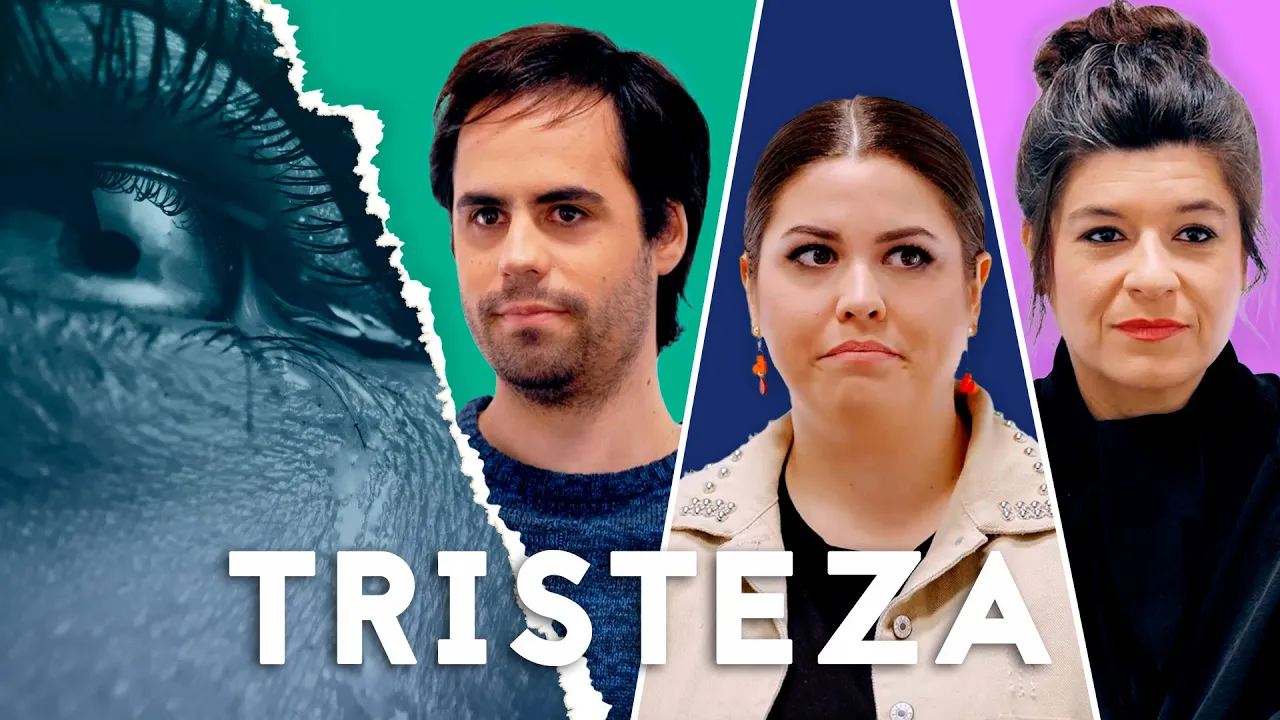
¿CÓMO gestionamos LA TRISTEZA? | El año de las emociones
A Discussion on Sadness and Emotions
The discussion delves into the complexities of sadness, exploring its nature, impact, and role in personal growth and emotional development.
Exploring the Nature of Sadness
- Sadness is often triggered by unexpected events such as relationship disappointments.
- Sadness is a universal emotion that everyone experiences at some point in their lives.
- Individuals may fear being stuck in a perpetual state of sadness after significant losses or heartbreak.
Coping with Sadness and Loss
- Facing sadness can lead to personal growth and resilience.
- Sadness is intertwined with various forms of loss, both tangible and intangible, shaping individuals' identities over time.
Balancing Emotions
- In times of sadness, individuals tend to introspect deeply and empathize with others' emotions.
- Understanding the balance between happiness and sadness is crucial for emotional well-being.
Navigating Through Sorrow
- Processing sorrow involves acknowledging its presence and allowing oneself to experience it fully.
Delving into Drama and Dealing with Sadness
The discussion revolves around delving into drama, the function of negative emotions like sadness, and coping mechanisms individuals employ to deal with sorrow.
Delving into Drama
- Negative feelings can prompt action and aid in self-discovery and personal growth.
- In moments of sadness, reinventing oneself is crucial for coping effectively.
Coping with Sadness
- Distraction through work, hobbies, and setting aside specific time for emotional release helps manage sorrow.
- Engaging in spontaneous activities during sad times can lead to unexpected positive outcomes.
Extreme Actions in Times of Sadness
Participants share extreme actions taken during periods of intense sadness, highlighting unconventional coping strategies.
Extreme Coping Mechanisms
- Immersive reporting in a remote location as a response to a breakup-induced emotional turmoil.
- Spontaneous trip to Peru following a difficult breakup, emphasizing the unpredictability of grief responses.
Impact of Sadness on Relationships
The conversation explores how sadness influences relationships, fostering empathy and intimacy while also revealing potential challenges.
Influence on Relationships
- Sadness deepens connections by evoking empathy and vulnerability within relationships.
- Some individuals may struggle to support others during times of distress due to their own avoidance of sadness or emotional stress.
Managing Emotional Boundaries
The dialogue delves into the complexities of emotional boundaries within relationships and how individuals navigate supporting others during challenging times.
Emotional Boundaries
- Challenges arise when individuals avoid confronting their own sadness or feel overwhelmed by supporting others emotionally.
Close Friendship and Emotional Vulnerability
The discussion revolves around the essence of close friendships, emphasizing the importance of friends who stand by you during tough times rather than just in moments of joy.
Close Friends vs. Acquaintances
- True friends are those who support you during challenging times like sickness or breakups, not just in moments of celebration.
- Expressing vulnerability through crying is highlighted as a way to release emotions and find relief.
- Breaking societal norms, especially for men, around openly acknowledging and planning to cry is discussed.
- Gender roles and socialization impact how individuals express emotions like crying, with women often more accepted for showing sadness than anger.
Crying as an Emotional Outlet
The conversation delves into the societal perceptions and personal experiences related to crying as a form of emotional expression.
Societal Norms and Personal Experiences
- Women may feel compelled to apologize when crying publicly due to societal expectations.
- Gender biases influence how different emotions are perceived; tears of stress are seen as more feminine.
- Crying can be multifaceted, not solely linked to sadness but also happiness or astonishment.
Varied Reasons for Crying
Exploring diverse reasons beyond sadness that lead individuals to cry, including instances of overwhelming joy or amazement.
Diverse Triggers for Tears
- Crying can stem from laughter-induced happiness or awe-inspiring events like space program advancements.
- Personal anecdotes about experiencing tears due to remarkable achievements such as SpaceX's Falcon Heavy launch are shared.
Rui-Katsu: Seeking Tears for Catharsis
Introducing the concept of "rui-katsu," where individuals seek emotional release through organized activities leading to catharsis.
Rui-Katsu Experience
- Discussion on rui-katsu centers around creating spaces for emotional catharsis through shared activities like music and sharing problems before entering a designated crying room.
- Drawing parallels between personal emotional release practices and formalized rui-katsu ceremonies in Japan.
Ceremonial Endings and New Beginnings
Reflecting on the symbolic significance of ceremonies marking endings like divorce as transformative beginnings towards new chapters in life.
Symbolism in Ceremonies
- Exploring the poetic nature of ceremonial acts symbolizing closure and transition from difficult phases towards new opportunities.
Nerea's Perspective on Expressing Sadness
Nerea discusses her approach to expressing sadness and contrasts it with the concept of rui-katsu in Japan.
Nerea's Private Approach to Crying
- Nerea prefers crying alone at home, in a comfortable setting, with her cats for company. -
- She finds public displays of emotions awkward and believes that privacy enhances the therapeutic value of crying. -
- Expressing sadness publicly may hinder the cathartic experience compared to private emotional release. -
Cultural Differences in Coping with Sadness
The discussion shifts to cultural differences in coping mechanisms for sadness, contrasting rui-katsu in Japan with Spain's reliance on alcohol.
Coping Mechanisms: Rui-Katsu vs. Alcohol Consumption
- In Japan, rui-katsu provides a structured way to release emotions through group crying sessions. -
- Spanish culture tends to cope with sadness through alcohol consumption, which can be counterproductive due to its depressant effects. -
- Alcohol-induced behaviors like drunk texting or sobbing uncontrollably can exacerbate feelings of sadness and lead to negative consequences. -
Shift Towards Mental Health Awareness in Spain
The conversation highlights a positive trend in Spain where mental health support is increasingly valued over excessive drinking as a coping mechanism.
Embracing Mental Health Support
- Recent years have seen a rise in Spaniards seeking mental health services as an alternative to alcohol for managing emotions. -
- This shift reflects a growing awareness of the importance of mental health and emotional well-being within Spanish society. -
- Choosing healthier coping strategies like self-care and seeking professional help signifies progress towards prioritizing mental wellness over temporary escapes like drinking. -
Understanding Fictional Sadness as Catharsis
The discussion delves into the therapeutic value of experiencing fictional sadness as a means of emotional regulation and catharsis.
Therapeutic Value of Fictional Sadness
- Engaging with fictional sad content allows individuals to process extreme emotions from a safe distance, akin to classical theatre's concept of catharsis. -
- By immersing oneself in fictional tragedies, individuals can understand and regulate their own emotions without real-life repercussions. -
Factors Influencing Happiness Levels in Spain
The conversation explores factors contributing to happiness levels among different age groups in Spanish society.
Factors Affecting Happiness
New Section
In this section, the discussion revolves around the year 1920 and the life of Spanish writer Miguel Delibes.
Miguel Delibes and His Life
- Miguel Delibes was described as a melancholic child who later became a writer with a unique perspective due to his rural background and teaching profession.
- Despite his depressive nature, Delibes found happiness in his life when he met his wife, Ángeles de Castro, who brought positivity into his world.
- The tragic death of Ángeles de Castro deeply impacted Delibes, inspiring him to write about her in an autobiographical book where he beautifully describes her influence on his life.
Emotions and Health
This part delves into the connection between emotions like sadness and their impact on health, particularly focusing on stress cardiomyopathy.
Sadness and Its Consequences
- Sadness can be beautiful but leaves a lasting impact. Artists like Delibes may find creativity in extreme sadness due to its profound emotional effect.
- Stress cardiomyopathy is discussed as a condition that can result from extreme sadness, leading to increased risks of heart-related issues after experiencing significant loss or emotional distress.
Literary Influences
The conversation shifts towards literary works from 1920, highlighting Marcel Proust's "In Search of Lost Time" and its relevance to emotions like sadness.
Marcel Proust's Influence
- In 1920, Marcel Proust's renowned work was published in Spain, emphasizing introspection on feelings such as sadness within literature.
- The Proust madeleine effect is explained as the association between sensory information and memories triggered by scents or other stimuli, showcasing how emotions are intertwined with our senses and recollections.
Memory Triggers
This segment explores how sensory cues can evoke powerful memories through personal anecdotes related to memory triggers.
Sensory Memories
- Smells often trigger vivid memories, known as the Proust madeleine effect. Personal experiences shared include instances where scents transported individuals back to specific moments from their past.
- A discussion ensues about how sensory cues like smells can unexpectedly evoke intense emotions tied to childhood memories or past experiences.
Historical Context: Homosexuality
The dialogue transitions into historical perspectives on homosexuality in Spain, tracing back discriminatory laws against LGBTQ+ individuals over centuries.
Historical Treatment of Homosexuality
Saphic Circle and Activism in Spain
The discussion revolves around the Saphic Circle, a group of women in London, Paris, Madrid, and Barcelona during the 1970s. They used the term "Saphic" to protect themselves and reclaim their identity, with many members being lesbians. The circle united writers, poets, and activists.
Saphic Circle Details
- The Saphic Circle originated in London and Paris but also had branches in Madrid near the Women’s University and in Barcelona around the Lyceum theatre.
- The term "Saphic" was derived from the poet Sappho and meant "lesbian," serving as a protective name that members embraced.
- Not all members were lesbians, but a significant portion identified as such.
- This circle brought together prominent writers, poets, and activists of that era.
Women's Rights Advocacy
The conversation shifts to notable figures like Victoria Kent, Clara Campoamor, Elena Fortún Zenobia Camprubí who were part of a club with over 400 members advocating for women's rights. They supported artistic creation, feminine literature, fought for women's rights including challenging articles of the Civil Code.
Advocacy Efforts
- Key figures like Victoria Kent and Clara Campoamor played pivotal roles in advocating for women's rights.
- The club grew to over 400 members due to its support for artistic creation and feminine literature.
- Members pushed for changes in laws such as abolishing outdated articles like those dictating husband-wife dynamics within marriage.
Impact of Exile on Activists
Discussion delves into how many activists faced exile during Franco's rise to power. Some individuals concealed their sexual orientation due to societal pressures during this tumultuous period.
Effects of Exile
- Many activists were forced into exile when Franco came into power.
- Some individuals refrained from openly acknowledging their lesbian identity due to the challenging circumstances they faced.
Embracing Sadness
Reflecting on sadness and its role in life while expressing gratitude towards participants for sharing wisdom openly despite discussing somber topics throughout the episode.
Embracing Emotions
- Acknowledging that discussions may be melancholic yet appreciating participants' openness about sadness.
Encouragement Through Adversity
Encouraging viewers experiencing difficult emotions by emphasizing that tough times are temporary. Quoting Santiago Ramón y Cajal on embracing challenges to reinvent one's life positively amidst adversity.
Overcoming Challenges
- Encouragement is given to embrace sadness as it can lead to personal growth and transformation.