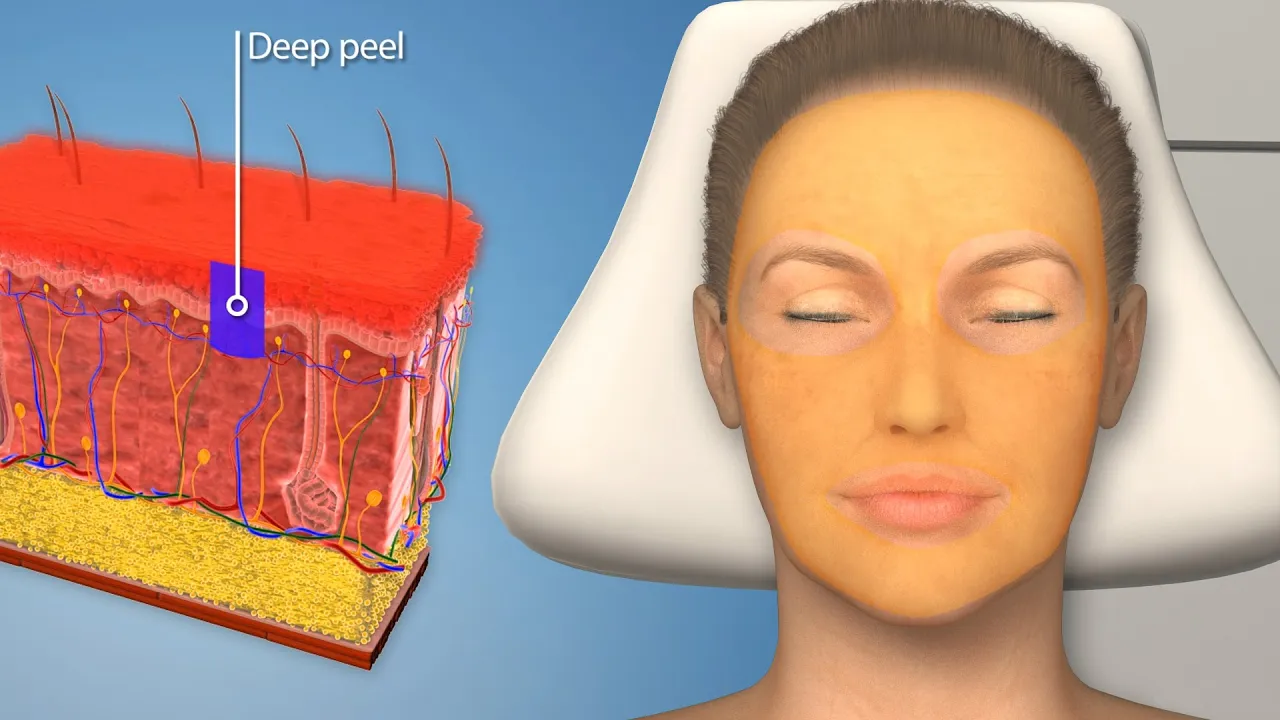
Deep Chemical Peel: The most powerful and dangerous skin treatment you can get
Chemical Peels Overview
This section provides an introduction to chemical peels, detailing their popularity and benefits in improving skin appearance through the removal of damaged outer skin layers.
Chemical Peel Types
- Superficial, medium, and deep chemical peels are utilized based on the extent of skin damage.
- : Deep chemical peels target the epidermis and dermis layers for treating deep wrinkles, pigmentation issues, acne scars, sun damage, and skin texture irregularities.
Skin Layers and Damage
- The skin comprises three layers: epidermis (outer), dermis (middle), and hypodermis.
- : The dermis contains collagen and elastic fibers that degrade over time leading to loss of elasticity and wrinkle formation.
Deep Chemical Peel Procedure
This segment outlines the process involved in deep chemical peel treatments, from consultation to post-treatment care.
Treatment Process
- Consultation involves assessing treatment goals, medical history, acid product selection, and addressing concerns.
- : Deep peels lasting 1-2 hours require local anesthesia or sedation for numbing before applying the chemical solution.
Healing Process
- The chemical solution damages epidermal and dermal layers triggering new cell growth, collagen production, and improved skin structure.
- : Potential risks include temporary frosting of the skin with side effects like redness, swelling, flaking; precautions against sun exposure are crucial during healing.
Post-Treatment Care
- Following a deep peel treatment:
- : Expect redness, pain, swelling initially with subsequent oozing or flaking; gradual fading of redness over months as new skin emerges.