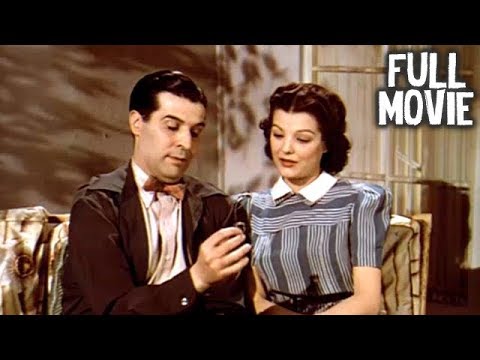
THE MIDDLETON FAMILY AT THE NEW YORK WORD'S FAIR // Full Drama Movie // English // HD // 720p
Laughter
This section includes laughter.
Laughter
- There is a moment of laughter.
New Section
This section introduces the setting and characters of the transcript.
Meeting Old Friends
- Jim meets Mrs. Harrison and Mr. Middleton at the playground of science.
- They exchange greetings and express joy at seeing each other again.
- Jim explains his role in answering questions for visitors at the fair.
- Mrs. Harrison asks about the time capsule and expresses interest in seeing it.
New Section
The conversation continues with a discussion about the time capsule.
The Time Capsule
- Jim explains that the time capsule was deposited by Westinghouse Electric and Manufacturing Company during the New York World's Fair in 1938.
- The purpose of the time capsule is to provide future generations with a glimpse into our civilization.
- The contents of the time capsule are described in detail, including microfilms, instructions, samples, and a list of contents.
- Mr. Middleton wonders how anyone in the future will know how to find or understand the time capsule. Jim explains that there is a book of record distributed worldwide with all relevant information about it.
New Section
The conversation shifts to discussing a letter writing contest and exploring other sites at the fair.
Letter Writing Contest
- Jim mentions a letter writing contest where cash prizes are awarded to those who write and receive the best letters home from the fair each week. Winners are announced during a radio program called "Letters Home."
- Mr. Middleton expresses interest in participating in the contest to win some cash.
Exploring the Fair
- Jim suggests that Mr. Middleton and his friends explore other sites at the fair while he shows them around.
- They discuss a glass enclosed room for letter writing and a television camera that allows visitors to see themselves on television sets throughout the fairgrounds.
- Mr. Middleton is introduced to Frank Willis, who operates the television camera. They engage in friendly banter about being on TV.
New Section
The conversation continues with Mr. Middleton experiencing being on television.
On Television
- Mr. Middleton gets a chance to be on television and introduces himself as Clark Gable from Bud, Indiana, promoting his hometown as the greatest state in the world.
- He interacts with Frank Willis and enjoys the experience of being on TV.
New Section
This section concludes with Jim suggesting they continue exploring while Mr. Middleton's friends write postcards.
Wrapping Up
- Jim suggests that Mr. Middleton's friends write postcards while they continue exploring the fairgrounds together.
- He points out a writing room for the letter writing contest and bids farewell to Frank Willis.
The transcript ends abruptly after this point, so there may be more content beyond what is provided here.
[t=0:14:56s] The Platelet of Science
This section discusses the role of research activities in science and technology.
Research Activities
- Research activities in science and technology are often exhibited to visitors.
- Metal discs are used to control various devices, such as electricians' switches, which help save money by shutting off appliances when they reach certain temperatures.
- These devices are produced in large quantities and hidden within appliances.
[t=0:15:38s] The Attitude of a Researcher
This section explores the attitude and mindset of researchers.
Passion for Research
- Researchers have a deep passion for their work, sometimes feeling the urge to explore beyond their assigned tasks.
- They believe that nothing is impossible and encourage others to open their eyes to the possibilities around them.
- Researchers marvel at the constant innovation happening every day and strive to contribute to it.
[t=0:16:24s] Advancement through Innovation
This section highlights the importance of innovation for companies and society.
Two Paths of Private Enterprise
- Under the American system of private enterprise, companies must either make better products or introduce new ones to stay competitive.
- Companies constantly improve existing products, reduce costs by minimizing waste, and anticipate demand for new products.
- Industrial prospecting involves discovering new industries and creating job opportunities.
[t=0:17:43s] Industry's Role in Job Creation
This section discusses industry's potential in creating jobs.
Abundance of Jobs
- The speaker believes that industry will create an abundance of jobs in the future, potentially surpassing available workforce.
- There is a disagreement between those who believe industry can provide enough jobs for young people and those who think otherwise.
- The speaker emphasizes that self-appointed leaders should not dictate opinions but rather consider the facts.
[t=0:18:57s] The Fair and Prosperity
This section focuses on the belief in progress and prosperity.
Belief in Progress
- The speaker mentions that the builders of the Fair believe in progress and back up their belief with substantial investments.
- Facts support the notion that progress leads to prosperity, while pessimism hinders growth.
- The speaker invites others to explore the facts and challenges those who rely solely on negative opinions.
[t=0:19:20s] Love and Disillusionment
This section delves into a personal conversation about love and family approval.
Love and Marriage
- The speaker expresses their desire for marriage but acknowledges the need for gradual introduction to their family.
- They want their family's blessings beforehand, fearing being cut off financially if they act impulsively.
- Money is not a concern when it comes to love, as it should not influence decisions regarding marriage.
[t=0:20:25s] Science and Engineering Clubs
This section highlights science education initiatives for young people.
Science Education Initiatives
- Young students participate in science and engineering clubs sponsored by organizations like the American Institute of New York City.
- These clubs aim to promote scientific knowledge among young people across the country.
- Students have access to laboratories where they can conduct experiments, fostering their interest in science and engineering.
Conclusion
The transcript covers various topics related to research activities, innovation, job creation, progress, love, family approval, and science education. It emphasizes the importance of continuous improvement, exploration of possibilities, industry's potential in job creation, belief in progress leading to prosperity, personal relationships, and fostering scientific knowledge among young people.
Mrs. Modern's Dishwashing Skills
This section focuses on Mrs. Modern's dishwashing skills and the contest she is participating in.
Mrs. Modern's Dishwashing Skills
- Mrs. Drudge mentions that Mrs. Modern is consistently diving into the dark and greasy water to search for knives.
- The announcer comments on Mrs. Roger's rubber apron getting dirty as she mops up with a tablecloth.
- The announcer declares that the dishwashing contest will end in seven minutes and 58 seconds, with Mrs. Modern having washed 50 dishes and 40 pieces of silverware.
- The contest is scored based on three criteria: time taken, cleanliness of the dishes, and condition of the contestants.
- Mrs. Modern wins on all three counts, being faster, having cleaner dishes, and looking fresh throughout the contest.
Impressions of the Dishwashing Contest
In this section, Jim Treadway shares his thoughts on the dishwashing contest.
Impressions of the Dishwashing Contest
- Jim Treadway expresses disbelief at hearing that a woman washed a pile of dishes nine times higher than the Empire State Building in 15 years.
- He finds it more impressive to see Mrs. Mother reading the paper while her dishes are being washed.
- Jim meets Babs and introduces her to his art teacher, Mr. Makarov.
- They discuss visiting the Hall of Power before meeting their families.
Discussion about Machines and Jobs
This section revolves around a conversation about machines and their impact on employment.
Discussion about Machines and Jobs
- They come across a machine at the Hall of Power that Jim finds fascinating but Nick sees as destructive to jobs.
- Nick argues that machines like this destroy jobs by reducing the number of people working.
- Jim counters by mentioning the benefits of machine production, such as better and cheaper products that create a demand for more labor.
- They discuss how machine production has improved safety in industries like steelmaking.
The Impact of Machines on Employment
This section delves deeper into the impact of machines on employment.
The Impact of Machines on Employment
- Nick shares an example of how only a few hundred workers were employed in textile mills in 1800, but today millions are employed due to machine production.
- He mentions that clothes are now cheaper, eliminating the need for homemade garments that required extensive labor.
- Jim questions whether machines like this keep people out of work, to which Nick provides examples from steel, printing, textiles, and automobiles where mechanization has increased employment.
Benefits of Machine Control
This section highlights the benefits of machine control and automation.
Benefits of Machine Control
- They come across a manipulator table controlled by switches and photoelectric equipment.
- Jim expresses skepticism about machines benefiting labor, but Nick explains how machine control has made certain occupations safer.
- He cites an example where no lives were lost in a steel plant due to electrical control replacing dangerous manual labor.
Machine Production and Labor Demand
This section discusses how machine production leads to increased labor demand.
Machine Production and Labor Demand
- Nick explains that machine production creates better and cheaper products, leading to increased consumer demand.
- Increased demand then creates a need for more labor in industries such as steelmaking, printing, textiles, and automobiles.
The transcript provided does not include any further sections or timestamps.
New Section
This section discusses the purpose of machines in mass-market industries and the goal of increasing production to create employment opportunities.
Machines and Employment
- Mass-market industries prioritize modernization over job preservation.
- The aim is to increase production, which leads to job creation.
- General statements about employment do not hold true for specific cases.
- The speaker mentions a name at Treadway for light fast, but it is unclear what they are referring to.
New Section
This section highlights the increase in payroll and employment despite the use of labor-saving machinery.
Labor-Saving Machinery
- People spent nine minutes discussing labor-saving machinery.
- In the same year, the company increased its payroll by 40,000 men and $88 million.
- The speaker finds it amusing how facts can break up an argument.
- Someone expresses their disagreement with this perspective.
New Section
In this section, someone suggests that it's almost time for lunch and acknowledges that there may be consequences if they start an argument during lunch.
Lunch Plans
- It is acknowledged that starting an argument during lunch might have negative consequences.
- The speaker agrees not to start an argument but mentions that they won't enjoy themselves.
- They request the other person to come early for a chance to have a nice long talk.
New Section
This section includes brief conversations about leaving, enjoying a meal, and misinterpreting approval from someone's father.
Leaving and Approval
- One person expresses their intention to leave as they need to get back to school.
- Another person comments on having enjoyed meeting everyone before leaving.
- A comment is made about behaving well and not misinterpreting the approval of someone's father.
New Section
This section includes a brief conversation about Karl Marx and misinterpretation.
Misinterpretation
- Someone mentions that the speaker's father thought they were talking about relatives of Groucho and Harpo Marx.
- The speaker expresses their lack of familiarity with Groucho and Harpo Marx.
- They mention seeing each other in class before saying goodbye.
New Section
In this section, dinner plans are discussed, including inviting others to join and visiting the Hall of Science.
Dinner Plans
- One person insists that another person is coming to dinner and will like it.
- A suggestion is made for someone else to visit the Hall of Science with the speaker's father.
- An invitation is extended to Mrs. Harrison, who declines but wants to show Jane and Barbara something in the hall related to electrical living.
New Section
This section briefly mentions an electoral mortal man doing tricks at the Hall of Science.
Electoral Mortal Man
- A comment is made about an electoral mortal man doing tricks at the Hall of Science.
- No further details or discussions are provided in this section.
New Section
This section consists of a short musical interlude without any significant dialogue or content.
New Section
This section includes a brief exclamation from one person after the musical interlude ends.
Exclamation
- One person exclaims "Wow" after the musical interlude ends.
New Section
In this section, there is a conversation about time-saving inventions and domestic responsibilities.
Time-Saving Inventions
- The speaker mentions that women in their day never had enough time.
- They express appreciation for time-saving inventions and mention a monster related to it.
- A comment is made about being against slavery, specifically domestic or otherwise.
New Section
This section includes a conversation about electrical engineers and their role in emancipation.
Electrical Engineers and Emancipation
- The speaker expresses admiration for electrical engineers, stating that they signed the Emancipation Proclamation.
- No further details or discussions are provided in this section.
New Section
This section briefly acknowledges a beautiful kitchen without further discussion.
Beautiful Kitchen
- One person comments on the beauty of the kitchen.
New Section
This section includes a conversation about modern appliances and different perspectives on homemaking.
Modern Appliances and Homemaking
- The speaker mentions that cooking over a wood stove with only a kerosene lamp was challenging.
- They express gratitude for modern appliances like electric dishwashers.
- Another person jokes about getting such a dishwasher for their birthday, leading to some playful banter within the family.
New Section
This section briefly discusses setting an example through home exhibits and personal preferences.
Setting an Example
- The speaker suggests that showcasing how they would like to live through home exhibits is not old-fashioned but rather sets a good example.
- Another person disagrees, stating that there are more important things today than homemade items.
New Section
In this section, different perspectives on priorities and interests are discussed within the family.
Different Perspectives
- One person values raising a family and keeping their grandfather well-fed and happy as important.
- Another person, Nick, is described as different and not interested in such things.
- The speaker mentions preparing a good lunch for Nick despite his lack of interest.
New Section
This section includes a conversation about Aristotle and a humorous anecdote related to him.
Aristotle Anecdote
- One person talks about how Nick discusses Aristotle more than anything else in class.
- They mention an anecdote about Aristotle convincing the richest woman in Greece to marry him.
New Section
This section introduces Electro, an electrical robot at the Hall of Science.
Introduction of Electro
- Electro is introduced as a remarkable electrical robot at the Hall of Science.
- The speaker mentions that Electro can speak for himself and invites him to share his story.
New Section
This section briefly acknowledges Electro's ability to walk and interact under his own power.
Electro's Abilities
- It is mentioned that Electro can walk up to greet people under his own power.
New Section
This section consists of a single word, "stop," without any further context or dialogue.
New Section
This section includes a conversation between the speaker and Electro, where they discuss counting on fingers.
Counting on Fingers
- The speaker refers to an earlier discussion where Electro bragged about being able to count on his fingers.
- They express their curiosity about finding out more about this ability from Electro.
[t=0:36:44s] Electro's Pleasure
In this section, Electro is given a cigarette and a lighter to enjoy. It is mentioned that Electro is only two years old but already capable of performing various electromechanical tasks.
Electro's Abilities
- Electro, a two-year-old robot, demonstrates his abilities in motors, gears, cams, and electric cells.
- Despite lacking a heart and brain, Electro is praised for having exceptional intelligence.
- The narrator mentions that Electro could fill a book with all the electromechanical principles involved in his functioning.
[t=0:37:37s] Wind Power and Westinghouse
This section discusses wind power and the impact of Westinghouse on the electrical industry.
Wind Power in Patagonia
- A conversation about wind power begins with someone mentioning gusty winds in Patagonia.
- The narrator apologizes for bringing up the topic and promises not to do it again.
Westinghouse's Impact
- Jim asks what happened to the former things Westinghouse developed, as they seem to have disappeared suddenly.
- The narrator explains that without Westinghouse, the electrical industry would be set back by 50 years.
- Three significant contributions of Westinghouse are highlighted:
- Alternating current (AC) allows for economical transmission of electric power over long distances.
- Steam turbines are used in large power stations where electricity is generated.
- Radio broadcasting began with the Westinghouse station KDKA Pittsburgh being the first to broadcast programs on a regular schedule.
[t=0:39:27s] Women's Perspective on Love and Relationships
This section delves into women's perspectives on love, relationships, and their ability to make mistakes and correct them over time.
Women's Views on Life Matters
- The narrator suggests that most women seek husbands who share similar views on the world, jobs, religion, and even politics.
- Women can make mistakes but also have the capacity to correct them given time.
Love and Time
- The narrator reflects on the role of time in love and relationships.
- Abstract form is mentioned as a way to express elusive qualities that verbal language cannot convey effectively.
[t=0:41:14s] Abstract Form and Art
This section explores the concept of abstract form in art and its expression through paintings.
Understanding Abstract Form
- The narrator explains that abstract form represents the fundamental rhythm underlying our conceptions of spatial limitations.
- Verbal language is considered too clumsy to express these elusive qualities.
Mr. Makarov's Painting
- Mr. Makarov shows one of his paintings, describing it as a good piece of abstract painting.
- A conversation ensues about the uniqueness of abstract art compared to traditional depictions of people and objects.
[t=0:42:43s] Family Heirlooms and Fine Art
This section focuses on family heirlooms, including a unique ring, and contrasting perspectives on fine art within the family.
Unique Ring
- Nick presents a unique ring from his family's collection, describing it as a rare specimen of barbaric jewelry with polychromatic harmony.
- The ring has been passed down for about 300 years.
Reluctance to Accept Priceless Gifts
- Nick offers the ring to someone but they hesitate due to its perceived value.
- Despite being encouraged to wear it for a while, they decline out of concern for its worth.
[t=0:43:32s] Wearing the Ring
In this section, someone agrees to wear the unique ring for a week or so despite their initial hesitation.
Wearing the Ring
- The person agrees to wear the ring for a week, acknowledging its significance and beauty.
- They are encouraged to show it to others who would appreciate it.
[t=0:44:13s] Letters Home Contest Winner
This section introduces Bud Milligan as the winner of the letters home contest from Riverdale in Tirol, Indiana.
Contest Winner Announcement
- Bud Milligan is announced as the fourth winner of the letters home contest.
- He is described as a very young man from Riverdale in Tirol, Indiana, which is referred to as the garden spot of America.
The transcript provided does not contain any timestamps beyond this point.
Tubby Parker and Prize Money
Bud and Tubby discuss Tubby's potential winnings and what he plans to do with the prize money.
Tubby's Polly Situation
- Bud asks Tubby about his plans for the prize money.
- Tubby mentions that he might find out if his girlfriend has been dating someone else while he was away.
- Bud reminds him that Tubby will have to split his money with Sharon, but Bud serves notice that Sharon is as far as it goes.
Shopping for a Shortwave Radio
- Bud asks Tubby what he plans to do with the prize money.
- Tubby reveals that he wants to go shopping for parts to make a shortwave radio, as it is considered the technology of the future.
Fair Without Electricity
- Bud asks Tubby to summarize his letter about how the fair would look without electrical contributions from pioneers like Westinghouse.
- Tubby mentions that without these engineers, there wouldn't be a fair at all.
The Grand Prize Winner
- Miss Bennett announces that Mr. Bots Middleton is the winner of the grand prize for the best letter.
- Everyone celebrates and talks about electricity being their jackpot.
Shopping in New York
Bud and Grandma explore shops in New York City.
Looking for What They Need
- Grandma expresses her hope of finding what she needs in New York.
Costume Jewelry
- They come across a shop selling costume jewelry.
- The shopkeeper shows them a perfect copy of a ring from a Moscow Museum, which they can have for $2 each.
Fixing Shoes
- A shoe shiner offers to fix Grandma's shoes, commenting on her big feet.
- He jokes about not needing eyes when you have ears, referring to overhearing conversations.
The Ring Mystery
A mix-up with rings leads to confusion and suspicion among the characters.
Grandma's Ring
- Bud finds a ring on his dresser and realizes it belongs to Grandma.
- He wonders where his own ring went.
The Same Rings
- Bud shows Grandma that he has multiple rings, just like the one she found.
- They wonder how they ended up with so many identical rings.
Suspicion and Confusion
- Bud questions if there is some sort of bad luck associated with the rings.
- Everyone becomes suspicious of each other, unsure of who may have taken or switched the rings.
Too Many Rings
The characters continue to discuss the mystery of the multiple rings.
Searching for Answers
- Bud suggests searching for answers about the rings.
- They joke about having too many rings and not knowing what to do with them all.
Food Break
- The characters mention being hungry and needing food after hours without eating.
Nick's Rings
The characters discuss Nick, who gave them all the extra rings.
Nick's Rings
- They talk about how many rings Nick gave them.
- They question if Nick was in the jewelry business due to his large supply of rings.
Valuables Found
Mrs. Middleton finds a valuable item left behind by someone else.
Mrs. Middleton Finds Something
- Mrs. Middleton finds a valuable item on a hall table.
- She comments on its polychromatic harmony but wonders why someone would leave it behind.
Accusations and Chaos
Chaos ensues as accusations are made regarding missing items and broken objects.
Accusations Fly
- Mrs. Middleton accuses someone of being a dirty crook and lying about there only being one valuable item.
- Chaos erupts as people argue and objects get broken.
The Gun Incident
- Bud's practical joking son causes a commotion by pretending to have a gun.
- Mrs. Middleton scolds Tom for carrying a gun, but he denies owning one.
Aftermath
The characters discuss what to do after the chaos settles.
Uncertain Future
- They wonder what they will do with all the broken items on the table.
- Bud suggests taking off their shoes and listening to the radio as a way to relax.
Looking for a Silver Lining
The characters decide to look for something positive amidst the chaos.
Looking for Positivity
- They mention that 46 years ago, they were watching lights at the Columbian Exposition in Chicago, which was the first American fair lighted by electricity.
- Jim's company provided most of the lighting for that fair, highlighting how far they have come since then# Tubby Parker and Prize Money
Bud and Tubby discuss Tubby's potential winnings and what he plans to do with the prize money.
Tubby's Polly Situation
- Bud asks Tubby about his plans for the prize money.
- Tubby mentions that he might find out if his girlfriend has been dating someone else while he was away.
- Bud reminds him that Tubby will have to split his money with Sharon, but Bud serves notice that Sharon is as far as it goes.
Shopping for a Shortwave Radio
- Bud asks Tubby what he plans to do with the prize money.
- Tubby reveals that he wants to go shopping for parts to make a shortwave radio, as it is considered the technology of the future.
Fair Without Electricity
- Bud asks Tubby to summarize his letter about how the fair would look without electrical contributions from pioneers like Westinghouse.
- Tubby explains that without these engineers, there wouldn't be a fair at all.
The Grand Prize Winner
- Miss Bennett announces that Mr. Bots Middleton is the winner of the grand prize for the best letter.
- Everyone celebrates and talks about electricity's importance in their lives.
Shopping in New York
The Middletons explore New York City and go shopping.
Exploring New York
- Grandma expresses her amazement at how big New York City is compared to their hometown.
- They compare certain aspects of New York City to Main Street back home, just on a larger scale.
Looking for Items
- The Middletons hope to find what they need during their shopping trip in New York City.
Costume Jewelry
- They come across a jewelry store window display featuring rings.
- Timestamp not provided for this bullet point.
A Perfect Copy
- The jewelry store owner claims that the ring in the display is a perfect copy of one found in a Moscow Museum.
- Bud asks about the price, and the owner offers it for $2, practically giving it away.
More Rings
- The store owner mentions having more rings available.
- Timestamp not provided for this bullet point.
Funny Encounters
The Middletons have humorous encounters while exploring New York City.
Big Feet
- A man with big feet approaches them and makes funny sounds.
- He jokes about not needing his eyes today and only relying on his ears.
Grandma's Ring
- The man notices that Grandma left her ring on his dresser.
- Grandma worries about bad luck but realizes she has her own ring with her.
Multiple Rings
- Bud questions why there are multiple rings when they should only have one.
- Timestamp not provided for this bullet point.
Confusion and Accusations
- Bud accuses the man of stealing their rings, causing confusion and tension among them.
- Timestamp not provided for this bullet point.
Food and Rings
The Middletons continue their adventures in New York City, encountering more humor and confusion.
Hungry Middleton
- Bud mentions being hungry after not eating for four hours.
- Timestamp not provided for this bullet point.
Too Many Rings
- Bud asks how many rings the man gave them and if he was in the jewelry business.
- Timestamp not provided for this bullet point.
Unexpected Encounter
Barbara Ann encounters Mr. Mackall while exploring New York City.
Meeting Mr. Mackall
- Barbara Ann meets Mr. Mackall, who recognizes her as Mrs. Middleton's daughter.
- He found a ring on the hall table and returns it to her.
The Missing Ring
Bud realizes that there is more than one ring missing, causing confusion and concern.
Study in Polychromatic Harmony
- Bud admires the ring that Mr. Mackall found, but he thought there was only one missing.
- Timestamp not provided for this bullet point.
Chaos Ensues
- Chaos erupts as they discover multiple rings are missing.
- Timestamp not provided for this bullet point.
Unwanted Gun
The Middletons deal with the aftermath of the missing rings and an unexpected gun.
Tom Middleton's Practical Joke
- It is revealed that Tom Middleton played a practical joke by carrying a gun.
- His parents scold him for his actions, causing tension among them.
Silver Lining
The Middletons try to figure out what to do after the chaos caused by the missing rings.
Taking Off Shoes
- They decide to take off their shoes and listen to the radio after everything that happened.
- Timestamp not provided for this bullet point.
Looking for a Silver Lining
- They plan to search for something positive amidst all the chaos and confusion.