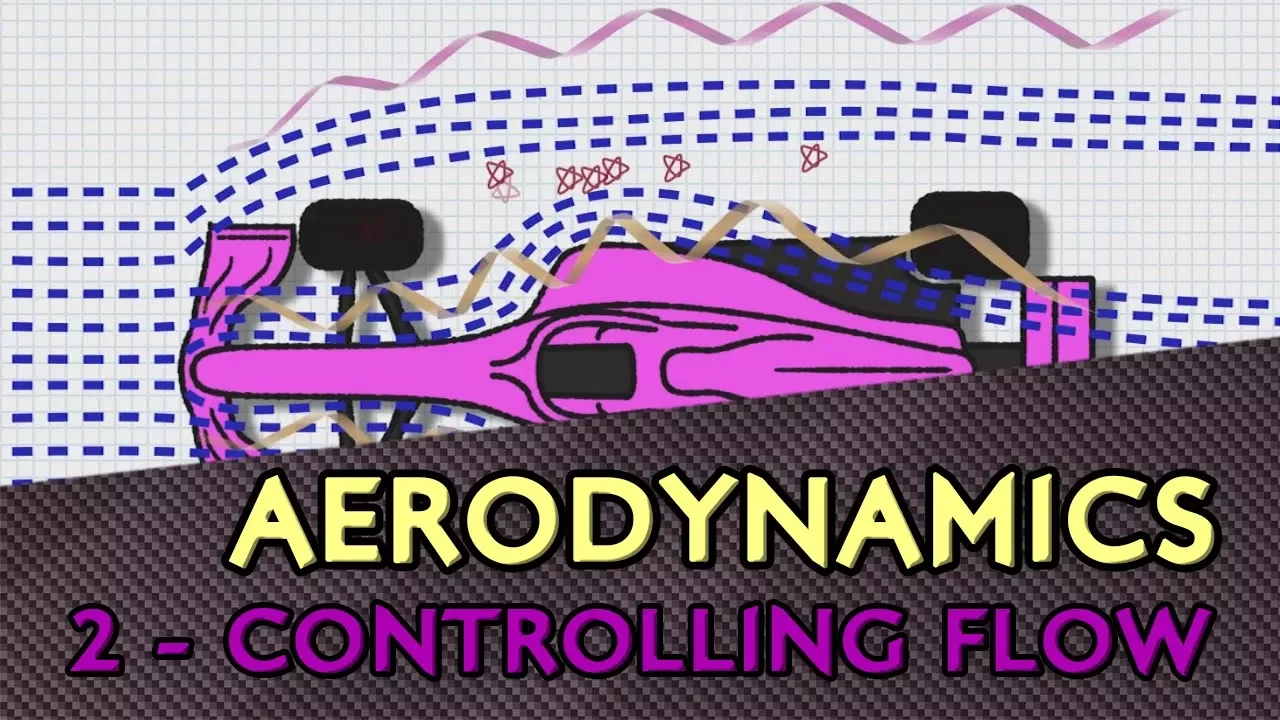
F1 Aerodynamics - 2: Turbulence, Drag and Vortices
Aerodynamics in Motorsports
This section delves into the aerodynamics relevant to Formula 1 cars, focusing on controlling airflow to optimize performance.
Understanding Airflow Behavior
- The air underneath a wing follows its surface due to low pressure, as high-pressure air flows into areas of low pressure.
- Viscosity, the friction between layers of air, affects aerodynamic drag by slowing down airflow near surfaces.
- Clarification: Majority of acceleration comes from air being pulled into low-pressure areas rather than being squeezed.
Effects of Wing Angle
- Increasing wing angle can lead to airflow separation, reducing downforce and causing turbulence.
- Airflow separation results in less downforce and increased drag due to disrupted airflow patterns.
Addressing Airflow Separation
- Vortices help keep fast-flowing air attached to surfaces longer, minimizing separation and turbulence for improved performance.
Airflow Control and Vortices in F1 Cars
The discussion delves into the intricate design of front wings in Formula 1 cars, focusing on how vortices are generated to manage airflow efficiently.
Front Wing Design and Vortex Generation
- Detailed front wing design is crucial for creating large vortices that aid in directing airflow along the car's sides.
- "The front wing's major job is to build huge vortices to help the air flow down the side of the car."
- The tips of a front wing play a key role in vortex generation, guiding airflow down the entire length of the car.
- "Tips of a front wing are designed for vortex generation to persuade air flow down the car."
Air Pressure Dynamics and Vortex Formation
- High-pressure air above the wing and low-pressure air below it interact to create vortices that enhance aerodynamic performance.
- "High-pressure air flows into low-pressure air at the edge of the wing, initiating a corkscrew movement."
- Wingtip shapes collaborate to form significant vortices that not only optimize good airflow but also mitigate turbulent airflow caused by spinning tires.
- "Wingtip shapes work together to create huge vortices that manage both good and bad airflow."
Controlling Airflow and Aerodynamic Efficiency
- Vortices act as guides for controlling airflow around an F1 car, ensuring optimal aerodynamic performance.
- "Vortices direct airflow, coaxing it into desired patterns for enhanced aerodynamics."
Upcoming Topics: Aerodynamic Components Explained
The upcoming video will delve into various aerodynamic components in Formula 1 cars, offering insights on their functions and significance.
Preview of Future Video Content
- The next video will explore specific aerodynamic features such as barge boards, elucidating their roles in enhancing overall performance.
- "Next video will cover details like barge boards and other aerodynamic elements."
- The presenter aims to provide comprehensive explanations on these components to deepen viewers' understanding of F1 technology.