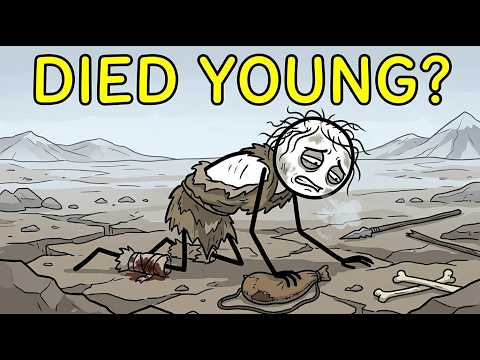
Why Did Ancient Humans Die Young?
The Misleading Life Expectancy of Ancient Humans
Understanding Life Expectancy in the Stone Age
- The commonly cited life expectancy of 30 years for Stone Age humans is misleading and oversimplified.
- This figure often evokes an image of a 30-year-old hunter-gatherer dying from old age, which is inaccurate.
Differentiating Life Expectancy Statistics
- It's crucial to distinguish between life expectancy at birth and life expectancy at later ages; they convey different realities.
- Life expectancy at birth includes all individuals, including those who die young, skewing the average downwards due to high infant mortality rates.
The Impact of Infant Mortality on Averages
- A thought experiment illustrates that a population with high child mortality can still have adults living into their 70s, yet the average life expectancy remains low.
- High infant and child mortality primarily drives down the average life expectancy figures rather than early adult deaths.
Realities of Survival Beyond Childhood
Insights from Paleodemography
- Studies show that individuals who survive past childhood could expect to live into their 60s or even 70s in ancient populations.
- This significant correction reveals that many adults lived long lives once they survived the dangers of early childhood.
Causes of High Childhood Mortality
- Infectious diseases were a major cause of high childhood mortality rates in ancient times, influenced by population density and lifestyle changes over time.
- Hunter-gatherers had lower exposure to epidemic diseases compared to settled agricultural societies due to their mobile lifestyles.
Childbirth Risks in Pre-modern Societies
Maternal and Infant Mortality Rates
- Maternal mortality was alarmingly high, with estimates suggesting a risk as high as 1% per birth across multiple pregnancies leading to significant cumulative risks for women.
- Complications during childbirth consistently resulted in maternal deaths across various cultures throughout history.
Broader Mechanisms Behind Child Mortality
- Factors contributing to child mortality included infectious diseases, malnutrition, and physical fragility without modern medical interventions available.
Violence and Accidents: Additional Mortality Factors
Interpersonal Violence's Role
- Some studies suggest that violence accounted for a notable percentage (10%-20%) of adult male deaths in prehistoric societies, though this is debated among researchers.
Environmental Hazards
- Accidents such as animal attacks or falls also contributed significantly to pre-modern mortality rates due to lack of medical care for injuries that are now treatable today.
The Transformative Impact of Antibiotics
Modern Medicine vs Ancient Health Challenges
- The absence of antibiotics meant minor infections could lead quickly to death; this starkly contrasts with modern medicine's ability to manage such conditions effectively today.
Aging Among Survivors: Evidence from Skeletal Remains
Archaeological Findings on Aging
- Skeletal evidence shows that those who survived into old age exhibited degenerative changes similar to modern elderly populations, indicating longevity was possible among some ancient humans.
Social Roles of Elderly Individuals
- Elderly members within hunter-gatherer societies played vital roles as knowledge keepers and caregivers, supporting theories like the grandmother hypothesis regarding human longevity evolution.
Reevaluating Lifespan Data
Methodological Limitations in Paleodemography
- Early analyses often underestimated lifespans due to broad categorization methods used for aging skeletal remains; more refined techniques reveal longer lifespans than previously thought.
Case Study: Libben Population Analysis
- Reanalysis showed many individuals classified as older actually lived much longer than initially recorded; this highlights methodological issues affecting demographic understanding.
Comparative Studies on Hunter-Gatherer Populations
Consistent Patterns Across Cultures
- Research indicates common patterns in adult death ages across various hunter-gatherer groups suggest most adults lived into their seventh decade after surviving childhood.
Agricultural Transition Effects
- Shifts from hunting-gathering lifestyles led not only to health declines but also increased childhood mortality during initial agricultural periods known as the Neolithic mortality crisis.
Cultural Narratives Surrounding Aging
Myths vs Reality
- The narrative surrounding ancient humans dying at 30 serves cultural functions by contrasting modernity against perceived historical brutality while misrepresenting actual longevity potential.
Achievements in Modern Medicine
- Modern advancements have not drastically extended maximum lifespan but have significantly reduced early-life mortalities through improved healthcare practices.
Conclusion: Revisiting Historical Perspectives on Longevity
Complexity Beneath Simple Statistics
- While the number 30 reflects tragic aspects of ancient existence, it fails to capture the broader reality where many lived long lives post-childhood under challenging conditions.