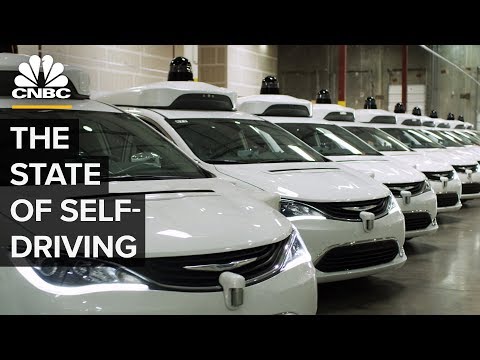
Why Don’t We Have Self-Driving Cars Yet?
New Section
This section discusses the current state of self-driving cars and the challenges faced in achieving fully autonomous vehicles.
The Current State of Self-Driving Cars
- More companies are working on bringing self-driving cars to the masses, but a truly autonomous vehicle does not exist yet.
- The timeline for achieving a driverless future is uncertain, with missed goals and projections in the industry.
- Proponents like Elon Musk have set aggressive timelines but have faced setbacks.
- Some companies aim to deploy self-driving vehicles by 2019, while others are more cautious about the timeline.
- The perception and prediction aspects of self-driving technology are challenging problems to solve.
Companies and Approaches in Self-Driving Technology
- Waymo (formerly Google's self-driving car project) and Aurora are developing hardware and software as the brains of self-driving cars.
- Lyft is developing its own self-driving systems and offering rides through partnerships in select areas.
- Tesla, Zoox, GM's Cruise division, Argo AI, Aptiv, and other companies are building their own vehicles or focusing on specific aspects of self-driving technology.
Challenges and Progress
- Perception and prediction remain difficult challenges in self-driving technology.
- Setbacks such as accidents have led to a more cautious approach in the industry.
- Several big players have adjusted their predictions on when self-driving cars will be widely available.
- The engineering challenge of achieving self-driving cars is significant, requiring substantial funding and partnerships.
Testing and Operations
- Companies like Aurora, Cruise, and Zoox are testing their vehicles on the road with safety drivers onboard.
- Different environments, such as urban areas like San Francisco, present unique challenges for testing self-driving technology.
New Section
This section discusses the approach of creating all-in-one self-driving taxi systems and the challenges involved.
All-In-One Self-Driving Taxi Systems
- Zoox is working on creating an all-in-one self-driving taxi system set to launch in 2020.
- Retrofitting cars with sensors and computers is not sufficient for achieving fully autonomous vehicles.
Challenges in Achieving Self-Driving Taxis
- Perception and prediction are difficult problems to solve in self-driving technology.
- Building a comprehensive self-driving system requires deep integration with vehicle manufacturers and mission-critical safety considerations.
The transcript provided does not have enough content to create additional sections without repeating information or creating very short sections that do not provide meaningful insights.
New Section
This section discusses the current state of semi-autonomous systems in vehicles, with a focus on Nissan and Tesla.
Semi-Autonomous Systems in Nissan and Tesla
- Nissan and Tesla both have semi-autonomous systems on the roads today.
- Tesla's system has been available in beta since 2015, allowing drivers to use it hands-free.
- Tesla is working towards releasing a feature complete full self-driving software this year. However, they face limitations due to their hardware.
New Section
This section explores different approaches taken by companies in the development of self-driving technology.
Different Approaches to Self-Driving Technology
- Some companies are focusing on self-driving shuttles operating along designated routes or long-haul trucks on highways.
- Companies like Ghost and Comma.ai are working on aftermarket kits that can be installed in older cars to add self-driving capabilities.
New Section
This section highlights the challenges faced by all players in the autonomous vehicle industry, particularly regarding safety.
Challenges in Autonomous Vehicle Development
- One of the major challenges is proving that the technology is safe and surpasses human driving capabilities.
- There are no established federal standards or testing protocols for automated driving systems in the U.S., leading to concerns about safety. Fatal crashes involving autonomous vehicles have occurred.
- Safety regulations need to be independent and strong, rather than relying solely on self-certification by companies. The Boeing 737 Max 8 incident serves as a cautionary example for deploying autonomous vehicles without proper regulation.
New Section
This section discusses the potential safety benefits of autonomous vehicles and the need to remove safety drivers for full autonomy.
Safety Benefits and Removing Safety Drivers
- The industry believes that autonomous vehicles will ultimately make roads safer than they are today. Elon Musk has even stated that it is almost irresponsible not to have these vehicles on the road due to their enhanced safety.
- However, it is important to consider that an autonomous vehicle should be compared not only to a human driver but also to a human driver with advanced driver assist systems.
- The true milestone for the industry will be when autonomous vehicles can operate without any human presence, including safety drivers.
New Section
This section explores the challenges of testing self-driving technology and the importance of simulation.
Testing and Simulation in Self-Driving Technology
- Simply driving a high number of miles does not provide an accurate measure of how well an automated system functions. It needs exposure to challenging real-world scenarios.
- Companies rely on simulation to expose self-driving vehicles to various situations that may rarely occur in reality but are crucial for ensuring safe responses from the vehicle.
- Testing self-driving vehicles on public roads poses risks not only for passengers but also for other road users who did not consent to being part of an experiment. Proper regulation and testing protocols are necessary.
New Section
This section highlights recent efforts by lawmakers and regulatory agencies regarding autonomous vehicle deployment.
Efforts by Lawmakers and Regulatory Agencies
- Lawmakers have held hearings to determine how best to ensure public safety while promoting self-driving innovation.
- In September, the National Highway Traffic Safety Administration released new federal guidelines for automated driving systems.
State Legislation and Deployment of Self-Driving Vehicles
This section discusses the progress of state legislation and the cautious approach taken by self-driving companies in deploying autonomous vehicles.
State Legislation
- As of October, 41 states have enacted laws or signed executive orders regulating autonomous vehicles.
Cautious Approach
- Self-driving companies are proceeding cautiously due to regulatory uncertainties.
- Limited deployments of self-driving vehicles are expected in specific areas where there is confidence in the technology.
- These limited deployments will primarily focus on fleet applications for moving goods and people.
- Aurora's self-driving systems can be integrated into various types of vehicles, from taxis to long-haul trucks.
Challenges in Deployment
- The cost of self-driving technology is a deciding factor for deployment, making it unlikely for most consumers to own fully autonomous vehicles.
- Product liability and maintenance issues also pose challenges for widespread adoption of self-driving technology.
- Ride-hailing companies like Lyft and Uber are getting involved in autonomous initiatives to overcome these challenges.
Public Perception and Understanding of Self-Driving Technology
This section explores the public perception and understanding of self-driving technology.
Public Perception
- Some industry players have overhyped the technology before it is ready, leading to confusion among the public.
- Many people do not have a clear understanding of what is meant by "driverless car."
- Waymo and General Motors Cruise Automation are close to achieving level five cars that can function autonomously, but they still have limitations similar to inexperienced drivers.
- There is a misconception that autonomous vehicles are already available for purchase, but true self-driving cars do not exist yet.
Impact on Progress
- Public confusion and uncertain timelines have impacted the progress of self-driving technology.
- Despite significant developments, truly self-driving cars as part of our daily lives are still years away.
Challenges in Achieving Full Autonomy
This section discusses the challenges in achieving full autonomy and the importance of thorough testing.
Vehicle Readiness
- Achieving full autonomy requires a good understanding of all possible scenarios and situations that the vehicle may encounter, which takes time.
- Level four vehicles are expected to be feasible in small quantities within the next five years, primarily for package delivery or neighborhood transportation.
User Misuse and Design Considerations
- The technology must be designed with assumptions that users may misuse it, emphasizing safety and avoiding overpromotion.
- Collaboration with society and community is crucial in building mission-critical safety systems for self-driving vehicles.