Administracion cuentas por cobrar
Administración Financiera de Cuentas por Cobrar
Importancia de las Cuentas por Cobrar
- Las cuentas por cobrar son cruciales para la empresa, ya que representan las ventas a crédito y lo que los clientes deben.
- Es esencial establecer condiciones claras en la administración para asegurar la recuperación de estas cuentas.
Manual de Crédito
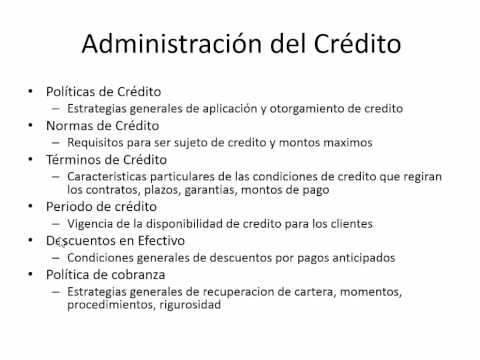
- Un buen manual de crédito debe incluir políticas generales sobre el otorgamiento de créditos y el tipo de clientes elegibles.
- Debe definir normas específicas, incluyendo requisitos documentales y análisis del riesgo crediticio del cliente.
Establecimiento de Límites
- Se debe estipular un monto máximo que se puede otorgar a cada cliente para evitar riesgos financieros.
- También es importante definir un límite total de créditos que la empresa puede manejar, considerando la posibilidad de que todos los clientes sean buenos pagadores.
Términos y Condiciones del Crédito
- Los términos del crédito deben estar claramente definidos, incluyendo contratos, plazos y garantías ofrecidas por el cliente.
- La documentación necesaria debe ser accesible al momento de aprobar el crédito para facilitar su recuperación.
Políticas Adicionales
- El manual debe incluir políticas sobre descuentos por pagos anticipados y cómo se aplican estos descuentos a los clientes.
Effective Collection Strategies for Accounts Receivable
Importance of Predefined Interaction Protocols
- It is crucial to have predefined protocols for interactions with clients regarding payments to avoid offending or making them feel harassed.
- Clear definitions are necessary for handling overdue accounts, including the treatment of clients and their receivables once credit terms have expired.
Steps in the Collection Process
- The collection process may start with friendly calls during initial days of delay, transitioning to more formal communication as time progresses.
- A well-integrated credit manual is essential for managing client relationships and monitoring payment compliance effectively.
Mechanisms for Monitoring Accounts Receivable
- Two key mechanisms include calculating days sales outstanding (DSO), which helps understand total sales recorded in accounts receivable.
- Aging reports allow classification of receivables into groups based on their payment status, helping identify those that are current, nearing due dates, or overdue.
Classification of Receivables
- An example aging report categorizes accounts by age: 0–30 days, 31–60 days, 61–90 days, and over 90 days past due.
- Understanding the aging of accounts helps determine how to address overdue payments effectively within the credit manual guidelines.
Addressing Overdue Accounts