Ch. 7 Cell Structure and Function
Chapter 7: Cell Structure and Function
Introduction to Cellular Discovery
- The chapter begins with an overview of cell structure and function, introducing sections 7-1 through 7-4.
- Cells were first discovered in the mid-1600s with the invention of the microscope; Robert Hooke was the first scientist to observe cells in cork.
Cell Theory Development
- In 1838, Matthias Schleiden concluded that all plants are made of cells, followed by Theodor Schwann's assertion that all animals consist of cells.
- Rudolf Virchow stated in 1855 that new cells arise only from existing cells, forming the basis of cell theory: all living organisms are composed of cells, which are fundamental units of life.
Advancements in Microscopy
- Electron microscopes allow scientists to view details at a much smaller scale than light microscopes, revealing structures down to atomic levels but requiring samples to be non-living.
- Scanning probe microscopes enable observation of single atoms and molecules like DNA and proteins.
Prokaryotic vs. Eukaryotic Cells
- Cells can be categorized as prokaryotic (without a nucleus) or eukaryotic (with a nucleus); prokaryotes include bacteria and have simpler structures.
- Eukaryotic cells are larger and more complex, containing a nucleus where genetic information is stored separately from other cellular components.
Eukaryotic Cell Structure Overview
Organelles as Functional Units
- Organelles within eukaryotic cells perform various functions akin to organs in a factory setting; they help maintain cellular operations.
Nucleus Functions
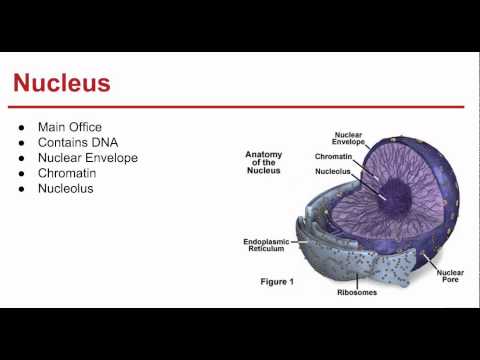
- The nucleus acts as the control center for the cell, housing nearly all DNA necessary for protein synthesis; it has a nuclear envelope with pores for material exchange.
Ribosomes Role
- Ribosomes function as protein assembly machines using messenger RNA (mRNA), which carries coded instructions from the nucleus.
Endoplasmic Reticulum (ER)
- The ER is an internal membrane system involved in synthesizing lipids and proteins; rough ER has ribosomes for protein synthesis while smooth ER specializes in lipid production and detoxification tasks.
Golgi Apparatus Functionality
Overview of Cellular Organelles and Their Functions
Golgi Apparatus
- The Golgi apparatus is responsible for processing proteins that are then distributed throughout the cell and outside it.
Lysosomes
- Lysosomes act as the cleaning crew of the cell, filled with enzymes that digest and break down lipids, carbohydrates, and proteins. They also recycle nutrients by breaking down organelles that are no longer useful.
Vacuoles
- Vacuoles serve as storage structures within cells, holding materials such as water, salts, proteins, and carbohydrates. In plant cells, a large central vacuole maintains homeostasis by regulating water balance.
Mitochondria
- Mitochondria are found in nearly all eukaryotic cells and convert chemical energy from food into usable compounds for the cell. They have a dual membrane system and are inherited maternally.
Chloroplasts
- Chloroplasts capture sunlight energy to convert it into chemical energy through photosynthesis. They contain their own genetic information, supporting the endosymbiotic theory regarding their evolutionary origin. Key components include thylakoids (thids), granum (stacks of thylakoids), stroma (outer area), and lumen (inner area).
Cytoskeleton