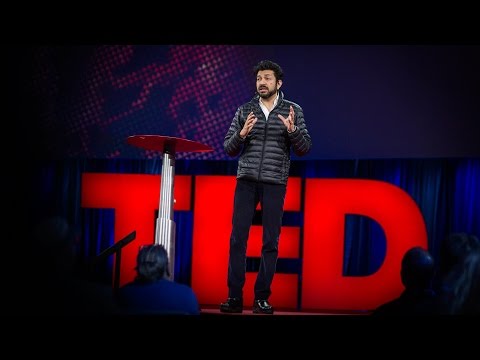
Soon We'll Cure Diseases With a Cell, Not a Pill | Siddhartha Mukherjee | TED Talks
The Future of Medicine: A Shift in Perspective
The Traditional Model of Medicine
- The speaker introduces the simplistic model of medicine: "have disease, take pill, kill something."
- This model's dominance is attributed to the antibiotic revolution, marking 100 years since antibiotics were introduced in the U.S.
- Antibiotics work by targeting specific microbes with precision, transforming lethal diseases into treatable conditions.
- Despite successes in infectious diseases, this approach has only partially succeeded in treating chronic illnesses like diabetes and hypertension.
- Only 250 out of approximately one million chemical reactions in the human body can be targeted by current medicinal chemistry.
Limitations of Current Medical Approaches
- The speaker compares medicinal chemistry to a pole operator managing a small fraction of a vast telephone network.
- Proposes reorganizing medical approaches to consider illness hierarchically rather than simply targeting diseases.
- Introduces the concept that cells are self-regulating units that form organs and ultimately humans within environments that also influence health.
Rethinking Cancer Treatment
- Discusses cancer treatment's historical reliance on the lock-and-key model and its limitations.
- Recent advancements focus on utilizing the immune system to combat cancer, recognizing it grows within an organism rather than isolation.
- Highlights successful new medicines developed through this understanding of cancer's interaction with human physiology.
Environmental Influences on Health
- Examines how environments can be carcinogenic (e.g., prisons contributing to cancer risk).
- Contrasts with efforts to create anti-carcinogenic environments through hormonal and metabolic changes for various cancers.
Addressing Mental Health Challenges
- Discusses depression treatment evolution from targeting neurotransmitters to changing brain physiology through talk therapy.
- Emphasizes that combining talk therapy with medication yields better results than either method alone.
- Suggestion for immersive environments that could alter signals triggering depression as part of a holistic approach.
A New Metaphor for Medicine
- Proposes shifting from a metaphor focused on killing (disease treatment) to one centered around growth (health improvement).
What Happens to Our Bones as We Age?
Personal Experience with Knee Degeneration
- The speaker shares a personal story about experiencing severe knee pain after a run, leading to an MRI that revealed significant cartilage and bone damage.
- Statistics indicate that 60% of the audience likely shows signs of bone degeneration, with 85% of women by age 70 exhibiting moderate to severe cartilage degeneration.
Research Journey into Cartilage Repair
- The speaker discusses initial attempts to reverse cartilage degeneration through chemical injections in animal models, which ultimately failed.
- A research student proposed a new hypothesis suggesting the issue might be related to skeletal stem cells rather than mechanical or chemical problems.
Discovery of Skeletal Stem Cells
- After shifting focus, researchers identified skeletal stem cells residing within the skeleton that can generate bone and cartilage.
- These stem cells have four key properties: they are located where expected, can be cultured to form cartilage efficiently, repair fractures effectively, and their numbers decline significantly with age.
Implications for Future Medicine
- The findings prompted a shift in thinking about arthritis as a cellular disease rather than just treating symptoms with pills.
- Questions arise regarding the potential for creating organs outside the body and implanting them or developing environments conducive to healing without requiring exercise.
Rethinking Medical Models
- The discussion concludes by emphasizing the need for innovative approaches in medicine—considering cells or environments as treatments instead of traditional pharmaceuticals.
Understanding the Future of Medicine
The Impact of Antibiotics on Medical Thinking
- Antibiotics have significantly influenced our perception of medicine over the past century, creating a distorted view that may not serve future needs.
- There is a need for new models to approach medicine, as current thinking may limit transformative impacts on illness treatment.
- While powerful drugs are important, the underlying issue may be inadequate conceptual frameworks regarding medicines.
The Role of Mechanisms, Models, and Metaphors
- The speaker emphasizes three intangible concepts: mechanisms, models, and metaphors as critical elements in advancing medical understanding.
- Personalization in medicine is often linked to genomics; however, this perspective might overlook broader biological contexts.
Personalization Beyond Genomics
- The genome is just one part of a larger biological framework; cells represent the first organized unit in this hierarchy.
- Effective personalization in medicine should extend beyond genetics to include cellular therapies and ultimately environmental immersion therapies.
Turn any video into a summary like this
YouTube links, meetings, lectures. With transcripts, search, and chat.