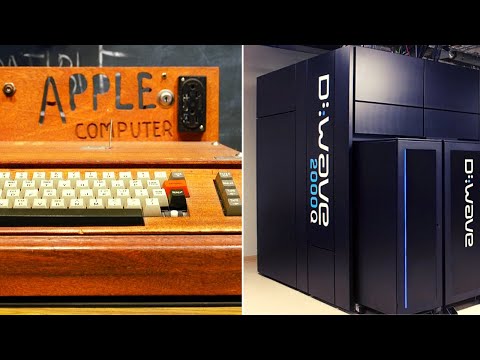
La HISTORIA DE LA COMPUTADORA: generaciones desde los 40 hasta los superordenadores💻
Computing Generations Overview
This section provides an overview of the six generations of computers, starting from the 1940s to the present day, highlighting key developments and advancements in computing technology.
First Generation Computers
- The first generation of computers spanned from 1940 to 1952, characterized by automatic calculation machines using vacuum tubes and valve electronics.
- ENIAC, considered the first digital computer, marked the beginning of this generation with its machine language operations.
- Post-World War II, focus shifted towards commercial applications leading to the development of EDVAC and market introduction of Saly and UNIVAC.
Second Generation Computers
- The second generation (1956-1964) saw transistors replacing vacuum tubes, reducing size and power consumption while enhancing performance.
- Introduction of COBOL for program portability and IBM's RAMAC magnetic disk system were significant advancements during this period.
Main Models
- IBM's 1041 Mainframe and System/360 series were notable models in the second generation era, offering configurable software for different needs.
History of Computers: Generations and Evolution
This section discusses the evolution of computers through generations, focusing on the third and fourth generations.
Third Generation (1964-1971)
- Integrated circuits revolutionized computer development by increasing processing capacity and reducing manufacturing costs.
- IBM 360 marked the beginning of the third generation, introducing SLT technology for more flexible programs and standardized models.
- Electronic components integrated into chips improved speed, energy consumption, reliability, flexibility, and multiprogramming in computers.
- Prominent models included IBM 360 and CDC 6600, enhancing processing power with minicomputers like PDP-8 and PDP-11.
Fourth Generation (1971-1981)
- Microprocessors led the fourth generation with personal computers like Intel 4004 enabling smaller sizes and mass use.
- Apple's birth in 1976 marked a significant milestone in computing history with the invention of mass-use microcomputers.
- Advancements in processing power facilitated connections between machines leading to the Internet's eventual development.
Evolution of Computers: Fifth Generation
The fifth generation of computers began around 1983 with ongoing advancements till present times.
Fifth Generation Characteristics
- Originating in Japan, plans were made to develop intelligent computers capable of human communication and image recognition.
The Evolution of Computers and Artificial Intelligence
This section discusses the evolution of computers and artificial intelligence, highlighting past projects in Japan, current endeavors by companies like Amazon and Google, and the integration of AI into smart home devices and autonomous cars.
Japanese Project on Artificial Intelligence
- The Japanese project on artificial intelligence lasted eleven years but did not achieve the desired results.
- Computers evolved within existing parameters without successfully incorporating artificial intelligence.
- Despite this setback, companies like Amazon, Google, Apple, and Tesla are actively working on integrating AI into computers.
Advancements in Smart Home Devices
- Initial steps have been taken in smart home devices to integrate various activities within households.
- Future goals include enabling machines to self-learn based on acquired experiences.
Fifth Generation Computers
- Laptops became widespread during the fifth generation, allowing for portable computing.
- The fifth generation marked advancements such as automatic language translation, gigabyte-level information storage, and the emergence of DVDs.
Advances in Computer Complexity and Functionality
This section delves into the complexity of fifth-generation computers with integrated microprocessor features. It also touches upon advancements in human-machine communication and parallel processing capabilities.
Integration of Microprocessor Features
- Fifth-generation computers integrated advanced features into microprocessors previously found only in CPUs.
- Users no longer require programming knowledge to operate complex systems; accessing a few functions suffices for problem-solving tasks.
Progress in Human-Machine Communication
- Advances have been made in human language communication; however, machine self-learning is still developing.
- Superconductors and parallel processing enable faster operations with increased task-handling capacity.
Computers Emulating Human-Like Intelligence
This segment explores notable instances where computers demonstrated capabilities akin to human intelligence through strategic gameplay and knowledge-based competitions.
World Chess Champion Defeat by Computer
- Gary Kasparov's defeat by IBM's Deep Blue computer showcased its 32 processors' ability to analyze vast amounts of data per second.
IBM's Watson Triumph
- IBM's Watson defeated champions from a US television show using high-power processors for autonomous database searches without internet connectivity.
Future Prospects: Quantum Computing
Discusses ongoing research towards quantum computing as a potential new era in computer technology due to its unique characteristics compared to classical computing methods.
Quantum Computing Development
- Ongoing research focuses on quantum computing as a potential new era due to its distinct characteristics from classical computing methods.
Quantum Computing Technology
Major technology companies like Google, Intel, IBM, or Microsoft are investing efforts into developing quantum computing systems that utilize qubits instead of traditional bits for enhanced problem-solving capabilities.
Characteristics of Quantum Computing
- Quantum computing utilizes qubits combining zeros and ones for unprecedented problem-solving abilities beyond conventional binary systems.