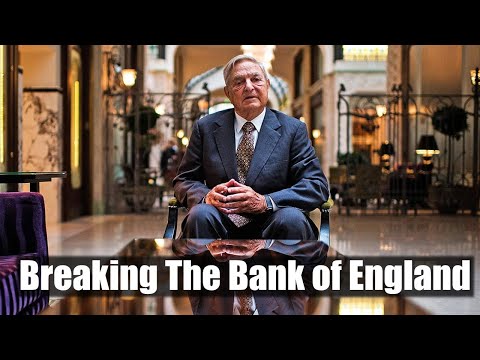
How George Soros Broke the Bank of England
New Section
This section introduces George Soros and his involvement in breaking the Bank of England in the early 1990s. It also mentions Stanley Druckenmiller, one of Soros's portfolio managers, who played a significant role in the billion-dollar gain on Black Wednesday 1992.
George Soros and Breaking the Bank of England
- George Soros first became known to the public as the man who broke the Bank of England.
- However, it is important to note that Stanley Druckenmiller, one of Soros's portfolio managers, did most of the research that led to the billion-dollar gain on Black Wednesday 1992.
- Druckenmiller had a non-traditional background for an investment banker and started his career by failing a training program for loan officers.
- He joined Soros's firm in 1988 and initially faced skepticism from Soros's son about becoming his successor.
New Section
This section discusses how George Soros and Stanley Druckenmiller worked together despite their differences. It also introduces Seeking Alpha Premium as a sponsor.
Working Together and Making a Billion Dollars
- Despite initial doubts about their compatibility, Soros and Druckenmiller managed to work together effectively.
- In 1989, there was a heated argument between them when Soros sold a position without consulting Druckenmiller.
- The trade that made them a billion dollars on Black Wednesday was not obvious at first but resulted from their collaboration.
- Seeking Alpha Premium is introduced as a sponsor offering analysis and opinion on investments.
New Section
This section provides background information on the European Exchange Rate Mechanism (ERM) and its purpose.
The Origins of ERM
- The ERM was established in the 1960s as a step towards a single European economy.
- It aimed to link the currencies of Western European countries at fixed exchange rates, facilitating commerce between member nations.
- The ERM required constant monitoring by central banks to maintain exchange rates within agreed-upon bands.
New Section
This section explains the vulnerabilities and challenges associated with the ERM system.
Challenges of the ERM System
- The ERM made national banks vulnerable due to constant monitoring and intervention required to maintain exchange rates.
- Currency fluctuations caused by large volumes of currency transactions could impact the stability of the system.
- Each national economy had unique characteristics that made it challenging for central bankers to balance interest rates, inflation, and economic growth within an artificially pegged currency.
New Section
This section discusses Britain's decision to join the ERM despite initial opposition from Prime Minister Margaret Thatcher.
Britain's Decision to Join the ERM
- Margaret Thatcher initially opposed joining the ERM due to concerns about its impact on the British economy.
- However, her influence waned, and John Major, Thatcher's Chancellor of The Exchequer, believed joining would benefit both Thatcher and the British economy.
- Despite Thatcher's diminished popularity, Britain joined the ERM three days before a Tory party conference in hopes of boosting her popularity.
Margaret Thatcher and John Major's Challenges with the ERM
This section discusses the challenges faced by John Major after Margaret Thatcher hailed the European Exchange Rate Mechanism (ERM) as her victory. The ERM did not bring instant prosperity, leading to a recession in Britain and a million job losses. The high exchange rate made it difficult for businesses to sell goods abroad, and there was no German-style prosperity as promised.
Challenges of Joining the ERM
- Joining the ERM did not bring instant prosperity to Britain.
- The country was already sliding into a recession before joining.
- A million people lost their jobs due to the high exchange rate.
- Businesses struggled to sell goods abroad.
- The promised German-style prosperity did not materialize.
Impact on Interest Rates and Mortgage Payments
- In a recession, central banks typically cut interest rates to prop up the economy.
- However, due to the ERM, the Bank of England could no longer do this.
- High interest rates led to mortgage payment struggles for British citizens.
- Many had to sell their homes at a loss with negative equity.
Germany's Unification and Economic Consequences
This section explores how Germany's reunification impacted other European countries and their economies. Faced with absorbing an impoverished workforce with outdated skills, Germany voted to spend heavily on social services. To avoid inflation, instead of printing money, the Bundesbank hiked interest rates, which affected other European countries' economies.
Implications of German Unification
- Germany's reunification led them to spend heavily on social services.
- Printing money would have caused inflation and went against German sentiments due to past experiences.
- Instead of printing money, the Bundesbank raised interest rates to attract capital from abroad.
Challenges for Other European Countries
- Many European countries needed lower interest rates to promote economic growth.
- However, matching or exceeding Germany's interest rates would devastate their economies.
- Devaluing their currencies was politically difficult.
John Major's Dilemma and the ERM Crisis
This section focuses on the challenges faced by John Major and the Bank of England due to high interest rates in the UK. Lowering interest rates would help the British economy but devalue the pound, which Major was unwilling to allow.
John Major's Dilemma
- Interest rates were too high for the UK.
- Cutting rates would benefit the British economy but devalue the pound.
- Leaving the ERM was not an option for John Major.
George Soros and Timing of Currency Collapse
This section highlights how George Soros accurately predicted and capitalized on the collapse of certain currencies within the ERM. His understanding of catalyst events and anticipation of currency devaluations played a significant role.
George Soros' Expertise
- Soros had a deep understanding of catalyst events in global markets.
- He knew that almost every trader would eventually bet on currency collapses within the ERM.
- A trigger event was needed to cause a stampede overwhelming central banks.
Trigger Events Leading to ERM Collapse
This section discusses trigger events that led to the collapse of certain currencies within the ERM, including comments from a Goldman Sachs economist and referendums against European unification plans.
Trigger Events for Currency Collapse
- A Goldman Sachs economist infuriated the Italian Central Bank by suggesting that time was running out for Italy, leading to potential devaluation pressure on lira.
- Danish voters rejected the blueprint for European Unification, leading to uncertainty and potential collapse of the ERM.
- Soros and Druckenmiller built positions against the pound and Italian lira, anticipating currency devaluations.
Soros' Strategy in Currency Trading
This section explains Soros' strategy in currency trading, specifically borrowing currencies, selling them to buy German marks, and profiting from the difference when exchange rates fell.
Soros' Currency Trading Strategy
- Soros borrowed pounds and Italian lira with a promise to pay back with interest.
- He sold the borrowed currencies to buy German marks.
- The goal was to buy back the shorted currencies at a cheaper rate when exchange rates fell, earning a profit.
Soros' Trade Against the Pound
This section discusses how George Soros took advantage of a catalyst to increase his position against the pound, leading to the events of Black Wednesday.
Soros Seizes an Opportunity
- On September 16th, the President of the Bundesbank's interview provided the catalyst Soros needed to step up his position.
- The devaluation of the Italian lira and Germany's interest rate cut created fear among investors.
- The president of the Bundesbank hinted at a need for currency realignment in an interview, unaware that it would be made public.
Druckenmiller and Soros Plan their Trade
- Stanley Druckenmiller discussed the trade with Soros, who was initially unhappy with its small size.
- Soros encouraged Druckenmiller to go all-in on shorting weak European currencies and buying German and French bonds.
- Soros also invested half a billion dollars in British stocks, anticipating a rise following a currency devaluation.
Chaos at the Bank of England
- On Black Wednesday, chaos ensued at the Bank of England as the pound started falling rapidly.
- The Chancellor authorized purchases of billions of pounds from the market but had no impact.
- As desperation grew, interest rates were increased twice within hours.
The Pound's Crash and Defeat
- Despite efforts to defend the pound, it continued to fall uncontrollably.
- Businesses exposed to the pound wanted out due to high risk and no potential reward.
- Eventually, it became clear that leaving ERM was inevitable.
The British Government Accepts Defeat
This section covers how the British government accepted defeat during Black Wednesday.
A Veritable Avalanche
- Selling intensified throughout the day, leading to an avalanche effect in market movements.
- Kenneth Clark acknowledges that they had no power as events unfolded beyond their control.
Accepting Defeat
- At 7:30 PM, the British government held a news conference to accept defeat.
- The transcript does not provide further details about the news conference.
The transcript ends here, and no additional information is available.
New Section
This section discusses how George Soros's trades cannot be solely blamed for the events that unfolded, as the daily turnover in foreign exchange markets was much larger than his trade.
Soros's Trade and Market Size
- Soros's trades cannot be blamed for what eventually happened.
- Daily turnover in foreign exchange markets in the early 1990s was frequently over a trillion dollars per day.
- Soros's ten billion dollar trade was just a drop in the bucket compared to the market size.
New Section
This section clarifies that Soros did not single-handedly break the Bank of England, but rather took advantage of an existing imbalance in the market.
Imbalance and Profits
- Soros did not break the Bank of England; there was already a great imbalance that needed to sort itself out.
- Soros understood the situation best and made significant profits from it.
- The profits on the sterling trade accounted for only 40% of Quantum Fund's total profits for the year.
- Even without that position, Quantum Fund's results would have been above its historical average rate of return.
New Section
This section highlights the financial impact of Black Wednesday on Britain and how it affected interest rates.
Cost and Interest Rates
- Soros and his fund made a billion dollars on Black Wednesday.
- The estimated cost to the British taxpayer for the failed intervention was between 3 and 4 billion pounds.
- After Black Wednesday, Britain's interest rate went back to 10%.
New Section
This section mentions some additional market chaos that occurred after Black Wednesday.
Market Chaos
- The Irish central bank temporarily raised their interest rates to 300% and Sweden raised their rates to 500% to defend their currency pegs.
- Italy dropped out of the ERM, and Sweden, Spain, Ireland, and France eventually devalued their currencies against the Deutsche Mark.
New Section
This section discusses the aftermath of Black Wednesday and how the Bank of England regained control over the British pound.
Aftermath and Economic Growth
- The Bank of England was once again free to control the British pound after Black Wednesday.
- Over the next few years, interest rates were cut and the British economy experienced high levels of growth.
- By 1997, the British pound was stronger than when it was added to the ERM.
- The UK went on to have 16 consecutive years of economic expansion.
New Section
This section suggests that Soros and other foreign exchange speculators may have actually benefited Britain despite collecting a significant fee.
Speculators' Impact
- Soros and other foreign exchange speculators might have done a favor for the British people.
- Despite collecting a significant fee, they potentially helped in restoring economic growth.
- If interested in more financial events, watch a video on the 1987 crash next.