Porter's Five Forces Explained with Example
Understanding Porter's Five Forces
Introduction to Porter's Five Forces
- The lesson introduces Porter's Five Forces as a model for analyzing competitive forces in a marketplace, particularly useful for new market entrants or businesses.
- It emphasizes understanding competition within a market to assess its profitability, referred to as "market attractiveness."
Context of the Model
- Porter's Five Forces operates at the meso level, which involves external factors directly affecting a company, positioned between macro (external uncontrollable factors) and micro (internal controllable factors).
- While firms can influence meso-level factors, they do not have complete control over them.
Profitability and Competitive Forces
- The model suggests that higher competitive forces lead to lower profit potential and less attractive industries; conversely, lower competitive forces indicate higher profit potential.
- Analyzing an industry with this framework provides only a snapshot in time; these forces can change over time.
Exploring the Five Forces
Existing Competitor Rivalry
- The first force is existing competitor rivalry, driven by the number of competitors and product similarity. Intense rivalry can reduce profits across the industry.
- High rivalry often leads firms to offer discounts and invest heavily in marketing. Unique positioning allows some firms (e.g., Apple vs. Dell) to charge more due to reduced substitutability.
Threat of New Entrants
- The second force is the threat of new entrants, which limits market profitability by forcing existing firms to keep prices low.
- Barriers to entry are crucial; high barriers can include unique intellectual property or economies of scale that deter new competitors.
Buyer Power
- The third force is buyer power. When buyers are powerful enough to demand lower prices, it reduces overall industry profits.
- Buyer power increases when there are few buyers, products are undifferentiated, and switching costs are low.
Threat of Substitution
- The fourth force concerns the threat of substitution—how easily customers can replace your product with alternatives.
- Substitute products limit pricing power and profitability; for instance, video conferencing may substitute airline travel.
Supplier Power
Understanding Porter's Five Forces and Industry Profitability
Supplier Power and Its Impact on Profits
- The uniqueness of a supplier's product increases their power, allowing them to raise prices without fear of losing customers.
- High supplier power can lead to increased costs for businesses, squeezing their profits as they must absorb these costs.
Characteristics of High vs. Low Profit Industries
- High profit industries typically have few rivals, low threat from new entrants, weak buyer power, difficult-to-substitute products, and weak suppliers.
- Conversely, low profit industries exhibit the opposite characteristics; understanding these distinctions is crucial for assessing industry attractiveness.
Importance of Persistent Forces in Industry Analysis
- Focus should be on persistent forces affecting profitability rather than temporary factors like high growth rates that may not last.
Case Study: Apple’s Original iPhone Launch
- In 2005, six companies dominated the cellular phone market with Nokia holding nearly a third of the global market share despite significant growth.
Analyzing Market Dynamics Using Porter's Five Forces
- Existing rivalry was intense due to manufacturers adding features to attract customers while products remained similar.
- Buyer power was high because consumers had many options among similar devices leading to heavy discounting by manufacturers.
- The threat of substitution was moderate; alternatives included email and landlines but were less convenient than mobile phones.
- Supplier power was low due to multiple suppliers available for most components in the industry.
Apple's Strategic Adaptation in a Competitive Market
- Despite an unattractive market characterized by competition and high buyer power, Apple successfully entered by leveraging unique product features.
Shaping the Five Forces in Favor of Apple
- Apple's unique iPhone reduced existing rivalry as it offered distinct features compared to competitors' offerings.
- The threat from new entrants diminished over time due to Apple's growing ecosystem which made it harder for newcomers to compete effectively.
Advantages and Disadvantages of Porter's Model
Advantages:
- The framework is straightforward and aids in assessing industry attractiveness for strategic decision-making.
Disadvantages:
- It provides a snapshot analysis that may overlook ongoing changes within an industry driven by evolving strategies among firms.
Additional Considerations:
- While supplier power is often viewed negatively, modern organizations sometimes thrive through joint ventures that benefit all parties involved.
Understanding Industry Attractiveness Through Porter's Five Forces
Overview of Porter's Five Forces Framework
- The iPhone example illustrates how Apple entered a seemingly unattractive industry and dominated it, transforming its perception.
- Porter's Five Forces framework helps assess an industry's attractiveness by analyzing fundamental forces affecting profitability.
Key Components of the Framework
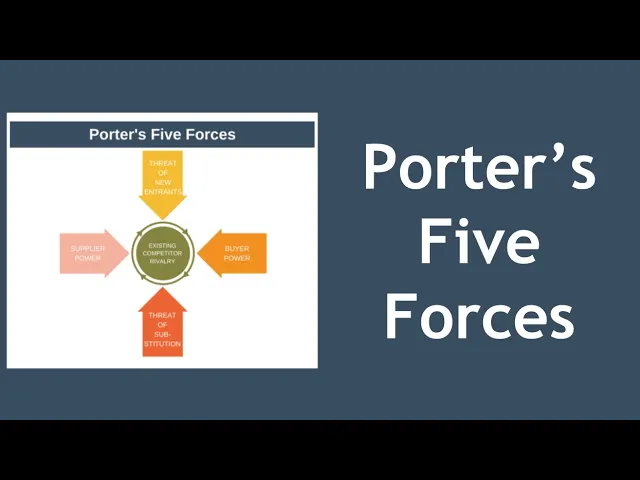
- The five forces include:
- Existing competitor rivalry
- Threat of new entrants
- Buyer power
- Threat of substitution
- Supplier power