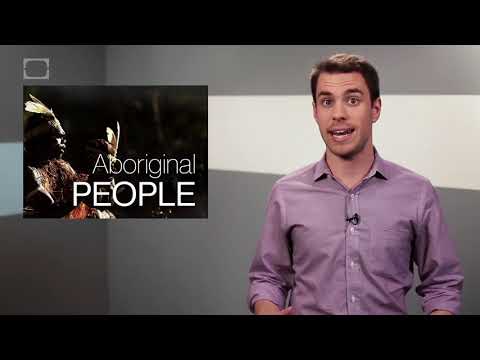
Who Are Australias Aboriginal People 1080p
Australia's Aboriginal People: History and Current Issues
Historical Context of Aboriginal Peoples
- Australia's Aboriginal people have faced severe historical persecution, leading to the establishment of National Sorry Day in 1998 as a form of recompense and awareness for indigenous populations.
- The term "Aborigines" is often used to group various indigenous populations, but some find it pejorative; legally, they are referred to as Aboriginals and Torres Strait Islanders.
Cultural Heritage and Population Statistics
- A genetic study suggests that native Australian peoples may have left Africa up to 75,000 years ago, indicating one of the oldest continuous populations outside Africa.
- By the time Europeans colonized Australia in 1788, there were approximately 300,000 native individuals speaking around 300 different languages.
Impact of Colonization
- Colonization led to devastating effects on traditional societies due to new diseases, violence fueled by racism, and oppressive land use policies; currently, only about 3% of the Australian population identifies as Aboriginal.
- Many Aboriginal languages are endangered; only about 75 remain today.
Government Policies and Their Consequences
- For decades, Aboriginal people faced extreme racism and government encroachment on their territories; citizenship rights were not granted until the mid-20th century.
- The policy of forcibly removing Aboriginal children from their families resulted in what is known as the Stolen Generation. The government has since apologized for these actions.
Ongoing Challenges
- Despite changes in governmental attitudes towards Aboriginal people over recent decades, high rates of unemployment, poverty, crime, and health issues persist within these communities.
- Land disputes between Indigenous groups and the government continue today.