Dunbar's Number: Why We Can't Have More Than 150 Friends

Dunbar's Number: Why We Can't Have More Than 150 Friends

Understanding Social Connections and Dunbar's Number

The Nature of Online Friendships

  • The speaker discusses the phenomenon of people claiming large numbers of friends on social media, often exceeding 500 or even 1000, suggesting that many of these connections are superficial.
  • This leads to the introduction of "Dunbar's number," which is approximately 150, indicating a cognitive limit to the number of meaningful relationships one can maintain.

Cognitive and Time Constraints

  • The limitations in maintaining relationships stem from cognitive challenges and time constraints; individuals cannot invest enough time in each relationship to develop genuine connections.
  • The speaker emphasizes that despite extensive research in social psychology, there remains a lack of understanding about what constitutes a true relationship.

Emotional Complexity of Relationships

  • Relationships are described as emotional constructs that are difficult to articulate verbally; this complexity contributes to the challenge in defining and comparing them.
  • Poets are recognized for their ability to express these nuanced emotional experiences, highlighting the difficulty most people face in verbalizing their feelings about relationships.

Relationship Quality and Investment

  • There is an assertion that the quality of relationships correlates with the amount of time invested; deeper connections require more shared experiences.
  • The concept is illustrated using a metaphorical model where personal relationships form concentric layers, with closer ties requiring more time and effort.

Layers of Relationships

  • The structure of personal relationships is likened to ripples on a pond: as one moves outward from their core group (about five close friends), they encounter broader but less intimate connections.
Video description

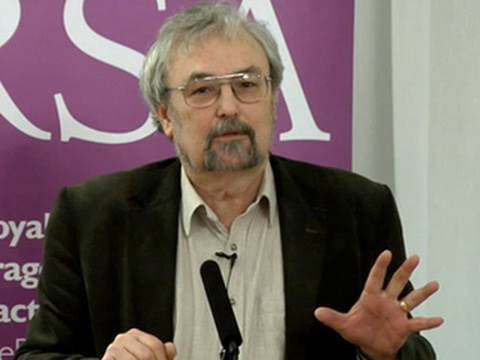
Complete video at: http://fora.tv/2010/02/18/Robin_Dunbar_How_Many_Friends_Does_One_Person_Need Evolutionary anthropologist Robin Dunbar expands on "Dunbar's number," his theory that the maximum number of stable relationships a person can maintain is approximately 150. Time to delete a few hundred Facebook friends? ----- We are the product of our evolutionary history, and that history colors our experience of everyday life -- from the number of friends we have to how religious we are. Renowned evolutionary anthropologist Professor Robin Dunbar visits the RSA to explain how the very distant past underpins all of our current behaviors, and how we can best utilize that knowledge. Did you know that you have just 150 friends, acquaintances and relatives? And that this is a natural size for villages all over the world? Now known as "Dunbar's Number," it defines the feasible boundaries of our social lives. Dunbar's investigations show us that we inherited the social side of our brains from our mother, and the emotional side from our father; why many women see the world in four or even five different colors, but men only ever have the conventional red, green and blue; and why facial symmetry has everything to do with voter choices in elections. - RSA Robin Ian MacDonald Dunbar is a British anthropologist and evolutionary biologist, specializing in primate behavior. He is best known for formulating Dunbar's number, roughly 150, a measurement of the "cognitive limit to the number of individuals with whom any one person can maintain stable relationships". Professor Dunbar is a director of the British Academy Centenary Research Project (BACRP) "From Lucy to Language: The Archaeology of the Social Brain" and is involved in the planned BACRP "Identifying the Universal Religious Repertoire".