S11: Définitions + Bascule RS -Circuits séquentiels- structure machine
Introduction to Sequential Circuits
Overview of Sequential Circuits
- The lesson introduces the final chapter on sequential circuits, focusing on definitions and basic concepts.
- "سيركوي سيقنسيال" translates to "sequential circuit," which is a fundamental concept in electronics.
Characteristics of Sequential Circuits
- In sequential circuits, outputs depend not only on current inputs but also on past states, indicating a memory aspect.
- New data influences results based on previous outcomes, highlighting the importance of historical information in processing.
Timing and Synchronization
Importance of Timing
- The concept of synchronization is crucial for calculating results in sequential circuits; it ensures that operations occur at specific intervals.
- Signals generated by these circuits are synchronized, allowing for orderly processing and communication between components.
Data Handling in Sequential Logic
Data Processing Mechanism
- Changes in output only occur with new input data; this emphasizes the need for accurate timing rather than relying solely on clock cycles.
- An example illustrates how an accountant processes overtime claims without considering the date, demonstrating asynchronous logic.
Key Components: Flip-Flops
Understanding Flip-Flops
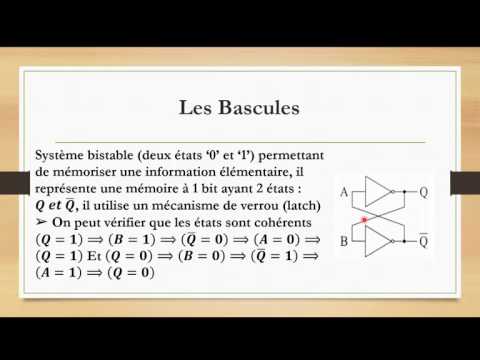
- Flip-flops are foundational elements in sequential circuits; they store binary information and play a critical role in data handling.
- The RS flip-flop is highlighted as a common type used within these circuits, showcasing its functionality and significance.
Operational Examples and Truth Tables
Practical Applications
- A truth table is referenced to illustrate how different inputs affect outputs within an RS flip-flop configuration.
- The discussion includes scenarios where previous states influence current outputs, reinforcing the concept of memory within sequential logic.
Understanding the Concepts of Zero and One
Introduction to Basic Mathematical Concepts
- The discussion begins with a focus on the concept of zero, emphasizing its foundational role in mathematics.
- The speaker introduces the idea that "0 plus 0" equals zero, reinforcing basic arithmetic principles.
- A reference is made to a specific case where "1 is 0," indicating a deeper exploration into mathematical identities or paradoxes.
Exploring Unique Cases in Mathematics
- The speaker mentions waiting for conditions to reach zero, suggesting an examination of limits or thresholds in mathematical scenarios.
- A unique situation is highlighted: "في حالة واحدة واحدة هي حالة من الأحيان," which translates to discussing singular cases that may arise in mathematical contexts.
Understanding Transformations and Values
- The conversation shifts towards transformations within a system, specifically mentioning "سطابة الترانزيسة" (transistor characteristics), hinting at applications beyond pure mathematics.
- Two primary states are discussed: one being zero and another involving complex interactions between values, illustrating how different conditions can affect outcomes.
Analyzing Command Structures
- The mention of "كامندو 1 1" suggests an exploration of command structures or sequences within mathematical operations or programming logic.
- Further elaboration on command structures indicates their importance in understanding systematic approaches to problem-solving.
Conclusion on Mathematical Relationships
- The final points discuss relationships between variables and their implications for broader mathematical theories, particularly focusing on how these concepts interrelate within systems.
- A summary of two main cases concludes the discussion: one involving direct transformations and another exploring potential variations under different conditions.