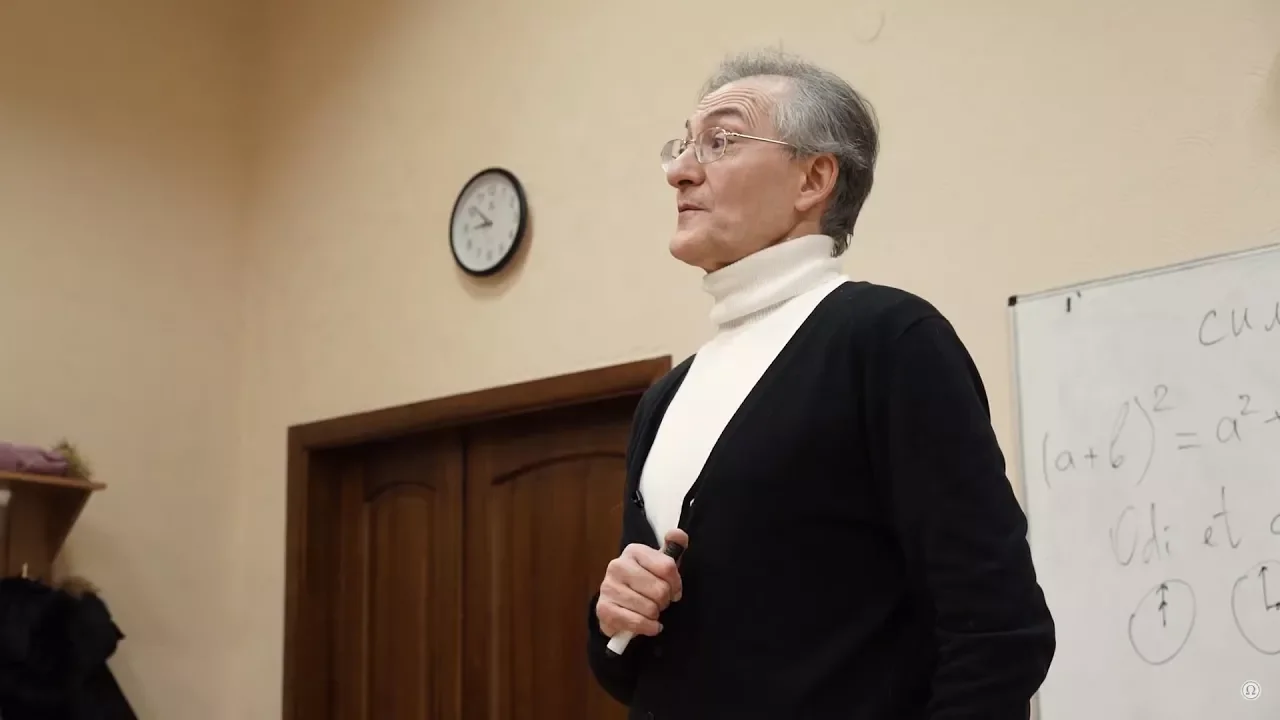
Шекспир "Гамлет", "Ромео и Джульетта", "Орфей и Эвридика" Пустовит курс "Эстетика" лекция 8/12
Exploring the Dynamics of Human Nature through Montaigne and Shakespeare
The Influence of Montaigne on Shakespeare
- Montaigne discusses the dynamism of human nature, emphasizing that humans are in a constant state of change. This perspective significantly influenced William Shakespeare, who was a keen reader of Montaigne's works.
- Shakespeare incorporated approximately 750 direct references from Montaigne's "Essays" into his own writings, showcasing a deep connection between their ideas.
Hamlet: A Case Study in Tragedy
- The discussion focuses on "Hamlet," particularly the character Ophelia, who is depicted as the daughter of Polonius and the love interest of Prince Hamlet. Her tragic fate serves as a pivotal point in the narrative.
- Ophelia's descent into madness culminates in her drowning, which is recounted by Queen Gertrude to Laertes, Ophelia’s brother. This moment highlights themes of loss and tragedy within familial relationships.
The Graveyard Scene: Comedy vs. Tragedy
- In Act 5, Scene 1, two gravediggers (referred to as clowns in the original text) provide comic relief amidst the tragedy. Their banter about death contrasts sharply with Ophelia's demise.
- The gravediggers discuss whether Ophelia deserves a Christian burial due to suspicions surrounding her death being a suicide. This raises questions about societal norms regarding class and morality.
Societal Commentary on Death
- One gravedigger argues that if Ophelia had not been noble, she would not have received a proper burial; this reflects on how social status influences perceptions of life and death.
Shakespeare's Mastery of Perspective
The Greatness of Shakespeare
- Shakespeare's greatness is attributed to his ability to present the same event from multiple perspectives, creating a rich and nuanced understanding of human experience.
- An example is the differing perceptions of death in "Hamlet," showcasing how characters like Ophelia and Laertes interpret events uniquely.
The Magic of Juliet's Balcony Scene
- In "Romeo and Juliet," the famous balcony scene contrasts Juliet’s magical experience with Mercutio’s mundane view, highlighting Shakespeare's skill in juxtaposing different character experiences.
- This duality emphasizes how perception shapes reality; what is enchanting for one may be dreary for another.
Complexity of Characters
- Hamlet’s feigned madness illustrates the complexity of human emotions, as different characters react differently to his behavior, revealing their own biases and beliefs.
- Ophelia mourns Hamlet’s decline from an idealized lover to a troubled individual, showcasing her emotional depth amidst tragedy.
Multi-faceted Character Evaluations
- Tybalt serves as a case study in multi-dimensional character analysis; while Mercutio condemns him as a villain, Juliet’s tears upon his death suggest he had redeeming qualities.
- This highlights Shakespeare's talent for creating layered characters whose true nature can be interpreted in various ways by different observers.
Human Nature and Change
- Shakespeare explores the dynamic nature of humanity; characters evolve throughout plays, reflecting internal struggles and societal influences.
- He draws on philosophical ideas about movement and change, suggesting that stagnation equates to death—a theme echoed by thinkers like Pascal.
Timeframe of Transformation
- The rapid progression within "Romeo and Juliet" (spanning just four days) showcases significant character development, emphasizing how love can transform individuals swiftly.
- Romeo transitions from pining for Rosaline to being deeply in love with Juliet, illustrating profound personal growth driven by passion.
King Lear: A Study in Transformation
- In "King Lear," the titular character evolves from a self-centered ruler into a figure marked by humility and insight through suffering.
- This transformation underscores Shakespeare's exploration of human capacity for change under duress.
Interconnected Concepts in Logic and Aesthetics
- The discussion connects themes of human variability with classical logic principles—highlighting contradictions inherent in static definitions versus dynamic realities.
Philosophical Insights on Change and Knowledge
The Nature of Change and Knowledge
- Discussion begins with the idea that change is essential; without it, difficulties arise. Reference to Plato's thoughts on immutability and knowledge.
- Plato argues that if things do not change, knowledge remains reliable. What was true stays true, while falsehood remains false.
- The speaker highlights Plato's assertion that where there is change, knowledge cannot exist reliably. This leads to a blurred line between truth and falsehood.
- The history of European culture is framed as a journey towards understanding movement, starting from ancient times focused on unchanging entities.
- Ancient Greek heroes are depicted as having immutable qualities; Euclidean geometry represents fixed mathematical truths.
Evolution of Thought in Art and Science
- For centuries until the 17th century, studies were centered around static concepts—mathematics and logic focused on unchanging realities.
- In the 16th and 17th centuries, thinkers like Montaigne began exploring human variability, marking a shift towards recognizing change in human nature.
- Artistic expressions in antiquity emphasized permanence through sculpture and architecture; these forms represented static ideals rather than dynamic experiences.
- During the Middle Ages, Gothic architecture continued this trend of focusing on immovable structures as central artistic achievements.
Transition to Dynamic Expressions in Art
- The Renaissance introduced great Italian painters who created works that remained visually unchanged over time but began to explore more dynamic themes.
- By the 18th century, music emerged as a primary art form reflecting change—highlighting its evolution compared to earlier static art forms like sculpture or painting.
Christoph Willibald Gluck's Opera Reform
- Introduction of Christoph Willibald Gluck’s contributions to opera; he is noted for his significant reforms within the genre during the 18th century.
- Gluck revolutionized opera by shifting focus from virtuoso singers to dramatic storytelling through music—a departure from previous norms where vocalists dominated performances.
- Emphasis was placed on narrative coherence over individual vocal displays; audiences were drawn more to theatrical elements than mere vocal prowess.
- Gluck’s approach redefined operatic structure by prioritizing drama over virtuosic singing—he aimed for an integrated experience where music served the story effectively.
Principles of Gluck's Operatic Aesthetic
- He articulated an aesthetic manifesto asserting that music should serve poetry—music becomes a tool for enhancing dramatic expression rather than overshadowing it.
Orpheus's Descent into the Underworld
The Tragic Journey of Orpheus
- Orpheus experiences immense grief, prompting him to descend into the underworld to retrieve his wife, Eurydice. He hopes that playing his lyre will soften the heart of Hades, allowing him to bring her back to life.
- The discussion introduces a fragment from the opera, specifically the beginning of Act II at the entrance to the underworld. This scene is guarded by Furies who prevent anyone from entering.
Musical Representation and Dialogue
- The music begins with sounds representing Orpheus's lyre, awakening the Furies. Their fierce response encapsulates their malevolent nature as they declare that he cannot enter.
- Orpheus pleads for entry in a dialogue characterized by individual vocalization; he sings in mezzo-soprano style typical of 18th-century opera. Notably, there are two versions of Gluck's opera: one featuring a castrato role.
Dynamics of Conflict and Resolution
- The initial confrontation between Orpheus and the Furies is marked by sharp opposition. As Orpheus begs for passage, their responses shift from harshness to curiosity about his plight.
- After listening to his sorrowful tale about losing Eurydice, the Furies begin to soften their stance towards him. This change leads them to eventually allow him passage after further pleading.
Themes of Change and Movement
- The narrative illustrates how art can embody transformation through conflict—showing how both characters evolve during their interaction. Initially rigid oppositions gradually give way to understanding.
- A diagram presented highlights that ancient culture was static; however, as time progresses through various eras (medieval times and Renaissance), movement becomes a central theme in European music development during the 18th and 19th centuries.
Philosophical Reflections on Motion
- The speaker discusses how movement cannot be described without contradiction—a concept explored by Hegel in his philosophy. Contradictions arise when trying to conceptualize motion versus stillness.
- An example involving a marker on a table illustrates this point: while it may seem straightforward when stationary, describing its movement introduces complexities that challenge binary truths (true/false).
Mathematical Foundations of Motion
- To describe motion accurately required new mathematical frameworks developed by Newton and Leibniz in the 17th century—specifically calculus—which became essential for classical mechanics.
- This triangle formed by contradiction, infinity, and motion outlines key problems faced during modernity as thinkers transitioned from viewing reality as static entities toward dynamic processes.
Exploring Static and Processual Truths
The Nature of Truth
- Discussion begins on the concept of static versus processual truths, suggesting that while some truths may seem fixed, others are dynamic and evolving.
- The speaker emphasizes the need to differentiate between static entities (like walls) and those that are inherently processual, hinting at a deeper philosophical inquiry into beauty as a process.
Illustrating Truth Through Analogy
- An analogy is introduced involving three researchers who observe a clock in a sealed room, each seeing different positions of the clock hands due to their timing.
- The first researcher sees both hands pointing upwards at 12 o'clock; the second sees one hand vertical and another horizontal after three hours; the third sees one hand pointing downwards after another three hours.
Conflict Among Observers
- Each researcher believes they have witnessed an absolute truth about the clock's position, leading to a debate among them regarding what is "true."
- This scenario illustrates how multiple perspectives can coexist without malice or deceit, highlighting that each observer speaks their own truth based on their experience.
Understanding Processual Truth
- The discussion transitions to how static truths represent moments within a broader processual truth. It reflects on European culture's struggle to transition from fixed beliefs to understanding dynamic processes.
- Acknowledgment is made that grasping these processual truths requires significant effort and understanding that various perspectives can be valid simultaneously.
Tragic Conflicts in Perspectives
- Reference is made to Hegel’s idea of tragic conflict arising from two equally valid truths clashing—static versus processual.
- An example from Pushkin’s works illustrates this conflict through characters whose differing perceptions lead to misunderstandings about love and time.
Love Across Time: A Case Study
- The narrative shifts to a story about Finn, who falls in love with Naïna at 16 but fails to evolve emotionally over time despite his efforts.
- After years of trying to win her love through various means, he finds her aged yet wise, contrasting his stagnant emotional state with her growth.
Reflection on Growth and Change
- Naïna articulates wisdom gained over time while Finn remains fixated on youthful ideals. This highlights the importance of personal growth alongside changing circumstances.
The Conflict of Change and Stagnation in Pushkin's "The Stone Guest"
The Nature of Change
- The speaker discusses the necessity of change, arguing that rigidity is a sign of foolishness. Time progresses, and individuals must adapt accordingly.
Pushkin's "The Stone Guest"
- Introduction to the characters: Don Juan returns to Madrid after being exiled for a duel. He is awaited by his lover, Laura, who is unaware of his return.
Dinner Scene at Laura's
- During a dinner hosted by Laura, guests admire her talent and toast to her performance. A tension arises as Don Carlos, brother of a man killed by Don Juan in a duel, attends the gathering.
Rising Tensions
- Guests praise Laura’s artistry; however, one guest urges her to sing. This prompts an unexpected reaction from Don Carlos against Don Juan, revealing underlying animosities.
Philosophical Dialogue on Youth and Time
- A philosophical exchange occurs between Don Carlos and Laura about youth and aging. Don Carlos warns that time will change her beauty while Laura expresses disinterest in contemplating such matters.
Artistic Representation of Conflict
- The discussion highlights the artistic representation of philosophical conflicts within human experiences—specifically contrasting static existence with dynamic change.
Upcoming Discussions on Art and Transformation