2017 Personality 14: Introduction to Traits/Psychometrics/The Big 5
Announcement of Lecture Series
The speaker announces a series of lectures starting in May, focusing on a psychological interpretation of the Bible from beginning to end. Interested individuals are encouraged to sign up on the speaker's Twitter account.
Lecture Series Announcement
- The speaker plans to conduct a series of lectures starting in May.
- The lectures will be held at the Isabel Bader Theatre, although booking is still being explored.
- The topic of the lectures will be a psychological interpretation of the Bible from beginning to end.
- Interested individuals can sign up on the speaker's Twitter account to express their interest.
Switching Gears and Course Focus
The speaker mentions switching gears and transitioning from the philosophical aspects covered in the first half of the course, which were grounded in clinical theories of personality. They explain that clinical psychology is an applied science that straddles between science and practice, involving human beings and value structures.
Transitioning Topics
- The focus of the course is shifting from philosophical aspects to other topics.
- Clinical psychology is considered an applied science that straddles between science and practice.
- Clinical psychology involves human beings and value structures due to its nature as Human Engineering.
Listening as a Clinician
The speaker discusses how clinicians should prioritize listening rather than imposing their own value structure on clients. They emphasize understanding clients' definitions of better or worse outcomes and engaging in dialogue and negotiation.
Importance of Listening as a Clinician
- Clinicians should prioritize listening over imposing their own value structure on clients.
- Clients' definitions of what constitutes better or worse outcomes should guide discussions.
- Dialogue and negotiation help establish goals for improvement based on clients' perspectives.
Eclectic Psychotherapy and Imposing Structure
The speaker discusses the potential drawbacks of being an eclectic psychotherapist who picks and chooses from different therapeutic schools. They explain that helping clients impose any structure on their lives can be an improvement over no structure at all.
Drawbacks of Eclectic Psychotherapy
- Research suggests that eclectic psychotherapists may be less effective than dedicated adherents of a specific school.
- Being eclectic may indicate a lack of in-depth knowledge about any particular therapeutic approach.
- Helping clients impose structure, even within a specific clinical model, can be beneficial for those who are chaotic or uncertain.
Dedication to a Single Game
The speaker highlights the importance of dedicating oneself to a single game or pursuit at some point in life, drawing parallels with university education where individuals become focused on one area while sacrificing other possibilities.
Importance of Dedication to One Pursuit
- At some point in life, it is necessary to dedicate oneself to a single game or pursuit.
- This dedication often involves sacrificing other potential paths or opportunities.
- University education exemplifies this focus on becoming "one thing" by specializing in a particular field.
The transcript provided does not contain enough content for additional sections.
The Impact of Age on Opportunities and Perception
In this section, the speaker discusses how age can affect opportunities and perception, particularly when it comes to career prospects.
Age and Career Prospects
- As people reach their 40s, they may face challenges in finding new opportunities.
- Younger individuals are often seen as having more potential and are preferred over older candidates.
- Employers may be less forgiving towards older individuals who lack knowledge or experience.
- The speaker emphasizes that by the age of 40, individuals have already lived more than half of their lives.
Transition to Scientific Models
This section focuses on the transition from discussing age-related factors to scientific models in psychology.
Psychometrics and Scientific Method
- Scientists utilize the scientific method, which involves experimental design and hypothesis testing.
- Psychometrics is the study of psychological measurement within the field of psychology.
- Reliable measurement is crucial for scientific research, ensuring consistent results across multiple instances.
- Validity is another critical factor in measurement, indicating that it accurately measures what it intends to measure.
The Evolution of Personality Measurement
Here, the speaker explores the development of personality measurement within a scientific context.
Personality Measurement Challenges
- Unlike many other areas of science, our understanding of personality emerged without a pre-existing theoretical model.
- Personality research relied heavily on statistically rigorous observation rather than theory-driven approaches.
- Psychometrics deviated from traditional scientific practices where theories precede measurement tool development.
Importance of Proper Measurement in Psychology
This section highlights the significance of accurate measurement in psychology research.
Measurement Errors in Psychology Research
- Proper measurement is essential for valid findings in psychology research.
- Many psychologists fail to properly instantiate their measurements, leading to incorrect conclusions.
- Social psychology, in particular, has faced scandals due to measurement issues and the existence of non-existent constructs.
Axiomatic Propositions for Understanding Psychology
The speaker introduces a set of axiomatic propositions that are fundamental for understanding psychology.
Importance of Accepting Axiomatic Propositions
- To progress in understanding psychology, it is crucial to accept and consider each axiomatic proposition.
- Measurement plays a vital role in experimental psychology, and many published findings may be incorrect due to measurement errors.
The transcript provided does not contain timestamps for all sections.
New Section
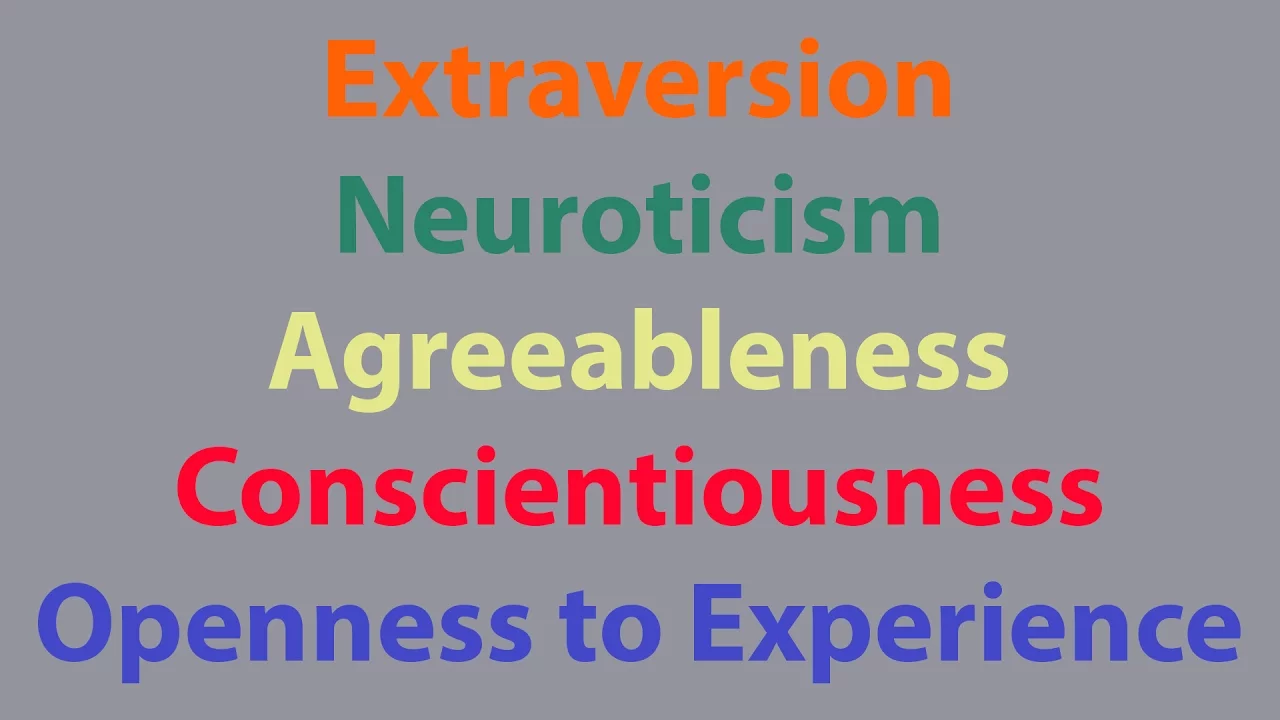
In this section, the speaker introduces the psychometric model of personality known as the Big 5 model. The model suggests that human personality can be described along five basic dimensions.
The Big 5 Model of Personality
- The psychometric investigations have indicated that human personality can be specified along 5 basic dimensions.
- These dimensions are considered to be stable elements that characterize an individual's being.
- Personality traits can be thought of as sub-personalities that make up a person's overall personality.
- Traits are integrated into something resembling a unity, although there is diversity within this unity.
New Section
This section explores the concept of traits and how they contribute to an individual's personality.
Understanding Traits
- A trait can be defined as an element of personality or a sub-personality.
- Individuals are made up of various sub-personalities that together form their overall personality.
- Traits are describable and stable elements that help define an individual's being.
New Section
This section discusses one major dimension of the Big 5 model - extraversion vs introversion.
Extraversion vs Introversion
- Extraversion and introversion are considered as the first major dimension in the Big 5 model.
- By answering questions related to preferences for socializing or being alone, individuals can determine whether they lean towards extraversion or introversion.
- Factor analysis, a statistical process, is used to group together questions related to these dimensions when assessing someone's personality traits.
New Section
In this section, factor analysis is explained as a statistical process used to determine how questions about human beings group together based on their responses.
Factor Analysis
- Factor analysis is a statistical process used to determine how questions about human beings group together.
- By subjecting a set of questions to factor analysis, it is possible to identify patterns and relationships between the questions.
- This process helps in understanding how different traits or dimensions of personality are related to each other.
The transcript does not provide any further content beyond this point.