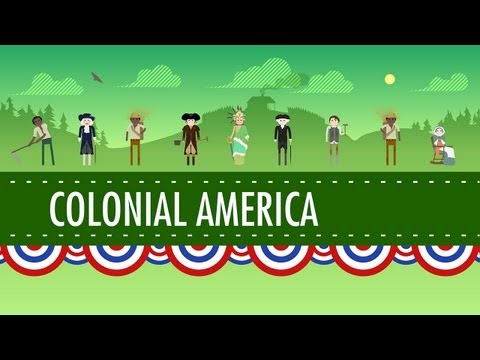
The Quakers, the Dutch, and the Ladies: Crash Course US History #4
Introduction to American History
In this section, John Green introduces the importance of studying American history and addresses the misconception that the colonial period is not significant.
Importance of Studying American History
- Many American history classes overlook the colonial period due to its limited representation in major tests.
- John emphasizes the value of understanding the complex factors that led to the creation of the United States.
- He encourages viewers to prioritize a deeper understanding of history over short-term test success.
Colonial America Beyond Jamestown and Massachusetts
This section explores New Amsterdam as an example of colonial America beyond Jamestown and Massachusetts. It highlights the commercial nature of New Amsterdam and its transformation into New York under English rule.
New Amsterdam and Commercial Ventures
- New Amsterdam was founded by Dutch traders as a commercial venture.
- The colony welcomed diverse groups, including Jews and Quakers, who could contribute to economic growth.
- However, Native Americans were driven out of the colony by Dutch settlers.
Transformation into New York
- The English took control of New Amsterdam in 1664, renaming it New York.
- Under English rule, women had less economic freedom compared to their previous rights under Dutch governance.
- Free black people also faced job losses that they previously held under Dutch rule.
Pennsylvania's Promise
This section focuses on Pennsylvania as a haven for Quakers and its reputation as a land offering religious freedom and cheap land. It also mentions German immigration to Pennsylvania.
William Penn's Vision for Pennsylvania
- William Penn established Pennsylvania as a refuge for Quakers, known for their tolerance except towards slavery.
- The colony demonstrated remarkable religious toleration and respect for Indian communities during Penn's leadership.
Pennsylvania's Appeal and German Immigration
- Pennsylvania attracted German-speaking immigrants due to its promise of religious freedom and affordable land.
- The colony became known as the "best poor man's country" during the 17th century.
South Carolina and Slavery
This section explores the establishment of South Carolina as a buffer colony and its reliance on slavery, particularly African slaves imported from Barbados.
Establishment of South Carolina
- King Charles II granted eight English proprietors the right to establish South Carolina as a buffer colony north of Spanish-controlled Florida.
- The original settlers came from Barbados, which influenced their expertise in slavery.
Reliance on Slavery
- Initial attempts to enslave Native Americans for labor were unsuccessful, leading to the importation of African slaves.
- Slavery is acknowledged as a significant topic that will be discussed further in future episodes.
Crises in British Colonies
This section discusses the crises experienced by British colonies in the Americas during the last quarter of the 17th century. It includes an analysis of a document criticizing Governor William Berkeley.
Criticism Towards Governor William Berkeley
- Nathaniel Bacon led an armed uprising against Governor Berkeley in Virginia.
- Bacon's rebellion was not solely motivated by Berkeley's failure to protect colonists from Native American attacks but also his refusal to allow further expansion and acquisition of Native American lands.
Conclusion
John Green concludes this episode by highlighting Nathaniel Bacon's rebellion and his motivations related to Native American conflicts and land acquisition.
Nathaniel Bacon's Rebellion
- Nathaniel Bacon arrived in Virginia in 1673 and rebelled against Governor Berkeley three years later.
- Bacon was primarily driven by his desire for more aggressive actions against Native Americans and the acquisition of their lands.
Berkeley, Bacon's Rebellion, and the Dominion of New England
This section discusses Berkeley's distribution of land to his cronies, Bacon's rebellion in Virginia, and the establishment of the Dominion of New England.
Bacon's Rebellion
- Berkeley gave the best land to his cronies, leaving men like Bacon dissatisfied.
- Bacon burned Jamestown and made himself ruler of Virginia.
- 23 rebels were hanged, but Bacon died shortly after from dysentery.
- The rebellion led to a shift from indentured servants to slaves.
- The English crown sought more control over the colonies.
The Dominion of New England
- King James II consolidated several colonies into one mega-colony called The Dominion of New England.
- Edmund Andros became its dictatorial ruler.
- The Glorious Revolution reversed this policy and reasserted colonial independence.
- The English Toleration Act of 1690 allowed Protestants to worship freely.
The Salem Witch Trials and Colonial Society
This section explores the context for the Salem Witch Trials and provides insights into colonial society.
The Salem Witch Trials
- The Tolerance Act marked the failure of Massachusetts' religious mission and led to scapegoating during the witch trials.
- Fourteen people accused of witchcraft were executed during this time.
Colonial Society
- Most colonists were small farmers or worked on farms.
- Population growth led to families running out of land, pushing second and third sons to seek opportunities in coastal cities.
- Colonial society had an elite ruling class and a growing number of poor people.
- Artisans played a significant role in the colonies' economy.
Colonial American Economics
This section discusses the economic aspects of colonial America.
- Most colonists were farmers or worked on farms.
- New England's population growth led to a shortage of land, pushing people towards coastal cities.
- The colonies offered better opportunities for the poor compared to Europe.
- Married women had limited property rights, and male dominance was prevalent.
Conclusion
This section concludes by emphasizing that history encompasses more than just the lives of prominent figures like James II and Nathaniel Bacon. It highlights the experiences of ordinary individuals in shaping colonial America.
New Section
The real story of history is about regular people trying to take care of their families and survive. The colonial era may lack large-scale drama, but it is filled with small-scale dramas.
Regular People in History
- History classes often focus on great men and dramatic events, but the true story of history is about regular people.
- The colonial era may not have had large-scale drama, but it was filled with small-scale dramas.
American Revolution
Next week, the focus will shift back to great men and dramatic events as we discuss the American Revolution.
Great Men and Dramatic Events
- Next week's episode will delve into the American Revolution, which is known for its great men and dramatic events.
Turn any video into a summary like this
YouTube links, meetings, lectures. With transcripts, search, and chat.