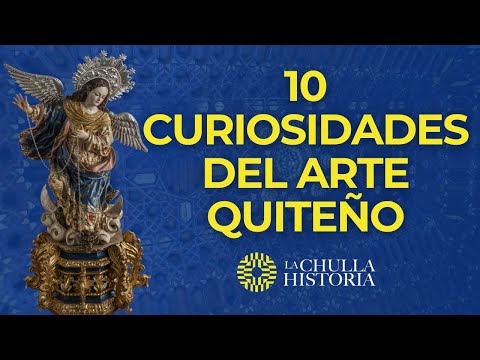
10 Curiosidades en el Arte Quiteño (I)🖌️| La Chulla Historia
Detailed Insights into Quito's Artistic Treasures
The video explores intriguing details about the artistic heritage of Quito, shedding light on hidden gems and unique features found in historical sites and artworks.
Unveiling Hidden Paintings at San Francisco Convent
- A mural painting was discovered during restoration work at Cantuña Chapel in November 2018.
- This mural depicted the Calvary scene with Virgin Mary, St. John, and Mary Magdalene.
- The painting's origins were traced back to the 17th century through pigment analysis.
- Despite its age, a protective layer was applied post-restoration to preserve its beauty.
Depicting Donors in Religious Art
- Before portraiture became fashionable, donors were portrayed alongside saints or virgins as an act of gratitude.
- Wealthy individuals commissioned these paintings as a form of immortalization.
- Various styles of donor portraits exist in Quito, ranging from simple depictions to elaborate scenes including miracles.
The Gleaming Finish of Quitenian Sculptures
- Quitenian sculptures are known for their porcelain-like shine achieved through a technique called "encarnado."
- Artists used lamb bladder mixed with saliva to enhance the finish on hands and faces.
- This method has preserved sculptures for over 400 years, maintaining their brilliance even today.
Influence of Arab Art in Colonial Churches
- The Mudéjar style, originating from Muslim artisans in Christian territories like the Iberian Peninsula, influenced art in colonial churches.
- Examples include intricate geometric designs and symbolic representations like those seen at San Francisco Convent and Santo Domingo Church.
Bernardo de Legarda's Signature Masterpiece
- Bernardo de Legarda's skillful depiction of movement is evident in the renowned Virgin of Quito sculpture.
New Section
The section discusses the indigenous origins of artworks in Quito, highlighting the challenges in identifying artists due to limited signatures and names on the pieces.
Indigenous Artistic Origins
- Indigenous artists in Quito were predominantly of indigenous descent and often illiterate.
- Signatures or artist names are rare on artworks, with a notable exception found on the Virgin of Quito commissioned by Franciscan friars for the main altar.
New Section
This part delves into restoration processes and controversies surrounding religious artworks, focusing on repainting practices during colonial times.
Restoration Controversies
- Restorations in churches and convents have revealed numerous novelties, including repainting practices known as "repintes."
- Repainting was common during colonial times due to religious controversies, where artists painted over contentious elements at the request of religious authorities.
New Section
The discussion centers on examples of controversial repainting in artworks, drawing parallels with historical cases like the Sistine Chapel censorship.
Historical Repainting Examples
- Miguel de Santiago's artwork "La Inmaculada Eucarística" underwent repainting to align with religious preferences.
- Similar to cases like the Sistine Chapel censorship, artistic modifications were made to conform to prevailing religious sentiments.
New Section
Analyzing specific instances of controversial artistic alterations within historical works from Quito's art scene.
Artistic Alterations
- Miguel de Santiago depicted Father, Son, and Holy Spirit with identical faces in a 17th-century artwork.
- Religious authorities objected to certain representations leading to covering or replacement of figures as seen in lesser-known images.
New Section
Exploring instances where controversial artistic changes were reversed or restored back to their original state over time.
Reversal of Modifications
- Instances such as covering or replacing objectionable figures were temporary before returning works to their original states.
La Ciudad: Historia Completa
The transcript discusses the history of the city, focusing on a special video being prepared to delve deeper into its history. It highlights an image showing a sculpture made entirely of stone and a saint with human remains.
Sculpture Details
- The image posted by Leído Suero reveals a sculpture covered in robes made entirely of stone.
San Francisco Museum
- Two sculptures in San Francisco's museum depict a significant scene: Peter's denial of Jesus, where Peter asks for forgiveness after denying Jesus three times.
Realism in Sculptures
- The sculptures from the 17th century are attributed to Father Carlos. Notably, Peter's head is an actual human skull, enhancing the realism.
Conclusion and Support
The conclusion wraps up the discussion on art curiosities in Quito, emphasizing that these stories represent just a fraction of the city's hidden secrets waiting to be passed down through generations.
Symbolism and Restoration
- A skull used in one sculpture was taken from one of the many graves in the central courtyard, initially a cemetery symbol. After restoration in 1911, it was identified as belonging to an 18-year-old woman.
Preservation of Stories
- The stories shared are only a glimpse into Quito's rich tapestry of secrets that will endure through storytelling across generations.