Introduction aux troubles de la personnalité (selon le DSM-5-TR)
Introduction to Personality Disorders
Overview of Personality Disorders
- The series consists of four segments focusing on personality disorders, starting with an introduction to the concept and followed by discussions on groups A, B, and C.
- Each individual's personality is unique, shaped by childhood experiences and environmental influences alongside genetic factors.
Understanding Personality Traits
- Personality determines how individuals relate to others and perceive their environment; variations in traits affect personal and professional interactions.
- Examples illustrate a continuum of personality traits: one person may be impulsive and unpunctual while another is punctual but indecisive.
Characteristics of Personality Disorders
- According to DSM-5, a personality disorder is diagnosed when an individual's experience deviates significantly from societal expectations in at least two areas: cognition, affectivity, interpersonal functioning, or impulse control.
- These deviations must be enduring, rigid, pervasive across various situations, causing significant distress or impairment in major life areas.
Classification of Personality Disorders
Groups of Personality Disorders
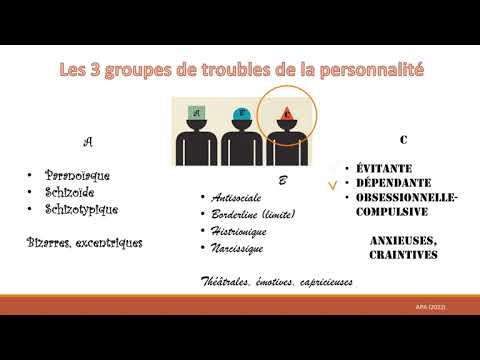
- Group A includes paranoid, schizoid, and schizotypal personalities characterized as odd or eccentric.
- Group B encompasses antisocial, borderline, histrionic, and narcissistic personalities described as dramatic or erratic.
- Group C features avoidant, dependent, and obsessive-compulsive personalities marked by anxiety or fearfulness.
Co-occurrence of Disorders
- It’s common for individuals to meet criteria for multiple personality disorders; for instance, borderline can co-exist with antisocial traits.
Treatment Approaches for Personality Disorders
Treatment Considerations
- There is no singular treatment for personality disorders; approaches are tailored based on symptoms and the individual’s motivation for therapy.
- Medications may address specific symptoms like impulsivity or violent behavior while various therapies aim to improve emotional management and problem-solving skills.