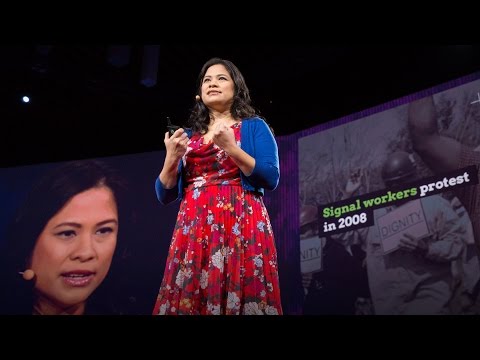
Noy Thrupkaew: Human trafficking is all around you. This is how it works
Seeking Therapy and Discovering a Surprising Question
The speaker shares their experience of going through a difficult time and seeking therapy. They recall a surprising question asked by their therapist about who raised them until the age of three.
Therapist's Question Raises Curiosity
- The speaker went to see a therapist during a challenging period in their life.
- After a few months of therapy, the therapist asked who actually raised the speaker until they were three years old.
- This question seemed strange to the speaker as they believed it was their parents.
Reflecting on the Question
The speaker reflects on the therapist's question and their response.
Initial Response to the Question
- The speaker found the therapist's question unusual but responded that it was their parents who raised them until they were three years old.
Challenging Assumption About Parental Care
The therapist challenges the assumption made by the speaker regarding their early upbringing.
Therapist's Perspective
- The therapist disagrees with the speaker's belief that their parents solely raised them until they were three.
- They suggest that there might be more complicated factors involved in the speaker's upbringing.
Seriousness Amidst Jokes
The speaker acknowledges that despite initially trying to be funny during therapy sessions, they realized that there was a need for seriousness due to underlying issues.
Transition from Humor to Seriousness
- Initially, the speaker attempted to be humorous during therapy sessions, but their jokes were met with serious responses from the therapist.
- This shift made them realize that there were deeper emotional issues at play.
Uncovering the Truth About Early Caregiver
The speaker decides to investigate and discovers the truth about their early caregiver.
Inquiring About Early Caregiver
- Prompted by the therapist's question, the speaker asks their parents who actually raised them until they were three years old.
- To their surprise, they learn that a distant relative of the family had been their primary caregiver during that time.
Fond Memories of Auntie
The speaker reminisces about their memories of their auntie, who was their primary caregiver until they were three years old.
Strong Bond with Auntie
- The speaker affectionately referred to their primary caregiver as "auntie."
- They have vivid memories of her presence in their life and describe her physical appearance, accent, and moments of closeness.
Intense Love and Reluctance to Let Go
The speaker reflects on the intense love they felt for their auntie as a child but also acknowledges the struggle of letting go.
Overwhelming Love for Auntie
- As a child, the speaker loved their auntie intensely but without fully understanding that love also requires letting go.
- Their attachment to her was strong, even in situations where she needed personal space or basic needs like using the bathroom or eating.
Painful Memory of Abuse
The speaker recalls a distressing memory from childhood involving witnessing abuse towards their auntie.
Witnessing Abuse
- One of the clearest memories from early childhood is seeing another family member physically abuse their auntie.
- This abuse would occur over minor issues such as wanting to go out with friends or being slightly late.
Escalation of Abuse
The speaker describes how their emotional reaction to the abuse led to a worsening situation for their auntie.
Hysterical Reaction and Hidden Abuse
- The speaker's intense emotional response to witnessing the abuse caused the abuser to resort to beating their auntie behind closed doors.
- The situation escalated to the point where it became unbearable for her.
Auntie's Escape
The speaker shares that their auntie eventually ran away from the abusive environment.
Auntie's Escape
- Due to the severity of the abuse, their auntie made the decision to run away from her difficult circumstances.
Discovering Auntie's Background
As an adult, the speaker learns more about their auntie's background and journey.
Auntie's Origin and Return
- It is revealed that their auntie was only 19 years old when she was brought from Thailand to care for the speaker on a tourist visa.
- After leaving Illinois, she returned to Thailand, where they unexpectedly encountered her again at a political rally in Bangkok.
Reunion with Auntie
The speaker recounts a reunion with their auntie in Bangkok and reflects on their emotions during that encounter.
Emotional Reunion
- When they met again as adults, the speaker clung onto their auntie just as they did when they were a child.
- They experienced conflicting emotions of attachment and guilt but promised to keep in touch.
Unfulfilled Promise
The speaker admits that despite promising to stay connected, they never followed through.
Broken Promise
- Regrettably, the speaker never fulfilled their promise to keep in touch with their auntie.
- They explain that expressing their deep gratitude and acknowledging the sacrifices made by their auntie felt overwhelming.
The Speaker's Realization
The speaker reflects on the impact of their auntie's care and connects it to their work as a journalist researching human trafficking.
Personal and Professional Connection
- The speaker, who works as a journalist specializing in human trafficking, realizes the connection between their personal story and professional life.
- They acknowledge that they had not previously connected these two aspects until recently.
Disappointment in Addressing Human Trafficking
The speaker expresses disappointment in society's approach to addressing human trafficking.
Lack of Progress
- Despite spending years researching and writing about human trafficking, the speaker feels let down by the lack of effective action taken.
- They express frustration with how society fails to address the issue adequately.
Inadequate Understanding of Human Trafficking
The speaker highlights society's limited understanding of human trafficking and its narrow focus on forced prostitution.
Misconceptions About Human Trafficking
- Society tends to associate human trafficking solely with forced prostitution when it is much more prevalent and complex.
- This narrow perspective overlooks other forms of exploitation, such as state-imposed forced labor or labor in sectors like agriculture, domestic work, and construction.
Exploitation Embedded
New Section
This section discusses the lack of knowledge about the people behind the products we consume and the need to understand their treatment and working conditions.
Lack of Knowledge and Treatment of Workers
- The speaker realizes that she has no idea who to thank for the abundance of products in a grocery store .
- She starts investigating the agricultural sector and finds numerous fields with few labor inspectors .
- There are multiple layers of plausible deniability between growers, distributors, and processors .
- The guest worker program ties legal status to employers and denies workers the right to organize .
- Although not human trafficking, these practices create fertile ground for exploitation .
New Section
This section highlights the accidental investment in a pineapple plantation with poor working conditions by an anti-trafficking philanthropist.
Accidental Investment
- Pierre Omidyar accidentally invested $10 million in a pineapple plantation with terrible working conditions .
- He realized his mistake, expressed shock and horror, and called for awareness of labor and supply chains .
New Section
This section emphasizes the importance of individual actions in demanding companies to eliminate exploitation from their labor and supply chains.
Demanding Change
- The speaker agrees that individuals should stop supporting companies that allow exploitation .
- What would happen if everyone demanded laws calling for elimination of exploitation?
- CEOs could make a difference by saying "no more" to exploitative practices .
- Ending recruitment fees for migrant workers and granting guest workers organizing rights would be significant decisions .
- These actions would have a global impact and change the system .
New Section
This section emphasizes the need to change a broken system and highlights the resilience and resourcefulness of trafficking survivors.
Changing the System
- The speaker urges for a decision to change a broken system that profits from others' pain .
- Human trafficking survivors are more than their victimization; they are resourceful and resilient .
- Survivors have led social justice movements, fought for workers' rights, and created organizations .
- Their activism has resulted in an international treaty on domestic workers' rights and civil suits against exploitative companies .
New Section
This section concludes by highlighting the power individuals have to make a different choice and create a just world.
Power of Choice
- Sharing personal stories can be challenging but necessary for raising awareness .
- Individuals have the power to decide who we are as a society, rejecting prosperity tied to others' pain .
- Our lives are interconnected, and we can make choices that lead to a just world for all .
The transcript is already in English, so there is no need to respond in another language.
New Section
The speaker acknowledges that they haven't done thorough research on the topic and haven't gathered all the necessary information. They emphasize that the story they have shared is messy and unfinished, reflecting the complex nature of human trafficking. However, they believe that everyone is implicated in this problem and can also be part of the solution. The speaker encourages collaboration in telling this story together.
Not Conducting Due Diligence
- The speaker admits to not having done their journalistic due diligence, such as issuing document requests and conducting interviews.
- They humorously mention not having found their auntie yet, indicating a lack of comprehensive investigation.
Unknown Story
- The speaker acknowledges not knowing the story of what happened and how it has affected someone's life.
Messy and Unfinished Story
- The speaker describes the story they have shared as messy and unfinished, implying that there are still many aspects to uncover.
Reflecting Reality
- The speaker suggests that their messy and unfinished story mirrors the situation we all face regarding human trafficking.
- They highlight how everyone is implicated in this problem, emphasizing collective responsibility.
Part of the Solution
- Despite being implicated in the issue, the speaker believes that everyone can also contribute to its solution.
- They express a need for building a more just world together.
Our Story to Tell
- The speaker emphasizes that it is our collective responsibility to figure out how to build a more just world.
- They encourage telling this story from the very beginning with proper understanding and collaboration.
Telling the Story Together
- The speaker concludes by urging everyone to tell this story together.
- Collaboration is seen as essential in addressing the issue of human trafficking.
The transcript is already in English, so there is no need to translate.
Turn any video into a summary like this
YouTube links, meetings, lectures. With transcripts, search, and chat.