Grid Gerencial
The Grid Theory of Leadership
Introduction to the Grid Theory
- The Grid Theory, developed by Robert Blake and Jane Mouton, categorizes leadership styles within organizations based on two dimensions: concern for people and concern for production.
- This model was updated between 1979 and 1985, culminating in its final development in 1991 at the University of Texas.
Key Components of the Model
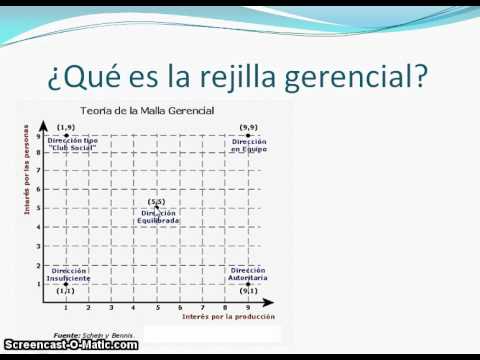
- The discussion will cover what managerial grid is, its key dimensions, four extreme leadership styles (1.9, 9.9, 1.1, and 9.1), and a central style (5.5).
- The goal is to understand how leaders can be positioned on this grid based on their interest in people versus production.
Importance of Balance in Leadership
- Research indicates that effective management requires attention to both production goals and employee welfare.
- Blake and Mouton established a simple model to illustrate how leaders lean towards either people or production.
Application of the Grid Theory
- The managerial grid has been widely applied globally, notably at Exxon, facilitating socialization within corporate environments.
Understanding Managerial Styles
- The grid allows for assessment through surveys that determine a leader's position within a 9-point framework.
- Leaders can fall into various categories:
- 1.1: Impoverished Management - Low concern for both people and production.
- 9.1: Authority Compliance - High focus on production with little regard for people.
- 1.9: Country Club Management - High concern for people but low focus on productivity.
- 5.5: Middle-of-the-Road Management - Balanced approach towards both dimensions.
Ideal Leadership Style
- According to Blake and Mouton, the most effective style across situations is Team Leadership (9.9), which emphasizes high performance while ensuring employee satisfaction.
Dimensions of Concern
- Two primary dimensions are evaluated:
- Concern for Production: Includes decision quality, process efficiency, creativity in research, service quality from management levels.
- Concern for People: Encompasses personal commitment to goals, maintaining self-esteem among employees, fostering a positive work environment.
Assessment Tools
- A questionnaire helps identify where an individual leader stands within the grid based on responses related to their concerns about people versus production.
Conclusion
Understanding Leadership Styles in Organizations
The Role of Management Tools
- Management tools are significant for identifying and classifying leadership styles within organizations, but they do not provide new tangible insights into the concept of leadership.
- Various theories and models of leadership will continue to coexist, similar to those from Ohio State University and the University of Michigan.
Limitations of Leadership Models
- There is no concrete evidence explaining why a leader may fall at a specific point on the leadership grid or if the 9.9 point is indeed the best.
- Authors suggest that team-centered leadership at point 9.9 is considered most desirable and significant for organizations and individuals.
Underlying Causes of Leadership
- To understand the reasons behind a leader's style, it is crucial to observe underlying causes that are often hidden or deeply rooted in individuals.