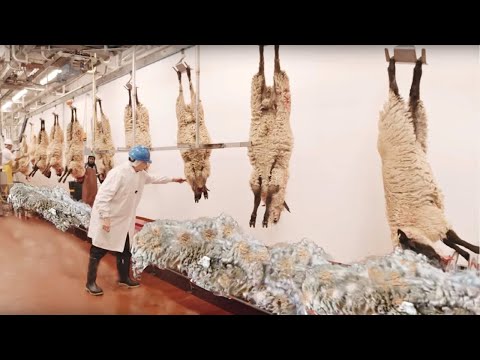
COMO se HACE la LANA de OVEJA🧶🐑| Como se CONVIERTE la LANA de las OVEJAS en ROPA
Introduction to Sheep Wool Production
This section introduces the production of sheep wool and its popularity worldwide. It highlights the qualities of wool as a material and its uses in various garments.
Sheep Wool Production and Qualities
- Each year, millions of tons of wool are produced by sheep worldwide.
- Wool is a popular and widely used fiber known for its softness, curliness, durability, moisture absorption, insulation properties, and resistance to wrinkles.
- It is ideal for garments like sweaters and coats due to its ability to provide warmth and comfort.
- Wool has excellent elasticity, resistance to friction, abrasion, and flame.
- The production of sheep wool dates back centuries, with historians believing that sheep were initially bred for both food and clothing around 10,000 years ago.
- Australia has become the largest wool industry in the world since British settlers sent 13 sheep there in 1797.
Shearing Process
This section focuses on the shearing process involved in obtaining sheep wool. It discusses the importance of skilled shearers and their techniques.
Shearing Process
- Shearing is done once a year during the warmer months when it can stress the sheep less.
- Skilled shearers carefully remove all the wool from each sheep's body using electric machines.
- The shearer's goal is to shear each sheep efficiently while minimizing any discomfort or harm to the animal.
- After shearing, there is a physiological response in sheep that increases their heat production and food consumption.
- This response contributes to their overall nutritional well-being.
Shearing Techniques
This section explores specific techniques used during shearing. It emphasizes proper handling of the animals and efficient shearing methods.
Shearing Techniques
- Shearers use a padded harness attached to the shed's roof, allowing them to semi-incline for most of their two-hour shift.
- The shearing process begins by removing the coarser wool from the sheep's belly and then shearing the rest in one piece.
- Skilled shearers can shear between 140 and 200 sheep per day, with some achieving record times of less than two minutes per animal.
- Electric clippers with wide combs and sharp blades are used for shearing, specifically designed for sheep wool.
- Regular blade sharpening is necessary due to the high volume of shearing work.
Wool Processing
This section focuses on the processing of freshly shorn wool after it is collected. It includes cleaning, separating, and classifying the wool fibers.
Wool Processing
- Freshly shorn wool contains unwanted debris and shorter fibers that need to be removed before further processing.
- The wool is placed with the skin side down on a specially designed table with gaps between slats to allow debris to fall through.
- Specialists clean the edges of the wool manually before it undergoes classification based on its quality and tone.
- The fineness of the fibers determines the quality of the wool, with finer fibers often used for high-end products like Merino garments.
- After classification, washing is performed to clean and improve fiber quality.
Final Steps and Factory Reception
This section covers final steps in preparing wool for factory reception. It includes pressing into bales and transportation to factories.
Final Steps and Factory Reception
- Once washed, fluffy fleeces are compressed into bales weighing up to 200 kilograms each using a giant press.
- The freshly shorn sheep return to grazing, lighter by approximately 6 kilograms, ready for another year.
- Factories receive around 8,000 kilograms of freshly shorn wool in compressed bales.
The transcript does not provide further information beyond this point.
Compactar la lana y teñido
This section discusses the process of compacting wool to dye larger quantities at once and preserve resources. It also explains how the wool is dried using a large microwave-like machine.
Compactar la lana y teñido
- Compactar la lana permite teñir más cantidad de una sola vez y preservar los recursos.
- Un rápido ciclo de centrifugado elimina la mayor parte del agua, pero la lana recién teñida aún está bastante húmeda.
- La lana pasa a una secadora que funciona como un gigantesco microondas para eliminar la humedad restante.
- En el proceso de calentamiento en el microondas, el agua se evapora y es aspirada por un sistema de vacío interno.
- La lana se desenreda en una cardadora, donde pasa por más de 100 rodillos que cepillan las fibras para alinearlas y eliminar enredos o material no deseado.
Hilado y retorcido del hilo
This section focuses on the spinning and twisting process of turning wool into yarn. It explains how the fibers are aligned and twisted to achieve the desired thickness and strength.
Hilado y retorcido del hilo
- El objetivo del cardado es preparar la lana para el hilado.
- En el hilado, se somete la lana a un proceso de torsión hasta que se transforma en un hilo con el grosor deseado.
- Cada hebra se retuerce al menos cuatro veces por pulgada para aumentar su resistencia.
- El hilo retorcido se enrolla en bobinas, que son piezas largas de hilo retorcido listas para convertirse en tejido.
Tejido y finalización
This section explains the weaving process using vertical and horizontal threads to create fabric. It also mentions the packaging and distribution of wool textile products.
Tejido y finalización
- El tejido de lana se compone de una urdimbre (hilo vertical) y una trama (hilo horizontal).
- La intersección de la urdimbre y la trama proporciona el patrón base del tejido.
- Una vez que los productos textiles de lana han sido fabricados, se preparan y empaquetan para su transporte y distribución.
For information on how aluminum foil is made, refer to the link provided in the description or first comment.