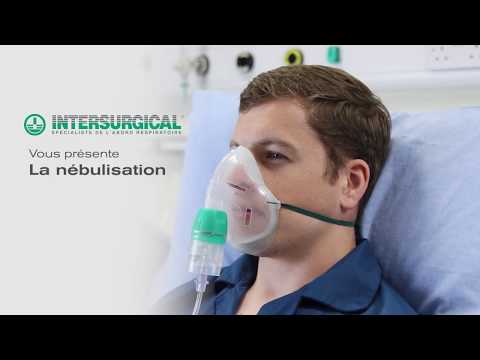
Intersurgical présente la nébulisation
Introduction to Respiratory Diseases
This section introduces the impact of respiratory diseases on global health and highlights the various conditions that fall under this category.
Causes and Impact of Respiratory Diseases
- Respiratory diseases are among the leading causes of death worldwide, including lung infections such as pneumonia and tuberculosis, chronic obstructive pulmonary disease (COPD), and lung cancer.
- In 2008, respiratory diseases accounted for 9.5 million deaths globally, representing one-sixth of all deaths. These conditions are often underestimated by non-specialists.
- Pneumologists play a crucial role in treating a wide range of respiratory pathologies, including tuberculosis, HIV-related pulmonary complications, asthma, COPD, cystic fibrosis, and lung cancer.
- Respiratory conditions are not solely linked to smoking but can have various causes such as genetics, nutrition, and social/environmental factors.
Nebulization Therapy for Respiratory Conditions
This section discusses nebulization therapy as a method for administering medication directly to the lungs to improve the quality of life for patients with respiratory conditions.
Types of Inhalable Medications
- Nebulization therapy involves delivering medications in aerosol form directly to the therapeutic site in the lungs using inhalation. Various classes of pharmaceutical products are used for different respiratory conditions:
- Bronchodilators and anti-inflammatories for treating airway obstructions.
- Antibiotics for treating infections.
- Mucolytics for managing abnormal secretions.
- Opioids as analgesics for pain relief.
Components of a Nebulizer
- A nebulizer system consists of four main components:
- Gas flow generator: Supplies pressurized gas, typically air or oxygen, to the nebulizer.
- Tubing: Transports the compressed gas from its source to the nebulizer.
- Nebulizer chamber: Converts liquid medication into a cloud of fine droplets for inhalation by the patient.
- Inhalation interface: Can be a mouthpiece, face mask, or nasal piece that allows effective inhalation of the aerosolized medication.
Functioning of a Nebulizer
- The gas flow generator provides pressurized gas (air or oxygen) to the nebulizer chamber. The gas creates a zone of depression in the chamber, drawing the medication towards the top where it is aerosolized and propelled at high speed against a deflector. This process generates an aerosol cloud with appropriately sized particles for inhalation.
Inhalation Interfaces
- The inhalation interface can be a mouthpiece, face mask, or nasal piece. Each has its advantages and considerations:
- Mouthpiece is ideal as it does not cause leakage or deposition on the face and allows efficient drug delivery.
- Face mask is used when a mouthpiece cannot be used but may result in drug deposition on the face.
- It's important to ensure proper fit and seal of masks to prevent contact between medication and patient's eyes.
- Newer generation masks like Echoes Light have anatomical design and soft lips for improved sealing and reduced risk of eye exposure.
Considerations for Nebulization Therapy
This section discusses important considerations when administering medication through nebulization therapy, including precautions for certain medications and the protection of healthcare professionals and other patients.
Medication Deposition and Protection
- Facial deposition of medication should be avoided when using a face mask. Proper fit is crucial, especially around the nose, to optimize sealing and prevent contact between medication and patient's eyes.
- Facial deposition is particularly important to avoid when administering steroids or anticholinergic agents to prevent skin and eye contact.
- When delivering antibiotics, it is essential to protect the immediate environment, healthcare staff, and other patients. This can be achieved by using an anti-pollution kit or adding a respiratory filter to the expiratory outlet.
Inhalation Interfaces in Ventilated Patients
- In ventilated patients (adults, children, newborns), a breathing circuit with an inhalation interface can be used. The interface and nebulizer are connected to the inspiratory limb of the circuit.
- An auto-occlusive breathing piece allows manipulation of the nebulizer without interfering with patient ventilation.
Factors Affecting Nebulizer Performance
This section explores key factors that influence aerosol deposition in the respiratory tract during nebulization therapy.
Factors Determining Aerosol Deposition
- Three main factors determine aerosol deposition in the respiratory tract:
- Particle size: Optimal particle sizes for tracheobronchial deposition range from 2 to 5 microns, while alveolar deposition requires particles between 0.5 and 2 microns.
- Breathing mode during inhalation.
- Age and lung condition of the patient.
Importance of Particle Size
- Particle size is a crucial factor in optimizing aerosol deposition in the target area of the lungs. Nebulizer design should consider particle size to achieve desired deposition.
- Other factors affecting nebulizer performance include efficiency, granulometry, inhalable flow rate, duration of nebulization, residual volume, and mass median diameter.
Measuring Nebulizer Efficiency
- Nebulizer efficiency is measured by the aerosol flow rate based on particle size and expressed as a percentage of optimal particle deposition.
- Optimal particle sizes for tracheobronchial and alveolar deposition are 2-5 microns and 0.5-2 microns, respectively. Particles larger than 5 microns may deposit in the mouth and nose and are not effectively inhaled.
Inhaler Nebulizer and Particle Size
This section discusses the inhalable flow rate and the optimal size of drug particles generated by a nebulizer. The mass of drug particles is expressed in grams per minute.
Inhalable Flow Rate and Particle Size
- The inhalable flow rate and mass of drug particles are important factors in nebulizer performance.
- The size of the drug particles can be evaluated using the mass median diameter (MMD), which is defined as half the mass of aerosols contained in droplets.
- Different nebulizers, such as Cirrus 2 and Top 2, produce particles for tracheobronchial deposition.
- Cirrus 2 is a closed-jet nebulizer that generates particles mainly between 2 and 5 microns in diameter. It can be used with both adults and children, with options for a mouthpiece or a face mask.
- Top 2 is a high-performance nebulizer that also produces particles between 2 and 5 microns in diameter. It has a side opening that increases gas flow through the nebulizer, reducing treatment duration.
Cirrus 2 Nebulizer
This section provides details about the Cirrus 2 nebulizer, including its design, usage, and compatibility.
Features of Cirrus 2 Nebulizer
- Cirrus 2 is a versatile closed-jet nebulizer suitable for various applications.
- Its tank opens with a quarter turn for quick and precise filling, while another quarter turn locks it securely.
- It can be used with portable compressors due to its closed design.
- An optional lock adapter ensures secure connection and prevents accidental disconnection from the flow meter.
Top 2 Nebulizer
This section discusses the Top 2 nebulizer, its features, and performance.
Features of Top 2 Nebulizer
- Top 2 is a high-performance nebulizer that produces particles between 2 and 5 microns in diameter.
- It utilizes a side opening and the Venturi effect to increase gas flow through the nebulizer, reducing treatment duration.
- It is suitable for use with low-output portable compressors, providing equivalent performance to classic jet nebulizers operating at 8 liters per minute.
- An optional lock adapter ensures secure connection and prevents accidental disconnection from the flow meter.
Uses of Nebulizers
This section highlights the widespread use of nebulizers in respiratory therapy.
Applications of Nebulizers
- Nebulizers are widely used in emergency care, hospitals, and home settings for respiratory therapy.
- They are recommended by the European Respiratory Society for administering bronchodilator treatment during severe asthma attacks.
- Nebulizers are also used in emergency services to administer salbutamol to asthmatic patients and bromide dipratropium to patients with chronic obstructive pulmonary disease (COPD).
- They are utilized in intensive care units for patients on ventilators who require inhalation therapy.
Inhalation Therapy with Nebulizers
This section provides information on how nebulizers are used for inhalation therapy.
Administration of Inhalation Therapy
- The prescribed volume of medication is introduced into the nebulizer, which is connected to the respiratory circuit using a T-piece inserted on the inspiratory branch.
- The distance between the T-piece and patient should ideally be between 30 and 45 cm.
- If a heat and moisture exchanger is used, it should be replaced with an alternative source of humidification.
- A filter should be used on the inspiratory and expiratory branches of the ventilation circuit to protect against contamination.
- The high-flow resistance of the nebulizer should be monitored, and it is designed to ideally function at a flow rate of 8 liters per minute.
Nebulizers in Respiratory Kinetic Therapy
This section discusses the use of nebulizers in respiratory kinetic therapy.
Use in Respiratory Kinetic Therapy
- Nebulizers can be used to administer aerosol during intermittent positive pressure breathing (IPPB) therapy.
- The goals of IPPB are to increase lung volume, reduce respiratory effort, mobilize secretions, and enhance collateral ventilation.
- Adding 0.9% sodium chloride can increase humidity when using an IPPB device with dry gas from a ventilator.
- Nebulizers are also used to administer bronchodilators during severe asthma attacks.
Tips for Nebulizer Usage
This section provides tips for using nebulizers effectively.
Tips for Effective Usage
- If possible, patients should breathe through their mouth and alternate between normal and deep breaths while occasionally holding their breath to optimize deposition.
- Ensure that the patient's nose is not obstructing the exhalation port or openings on the nebulizer mask.
- Positioning the patient in a sitting or semi-reclined position can optimize deposition.
- Patients should rest their elbows and ensure they are comfortable during treatment.
- Fill the nebulizer with 2.5 to 10 milliliters of medication, diluting if necessary with saline solution to reduce residual volume.
- Set the flow rate to eight minutes unless using a compressor with predefined settings.
Conclusion
Nebulizers play a crucial role in respiratory therapy by delivering medication in the form of aerosols. They are used in various settings, including emergency care, hospitals, and home care. Understanding the different types of nebulizers and their features is essential for effective treatment. Proper usage techniques can optimize deposition and enhance patient outcomes.