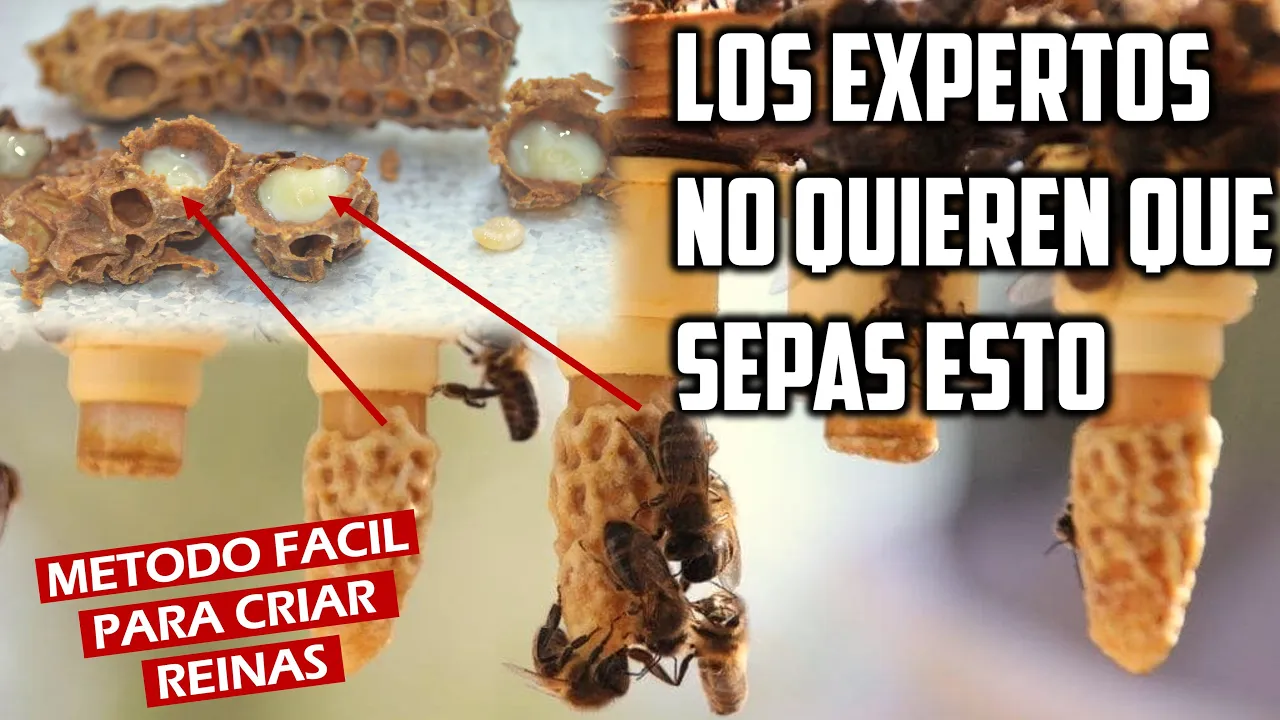
Como criar Abejas Reinas Metodo Facil #apicultura
How to Raise Queens Easily
In this video, the speaker aims to demonstrate a simple method for raising queens by following specific steps. The focus is on practicality rather than delving into various complex methods of queen rearing.
Steps for Raising Queens
- Locating Strong Colonies:
- Identify a hive with strong bee population, good honey production, and health. Mark this hive for selecting larvae.
- Selecting a Queenless Colony:
- Choose another colony with complete frames and mark it as the initiator colony (Colony B).
- Isolating the Queen:
- Locate and isolate the queen in Colony B by transferring her to a nucleus box marked as '1'.
- Creating a Nucleus:
- Shake some nurse bees into the box with the queen to form a nucleus.
- Preparing Queen Cups:
- Place plastic or wax cups in the center of frames in Colony A to be recognized by bees.
Continuation of Queen Rearing Process
This part of the video covers further steps in raising queens, including checking for royal cells and transferring larvae.
Continuing Queen Rearing Process
- Checking for Royal Cells:
- Return on the third day to observe if royal cells have been built by bees in Colony A.
- Selecting Larvae for Transfer:
- Look for newly hatched larvae or those aged between 1 to 2 days old in Colony B.
- Transferring Larvae:
- Extract royal jelly from existing cells and use it to transfer larvae into prepared queen cups.
Final Steps in Queen Rearing Process
The final steps involve patience and precision in transferring larvae into queen cups.
Finalizing Queen Rearing
- Patience in Transfers:
- Be patient during larval transfers; practice improves accuracy over time.
- Monitoring Progress:
Preparing Beehives for Queen Bees
In this section, the speaker discusses the importance of selecting larvae carefully to ensure the birth of healthy queen bees and outlines the process of preparing beehive divisions for this purpose.
Selecting Larvae and Hive Preparation
- Around 11 or 12 days before the queen bee is due to be born, it is crucial to select larvae carefully to prevent premature births.
- Queen bees typically emerge between days 12 and 13 after egg laying. Therefore, on day 7 post-laying, hive divisions should be prepared to leave them orphaned for at least two days. This facilitates easier acceptance of royal cells.
- When royal cells in the original hive are around 10 or 11 days old post-transfer, it is time to introduce one royal cell into each prepared division. This ensures that each queen bee will hatch in its designated nucleus.
This section emphasizes meticulous planning and timing in hive management to support successful queen bee rearing.