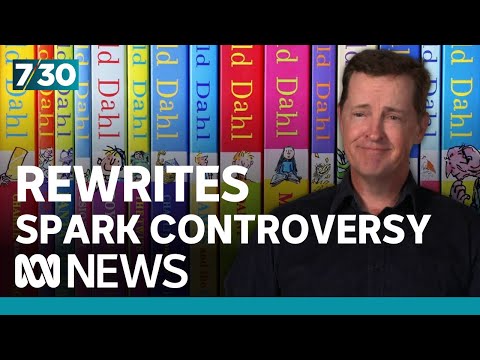
Should classic children's books be rewritten to remove offensive language? | 7.30
Roald Dahl's Books: A Controversial Makeover?
The Changes to Roald Dahl's Works
- Roald Dahl's children's books have undergone significant revisions, sparking controversy due to the removal of language deemed offensive.
- The publisher has removed terms like "fat" from titles such as Charlie and the Chocolate Factory, reflecting a shift in societal acceptance among young parents.
- Australian author Matthew Riley expresses concern over revising classic literature, emphasizing that sensitivity towards words like "ugly" could lead to broader censorship issues.
Perspectives on Sensitivity Readers
- Riley argues that classic books should be appreciated within their historical context, noting that they often contain outdated values.
- Sandy Grant, a publishing veteran, highlights the role of sensitivity readers in identifying potentially offensive content before publication.
- Grant acknowledges that while some older texts may reflect outdated values, readers can discern these differences and engage critically with the material.
Censorship Concerns
- Don Watson criticizes the rewriting of children's books as a form of censorship, warning against compromising self-expression in a liberal democracy.
- He emphasizes the importance of maintaining freedom of expression and avoiding parallels with authoritarian practices regarding literature.
Trends in Book Censorship
- The discussion around Roald Dahl coincides with rising efforts to ban or restrict books across various categories; over 1,000 attempts were reported last year by the American Library Association.
- Grant suggests that changes made by publishers are more commercially driven than politically motivated, indicating market demands influence editorial decisions.
Evolving Literary Landscape
- Sally Rippin notes that classic children’s literature often does not age well and must adapt to contemporary values for relevance.
- There is an increasing demand for diverse voices in publishing today; younger audiences seek representation through new authors and stories reflecting varied experiences.
- While embracing diversity is crucial, some argue for preserving original texts as they represent their time authentically.