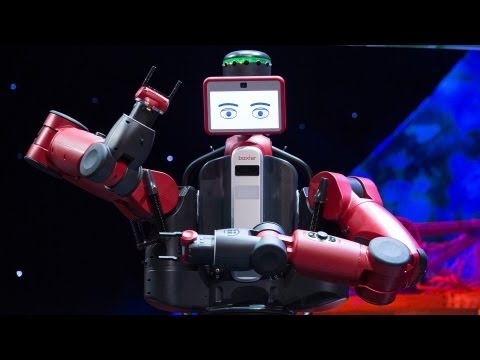
Rodney Brooks: Why we will rely on robots
The Future of Work: Technology and Job Displacement
Overestimating Short-Term Technological Impact
- Arthur C. Clarke's quote highlights a common perception that we tend to overestimate technology's immediate effects while underestimating its long-term potential.
- Concerns about job loss due to AI and robots stem from this short-term overestimation, leading to fears about the future workforce.
Historical Context of Job Displacement Fears
- A reference is made to a 1957 film featuring Spencer Tracy, where a mainframe computer was introduced to assist librarians, sparking fears of job loss.
- Contrary to expectations, the introduction of computers did not eliminate librarian jobs; instead, their numbers increased until the advent of the Internet diminished demand.
Evolution of Technology in the Workplace
- The technological advancements underestimated in 1957 have led to significant changes in how information is accessed and utilized today.
- Librarians' wages rose faster than other professions as they adapted and became partners with technology rather than being replaced by it.
The Role of Robots in Modern Work Environments
- The introduction of personal computers revolutionized office work by empowering employees to become proficient in programming spreadsheets rather than replacing them.
- Current examples include PackBot used for bomb disposal and TUG robots that assist nurses by handling mundane tasks, allowing more time for patient care.
Addressing Fears Around Factory Robots
- There are concerns regarding factory robots due to their complexity and danger; ordinary workers often cannot interact with them effectively.
- Emphasis is placed on developing technologies like Baxter, which allow ordinary workers to engage safely with industrial robots.
Introducing Baxter: A User-Friendly Industrial Robot
- Baxter represents a new wave of robotics designed for interaction with human workers in industrial settings.
- The robot demonstrates basic common sense through its ability to understand interactions without causing harm, unlike traditional industrial robots.
Innovative User Interface Design
- Baxter’s user interface allows users to guide its actions intuitively; when an arm is grabbed, it enters a mode that facilitates easy interaction.
- The robot infers user intentions based on simple gestures and commands, showcasing an advanced yet accessible approach to robotic operation.
The Future of Robotics in Factories and Elder Care
The Role of Robots in Factories
- Robots are capable of performing area searches autonomously, allowing factory workers to focus on training the visual appearance of objects without needing to navigate complex menus.
- Mildred, a factory worker with over 20 years of experience, quickly adapted to working alongside robots, programming them for repetitive tasks she previously handled herself.
- A common sentiment among factory workers is a desire for better job opportunities for their children, indicating a generational shift away from traditional factory roles.
- The vision is to transform workers like Mildred into robot trainers, enhancing their skills rather than requiring extensive study or training.
- Tools provided to workers are designed for quick learning and operation, enabling immediate collaboration with robotic systems.
Demographic Changes and Their Impact
- Over the past 40 years, the percentage of working-age adults has slightly decreased; projections indicate a significant decline in this demographic over the next 40 years globally.
- As baby boomers retire, there will be an increase in older individuals who require care but fewer younger people available to provide that support.
- The aging population will lead to a shortage of caregivers as they themselves grow older and less able to perform caregiving tasks.
- Robotics can play a crucial role in assisting older adults with daily activities such as grocery shopping and transportation, promoting dignity and independence as they age.
Turn any video into a summary like this
YouTube links, meetings, lectures. With transcripts, search, and chat.