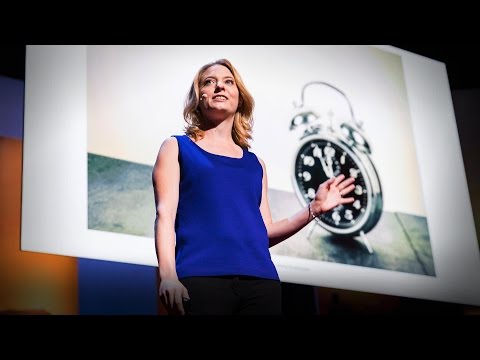
How to gain control of your free time | Laura Vanderkam | TED
Time Management Insights
The speaker discusses common misconceptions about time management and challenges the idea of saving time to achieve more.
Misconceptions About Time Management
- The speaker, despite writing about time management, admits to occasional tardiness due to having four small children.
- Critiques the notion of saving bits of time daily to create extra hours for important activities.
- Shares humorous yet impractical tips like making only right-hand turns during errands or being overly precise with microwave usage.
Rethinking Time Management
- Argues that successful people do not save time but prioritize effectively, allowing time to align with their goals.
- Discusses a study on busy women showing how time is elastic and adjusts based on priorities rather than strict schedules.
Prioritizing Priorities
The speaker emphasizes treating priorities as non-negotiable commitments akin to urgent situations like a broken water heater.
Elasticity of Time
- Illustrates how individuals can find time for unexpected tasks when necessary, highlighting the flexibility of time allocation based on priorities.
- Stresses that while one cannot create more time, prioritizing effectively allows individuals to fit essential activities into their schedules.
Priority Setting Strategies
- Shares an anecdote about a busy individual who views every minute spent as a conscious choice rather than a lack of time.
- Encourages using language that reflects true priorities by acknowledging that "I don't have time" often means "It's not a priority."
Identifying and Focusing on Priorities
Proposes strategies for identifying and focusing on priorities in both professional and personal life.
Performance Review Approach
- Suggests conducting future-oriented performance reviews by envisioning success at the end of the year and listing actions that led to achievements.
Personal Life Reflection
Going Beyond the Holiday Letter
The speaker discusses the purpose of holiday letters and encourages planning for future accomplishments.
Reflecting on Achievements
- Encourages imagining a successful year ahead and listing three to five significant accomplishments.
- Advises against sending the letter but emphasizes the importance of setting achievable goals based on these reflections.
Effective Time Management Strategies
Strategies for effective time management and prioritization are discussed.
Setting Priorities
- Emphasizes treating priorities like urgent tasks by scheduling them first.
- Recommends creating a priority list encompassing career, relationships, and personal growth categories.
Finding Time for What Matters
Discusses the abundance of time available in a week and how it can be utilized effectively.
Utilizing Available Time
- Highlights that there are 168 hours in a week, with ample time beyond work and sleep for other activities.
- Illustrates how individuals working full-time jobs still have significant hours available for personal pursuits.
Making the Most of Small Moments
Explores utilizing small pockets of time for meaningful activities.
Seizing Opportunities
- Encourages using brief moments for joyous activities like reading during commutes or meditating during breaks.
Turn any video into a summary like this
YouTube links, meetings, lectures. With transcripts, search, and chat.