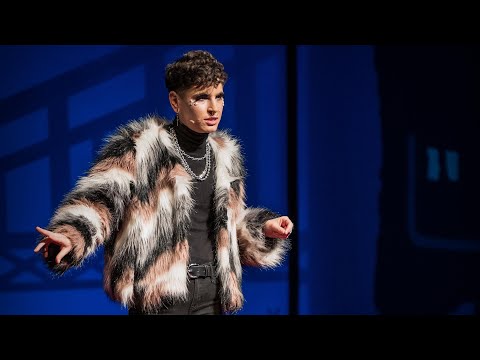
The Poetry of Everyday Language | Julián Delgado Lopera | TED
The Poetics of Everyday Language
The Influence of Family on Language
- The speaker's passion for language was nurtured in their abuela's dining room, surrounded by vibrant women sharing stories and experiences.
- Describes the lively atmosphere with five aunts and their complaints about life, showcasing diverse expressions through gestures and invented words.
- Each woman narrates her story uniquely, highlighting individual word choices and rhythms; the speaker's mother remains silent while others express themselves energetically.
- The family hails from Colombia, known for its storytelling culture where creativity in language is celebrated, influencing the speaker’s own linguistic style.
Encountering Language Hierarchy
- Upon moving to Miami at age 15, the speaker faced a stark contrast in language dynamics that stifled their enthusiasm for expression.
- A pivotal moment occurred during an English class reading of "Romeo and Juliet," where fear of mispronunciation led to anxiety when called upon to read aloud.
- The laughter from peers after struggling with pronunciation created deep feelings of shame and isolation regarding their unique way of speaking.
Struggles with Identity and Acceptance
- The speaker recalls attempts to fit in by practicing pronunciation late into the night, feeling pressured by societal expectations around language use.
- Observations reveal that non-white students were often corrected harshly by teachers, indicating a broader issue of discrimination based on language proficiency.
Understanding Language as a Closed Circle
- Discusses how society views English as a closed circle where only 'correct' forms are accepted; deviations push speakers to the margins.
- This perspective creates a hierarchy that excludes many voices and ways of understanding the world, leading to social isolation for those who do not conform.
Impact on Personal Relationships
- The speaker reflects on witnessing their mother's struggle with English pronunciation at grocery stores, which diminished her confidence over time.
- Contrasts this with memories from Colombia where their mother was assertive; highlights how ridicule changed her demeanor in America.
The Power of Language and Identity in Marginal Spaces
Experiences with Language Discrimination
- The speaker shares personal experiences of being denied job opportunities due to their inability to speak "correct English," highlighting the prejudice against non-standard language use.
- They recount instances of ridicule from white writers in academic settings, questioning the legitimacy of Spanglish as literature, which reflects broader societal biases against mixed languages.
- Despite these challenges, the speaker finds beauty and connection in marginal spaces where language serves as a unifying force among those who share similar backgrounds.
Discovering Community Through Language
- The narrative shifts to San Francisco's "Esta Noche" gay Latino bar, where the speaker discovered a vibrant community that celebrates linguistic diversity and creativity.
- At this venue, they learned about the rich history of LGBT individuals creating new words that reflect their identities and experiences, showcasing how language can evolve within communities.
- The blending of Spanglish with queer slang illustrates a unique form of expression that transcends traditional gender categories and sexual orientations.
Celebrating Linguistic Diversity
- In this inclusive environment, various gender identities are embraced, allowing for an expansive vocabulary that reflects individual experiences without rigid definitions.
- The atmosphere is filled with joy and acceptance as attendees express themselves freely through both language and performance art, fostering a sense of belonging.
- Glitter becomes a metaphor for both self-expression and linguistic creativity; participants feel seen and valued within their community.
Challenging Normative Language Standards
- The speaker encourages reflection on personal language use as an indicator of belonging to specific social circles shaped by background and experience.
- They propose reimagining how we view different languages—not as separate entities but as interconnected forms that enrich our communication landscape.
- Imagining practical applications like bilingual legislation or educational materials infused with playful language could foster greater understanding and acceptance.
Inviting Change in Language Perception
- By embracing diverse ways of speaking—including Spanglish or queer slang—we can create more inclusive environments that celebrate rather than stigmatize linguistic differences.
- The call to action emphasizes suspending notions of "correct" speech to allow marginalized voices to rise up, recognizing the inherent value in varied expressions of identity.
Turn any video into a summary like this
YouTube links, meetings, lectures. With transcripts, search, and chat.