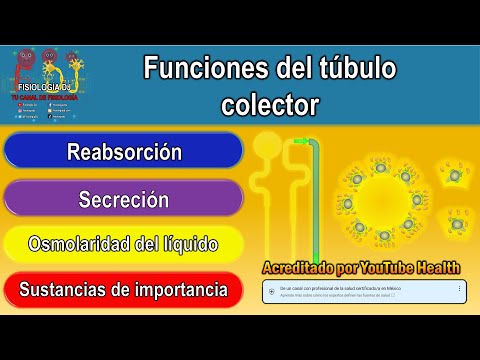
Nefrona partes y funcionamiento | Túbulo colector de la nefrona | Túbulo colector del riñón
Understanding the Function of the Collecting Duct in Nephrons
Introduction to Nephrons and Collecting Duct
- The video introduces the concept of nephron physiology, focusing on the collecting duct's role in kidney function.
- It highlights that kidneys filter approximately 180 liters of liquid daily, which undergoes modifications as it passes through nephron segments.
Liquid Filtration and Urine Formation
- Only about 1.5 liters of this filtered liquid is excreted as urine, emphasizing the nephron's efficiency in reabsorption.
- The collecting duct receives between 9 to 18 liters of fluid daily, with only around 1.5 liters contributing to final urine volume.
Cellular Composition and Hormonal Regulation
- The epithelial cells in the collecting duct include principal cells and intercalated cells, crucial for sodium absorption and potassium secretion.
- Hormones like antidiuretic hormone (ADH) and aldosterone significantly influence water permeability and electrolyte balance within these cells.
Types of Epithelial Cells in Collecting Duct
- Principal cells contain aquaporins (AQP2), sodium-potassium channels sensitive to aldosterone, facilitating sodium absorption and potassium secretion.
- Intercalated cells are classified into alpha and beta types; alpha cells secrete hydrogen ions while beta cells secrete bicarbonate.
Mechanisms of Water Reabsorption
- ADH promotes AQP2 expression on cell membranes, enhancing water reabsorption when hydration levels are low.
Hormonal Regulation of Water and Electrolyte Balance
Hormone Antidiuretic and Aquaporins
- The body maintains baseline levels of antidiuretic hormone (ADH) released by the neurohypophysis, which influences the expression of aquaporin type 2 in distal convoluted tubules and collecting ducts.
- This mechanism allows for a constant recovery of water, resulting in approximately 1.5 liters of urine excretion daily, as the body continuously adjusts ADH levels to maintain homeostasis.
Impact of Hormone Absence
- A lack of ADH leads to significant water loss through urine, exemplified by conditions such as diabetes insipidus.
Role of Aldosterone
- Aldosterone, the primary mineralocorticoid produced in the adrenal cortex, acts on principal cells in the distal convoluted tubule and initial collecting duct to enhance sodium reabsorption and potassium excretion.
- It increases sodium channel activity duration and boosts sodium-potassium pump activity; over time, this results in greater expression of these channels and pumps at the cell membrane.
Functionality of Carbonic Anhydrase
- Carbonic anhydrase is crucial for generating hydrogen ions and bicarbonate from carbonic acid within different tubular segments in the kidney.
- Intercalated cells facilitate hydrogen ion and bicarbonate transport into tubular fluid or interstitial fluid, playing a vital role in acid-base balance regulation based on bodily needs.
Kidney's Role in Ion Regulation
Turn any video into a summary like this
YouTube links, meetings, lectures. With transcripts, search, and chat.