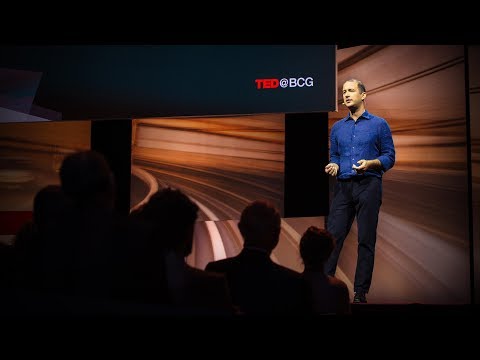
The surprising ingredient that makes businesses work better | Marco Alverà
Unfairness and its Impact
In this section, the speaker talks about how unfairness triggers strong emotions in people and is one of the defining issues of our society. The speaker also highlights how unfairness affects businesses and leads to disengagement among employees.
Unfairness Triggers Strong Emotions
- Unfairness triggers strong emotions that make it difficult for people to think straight.
- People become afraid, suspicious, and feel pain when they experience unfairness.
- Unfairness is a defining issue in our society and a root cause of polarization.
Impact on Businesses
- Disengagement among employees due to unfair treatment costs companies $550 billion annually in the US alone.
- This amount is equivalent to half the total spent on education in the US or the GDP of a country like Austria.
Examples of Unfairness
In this section, the speaker provides examples of situations where he or his daughters experienced unfair treatment.
Personal Experience
- The speaker was not invited to a friend's wedding despite being closer to the groom than others who were invited.
- This made him feel left out and unfairly treated.
Daughters' Experience
- The speaker's daughters had an argument over taking turns massaging their mother's back with a toy for back rubs.
- One daughter felt that the other had a longer turn, leading to shouting and tears.
- The mother had to use a stopwatch to ensure each girl had precisely one minute on the toy.
Importance of Fairness
In this section, the speaker emphasizes the importance of fairness and its impact on businesses.
Impact on Businesses
- Disengagement among employees due to unfair treatment costs companies $550 billion annually in the US alone.
- This amount is equivalent to half the total spent on education in the US or the GDP of a country like Austria.
- Promoting fairness and removing unfairness should be a priority for businesses.
What is Fairness?
In this section, the speaker discusses what fairness means in practice and how it works in surprising ways.
Definition of Fairness
- Fairness is more than rules and equality.
- It's about promoting an environment where people feel valued as human beings and part of a community.
- It's when people can lower their unfairness antennae and feel at ease.
Surprising Ways Fairness Works
- The speaker shares his experience working for an Italian state-owned oil company where fixed salaries and lifelong jobs were the norm.
- Despite not having a risk-reward system, pockets of excellence existed within the company that beat competitors in tough sectors such as trading, project management, and exploration.
- The secret sauce was fairness. Employees knew they were valued for what they were trying to do, not just their outcomes. They were part of a community where they didn't need to worry about short-term results or being penalized for bad luck or honest mistakes.
The Importance of Fairness
In this section, the speaker talks about how fairness is a key ingredient for motivation and teamwork. He shares examples of colleagues who were able to achieve great results by doing what they felt was right in a fair system.
Fairness as a Key Ingredient
- Fairness is a key ingredient for motivation and teamwork.
- Colleagues who worked in a fair system were good risk-takers, excellent team workers, and had fun at work.
- Being able to do what we feel is right is a great motivator.
Examples of Fairness in Action
- An HR director proposed hiring someone internally for a managerial job despite not having formal qualifications because he was very good. This decision was made based on merit rather than credentials.
- A colleague asked for a budget to build a cheese factory next to their plant in Ecuador because it was what the village needed despite it not making sense from a business perspective. They built it anyway because it was the right thing to do.
- To be fair, colleagues needed to take risks and stick their heads out, but in a fair system, they could do that and dare to be fair.
The Science Behind Fairness
In this section, the speaker discusses recent brain science that supports the idea that humans have an innate sense of fairness.
Innate Sense of Fairness
- Recent brain science shows that humans have an innate sense of fairness.
- Humans know what is right and wrong before they can talk or think about it.
- Babies as young as six months old show a preference for fairness over unfairness.
The Effects of Fairness
- When we perceive fairness, our brain releases a substance that gives us pleasure.
- When we perceive unfairness, we feel pain even greater than physical pain.
- Unfairness triggers the primitive, reptile part of our brain that deals with threats and survival, which can negatively impact motivation, creativity, and teamwork.
The Importance of Fairness in Community
- Humans are social animals who need to be part of a community to survive.
- Our brains evolve towards food because we need to be in that community from birth until around 10 years old.
- Not being invited to a friend's wedding can generate the same response as if we're about to be pushed out from our community because our lizard brain perceives it as a threat.
Fairness Can Work at All Levels
In this section, the speaker explains how fairness can work at all levels in any type of company.
Fairness at All Levels
- Science shows that fairness can work at all levels in any type of company.
- Fixed salaries and stable careers are not necessary for fairness to thrive in the workplace.
Creating a Fair Environment
- In a fair environment, people tend to be fair in turn, creating a beautiful fairness circle.
- Fairness allows other people to be fair, which creates a positive cycle of fairness.
Fairness: A Key to Success
In this talk, the speaker discusses the importance of fairness in leadership and decision-making. He shares his approach to promoting fairness within his team and company.
The Importance of Filtering Out Unfairness
- One drop of unfairness contaminates the whole pool.
- Effort should be made to filter out as much unfairness as possible from communities and companies.
Promoting a Culture of Diversity
- Actively promote a culture of diversity of opinions and character.
- Avoid biases by being aware of personal preferences that may not be good for the company or others with different ideas.
Improving Processes for Fairness
- Look at all rules, processes, systems in the company used for decision-making and resource allocation.
- Get rid of anything that is unclear, irrational or limiting information transfer.
- Fix anything that is limiting information transfer within the company.
The Last Mile of Fairness
- The last mile requires understanding people's emotions, needs, private lives, and society's needs.
- These elements are hard to put into an algorithm or spreadsheet but are key to making fair decisions.
Checking Decisions with Fairness Center Switched On
- Cross-check decisions with fairness center switched on.
- Ask tough questions such as whether it is right for someone to get a job they want or if charging too much for a product is right.
Taking Risks for Fairness
- Fairness requires judgment and risk-taking.
- Leaders should ask themselves where they can take risks beyond what's rational and do what's right.
Turn any video into a summary like this
YouTube links, meetings, lectures. With transcripts, search, and chat.