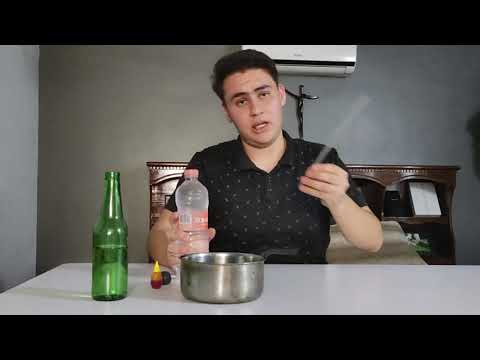
Experimentos de la Ley 0 de la termodinámica
Introduction to the Zeroth Law of Thermodynamics
Overview of the Experiment
- The experiment demonstrates the Zeroth Law of Thermodynamics, which states that if an object A is in thermal equilibrium with object B, and object C is introduced, all three will reach thermal equilibrium together.
- Required materials include a balloon, a glass cup, and a container of water. The setup aims to visualize thermal equilibrium.
Conducting the Experiment
- Heat the air inside the glass cup; pressing part of the balloon into it creates a vacuum due to heat-induced pressure changes. This illustrates how thermal contact leads to equilibrium among objects.
- When placing the heated glass cup in cold water, pressure changes cause suction on the balloon, demonstrating practical application of thermodynamic principles. If inverted, the balloon remains intact within the cup due to this vacuum effect.
Observations from Thermal Equilibrium
Results and Conclusions
- The experiment confirms that heating air causes pressure changes leading to vacuum formation within the glass cup when cooled by water. This exemplifies how temperature affects pressure in gases as per thermodynamic laws.
- It reiterates that when bodies are in thermal equilibrium and a third body is added, they establish a new state of equilibrium together. This principle was effectively demonstrated through visual observation during experimentation.
Further Experiments: Demonstrating Gas Laws
Materials for Additional Experiment
- For further exploration, materials needed include a glass bottle filled with water, food coloring, modeling clay (for sealing), hot and cold water containers, and a straw for observing liquid movement. Steps involve filling and sealing the bottle properly before submerging it in hot water for reaction observation.
Observations During Reaction
- After submerging in hot water for several minutes, rising levels indicate gas expansion due to increased temperature affecting internal pressure dynamics within sealed environments like bottles or balloons.
- Transitioning from hot to cold water results in rapid temperature drop causing immediate decrease in internal pressure; this showcases Gay-Lussac's law where constant volume relates directly proportional temperature and pressure changes observed through liquid movement up or down within tubes or bottles used during experiments.
Exploring First Law of Thermodynamics
Introduction to New Experiment
- The next experiment focuses on demonstrating the First Law of Thermodynamics using two balloons, a candle, and lighter; it emphasizes energy transformation principles involving internal energy change represented mathematically as ΔU = Q - W (change in internal energy equals heat added minus work done).
Experimental Procedure
- Initially inflate one balloon with air then place it under an ignited candle; observe how drastic temperature increase leads to bursting due to rapid energy transfer affecting material integrity under stress conditions caused by heat exposure on elastic surfaces like rubber balloons used here as experimental subjects.
This structured approach provides clarity on key concepts while allowing easy navigation through timestamps linked directly back to specific moments discussed throughout each segment presented during experimentation sessions focused around fundamental thermodynamic laws.