RE_Lecture 2
Understanding User Requirements in Software Development
Importance of User Requirements
- The speaker emphasizes the necessity of identifying user requirements to build effective software solutions, stating that these requirements exist regardless of whether they have been discovered yet.
- It is highlighted that if a project encounters issues, it is likely due to undiscovered requirements rather than their absence.
Problem-Solving Approach
- The development process begins with identifying a problem that requires a solution, which necessitates understanding user needs to create an appropriate software solution.
- The speaker stresses that any developed software must provide value to its stakeholders, such as clients or users.
Value and Investment
- An example is given where a client may invest significantly in software development (e.g., $15,000), underscoring the expectation for the software to deliver tangible benefits.
- If the software does not meet user needs or expectations, financial investment becomes unjustifiable.
Challenges in Defining User Requirements
Understanding User Needs
- A clear understanding of user requirements is crucial; misinterpretation can lead to ineffective solutions.
- There’s a distinction between merely building software and solving actual business problems faced by users.
Communication Barriers
- Users often struggle to articulate their needs clearly; developers must engage actively with them to extract meaningful insights.
- Many users may not fully understand what they need from the system, complicating requirement gathering.
Iterative Process of Requirement Gathering
Continuous Engagement
- Requirement gathering is described as an iterative process involving multiple activities aimed at refining understanding over time.
- Collaboration with experienced personnel within organizations is essential for accurately defining requirements.
Measurement and Validation
- Requirements should be measurable; vague criteria hinder assessing whether they have been met successfully.
Impact of Incorrectly Defined Requirements
Consequences of Misalignment
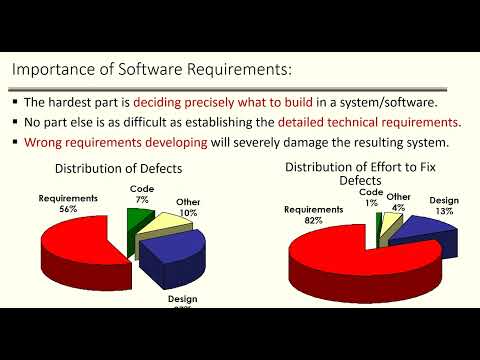
- Incorrectly defined requirements can lead to significant project setbacks and increased costs during development phases.
Cost Implications
- The cost associated with correcting errors increases exponentially as projects progress through design and coding stages.
User Involvement in Successful Projects
Role of Users in Development
- Active participation from users during requirement definition greatly enhances project success rates by ensuring accurate identification of needs.