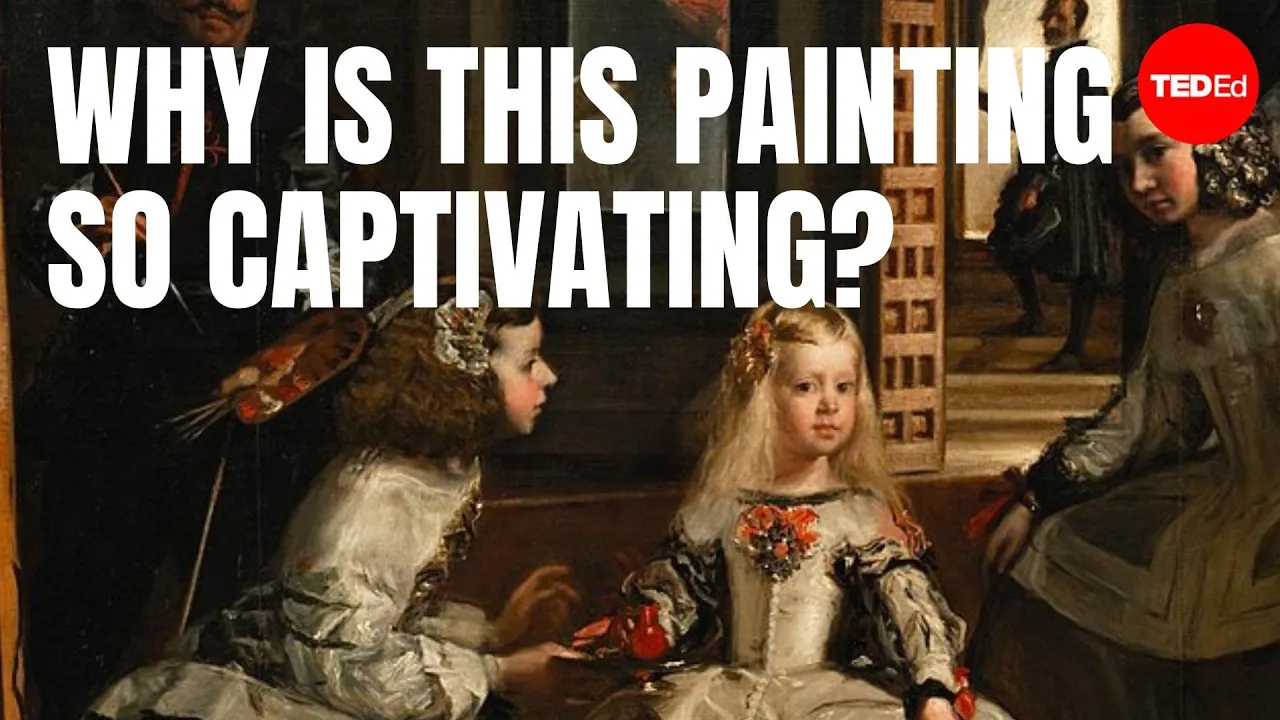
Why is this painting so captivating? - James Earle and Christina Bozsik
Introduction to "Las Meninas"
In this section, the speaker introduces the painting "Las Meninas" by Diego Velázquez and highlights its significance in art history.
The Painting's Description
- "Las Meninas" is a painting by Diego Velázquez in 1656.
- It depicts a scene from the Spanish Royal Court, featuring a child princess, handmaids, dwarfs, and the artist himself.
- At first glance, the painting may not seem special, but it is one of the most analyzed paintings in art history.
Detailed Observation of the Painting
This section focuses on observing specific details within the painting and discovering hidden elements that add depth to its meaning.
Hidden Details
- Upon closer inspection, two figures reflected in a blurry mirror are revealed to be King Philip IV and Queen Mariana.
- This changes the interpretation of the painting from a simple depiction of court life to a royal portrait.
- The painting creates an illusion of little activity or boredom, but there is more than meets the eye.
Understanding Historical Context
This section explores the historical context surrounding the creation of "Las Meninas" and how it influenced its meaning.
Historical Context
- The painting was created during a period of decline for Spain's empire.
- Spain had suffered defeat in The Thirty Years War and faced economic and political difficulties.
- King Philip IV had experienced personal misfortune with loss of his first wife and heir to the throne before remarrying.
Concealing Struggles through Artistic Choices
This section discusses how Velázquez used artistic techniques to conceal struggles faced by King Philip IV's household.
Concealed Struggles
- The painting obscures the struggle to provide food for the household.
- The advanced age of the monarch is concealed through the blurring of the mirror.
- The central focus of the painting is on Infanta Margarita Teresa, symbolizing an idealized view of Spain's future.
Blurring Boundaries between Art and Reality
This section explores how Velázquez blurred boundaries between art and reality in "Las Meninas" to create a three-dimensional experience.
Blurring Boundaries
- Velázquez used perspective and life-sized dimensions to create a sense of three-dimensionality in the painting.
- The convergence of lines between the ceiling, wall, and open door enhances the perception of a physical space.
- The audience and real world become part of the focus, emphasized by figures looking straight at the viewer.
Multiple Focal Points and Interpretations
This section discusses multiple focal points within "Las Meninas" and how they lead to different interpretations.
Multiple Focal Points
- The line formed by light fixtures leads to a mirror reflecting the royal couple.
- Different interpretations arise from whether it reflects them posing for their portrait or if it reflects the canvas itself.
- Velázquez's omission of an actual royal portrait adds complexity to understanding the painting's purpose.
Elevating Painting as an Intellectual Endeavor
This section highlights how Velázquez elevated painting from a craft to an intellectual endeavor through his incorporation of mirrors.
Intellectual Endeavor
- By incorporating mirrors into his work, Velázquez elevated painting beyond a simple craft.
- "Las Meninas" captures contrasts between ideal, real, and reflected worlds, maintaining unresolved tension.
- It tells a more complex story by exploring the relationship between art and reality.
Conclusion
This section concludes the analysis of "Las Meninas" and emphasizes its enduring fascination for viewers.
Enduring Fascination
- "Las Meninas" continues to captivate viewers due to its intricate details, hidden meanings, and exploration of art's relationship with reality.
- The painting's historical context, concealed struggles, blurring boundaries, multiple focal points, and intellectual depth contribute to its enduring appeal.