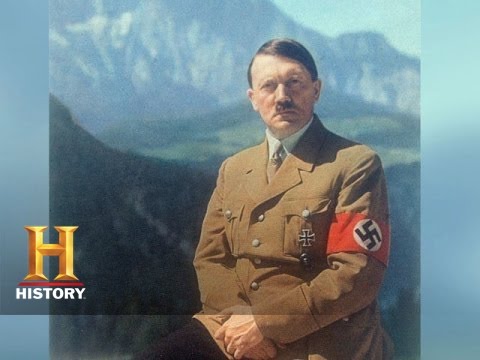
The World Wars: Adolf Hitler | History
Adolf Hitler: A Study of His Rise and Impact
Early Life and Influences
- Adolf Hitler is described as a fanatical leader and megalomaniac, whose mission was perceived to be the elimination of Jews from the world.
- Born on April 20, 1889, in Braunau am Inn, Austria, Hitler's childhood was marked by instability; his father died young, and he struggled academically.
- Initially named Schnickelberger, he served as a corporal in World War I. Post-war sentiments fueled his rise as a voice for German pride.
Political Ascendancy
- After World War I, Hitler engaged in politics by joining the German Workers Party in 1919, which later evolved into the Nazi Party.
- Following a failed coup attempt in 1923, he was imprisoned where he wrote "Mein Kampf," outlining his radical beliefs and anti-Semitic ideology.
The Path to Dictatorship
- In January 1933, Hitler became Chancellor; following the Reichstag fire in February that year, he gained extensive police powers to establish a totalitarian regime.
- International observers were alarmed by massive rallies showcasing military parades and public displays of loyalty towards Hitler.
World War II and Its Consequences
- On September 3, 1939, Britain declared war after Germany invaded Poland; this initiated widespread conflict across six continents.
- An estimated six million Jews perished during WWII due to systematic extermination efforts led by Hitler. He ultimately committed suicide in May 1945 alongside Eva Braun.
Historical Legacy
Turn any video into a summary like this
YouTube links, meetings, lectures. With transcripts, search, and chat.